Charleston Massacre: Vintage Americana Activist and writer Kevin Alexander Gray lives in Columbia, South Carolina, not far from the Charleston church shooter’s home town, where “a Confederate flag on the bumper of a car is just as common as a stop sign.” It’s also where Dylann Roof learned that Blacks are constantly raping white women and trying to take over the nation, said Gray. “That kind of racist talk is as old as the relationship between Black folk and white folk in America.”
Black Church Needs to Beef Up Security “This is an assault against the Black church and its members,” said Rev. Anthony Evans , executive director of the Washington-based National Black Church Initiative, a multidenominational coalition of Black churches across the country. Rev. Evans has gone South to advise coalition congregations “how to harden their church in terms of the safety of men, women and children. They don’t have to worry about this in a white church,” he said. “We only have to worry about this in the Black church.”
People’s Power vs Black Political Class The Winchester and Sandtown neighborhoods of Baltimore were the centers of protest against the police killing of Freddie Gray. The experience “has opened their eyes to the role of the state” in fostering poverty and powerless,” said Andre Powell , of the People’s Power Assembly. Although Black politicians may appear to run the show in the majority Black city, “the big financial boards, the Chamber of Commerce, those are the folks that really decide what’s done in Baltimore,” he said.
Mass Movement Needed Maryland is the fourth Blackest state in the nation, but solving the state’s problems is “not all Black and white,” said Dr. Kenneth Morgan , who teaches Urban Studies at Coppin State University. Morgan works closely with the Ujima People’s Progress Party, which is trying to get a spot on the statewide ballot. “Our efforts are to organize and mobilize a mass movement, and to help rekindle a national movement.”
Dominican Republic Seeks to Deport Dark-Skinned Residents Nearly a million Haitian migrant workers and descendants of Haitians face deportation from the Dominican Republic. Two deadlines for registration with the government have passed, but only a minority of those affected have succeeded in navigating the process. The DR depends on Haitians for low wage labor, but wants to keep the migrants insecure in order to further exploit them, said Dahoud Andre , a New York-based Haitian community activist and radio host. “At the same time that they threaten to deport hundreds of thousands, don’t be surprised that they are bringing in other Haitian workers to replace them.” The dispute is inextricably entwined with Dominican racism against Black Haiti.
Eritrean Identity “Most Sought After” Among African Refugees A UN report claims the tiny East African nation of Eritrea is responsible for a huge share of the refugees fleeing to the West. The report characterizes Eritrea’s compulsory national service as a form of slave labor. In an interview on Iran’s Press TV, journalist Thomas C. Mountain , who has lived in and reported from Eritrea since 2006, said the report is “a complete fabrication,” but conceded that national service “is very hard on our kids,” who want “to go out and make some money.” The Eritrean refugee numbers are vastly inflated, said Saba Gebregiorgis , an Eritrean living in Britain. “European countries give preferential treatment to Eritreans” as political refugees, said Gebregiorgis. “This has resulted in the Eritrean identity becoming the most sought after identity among the whole African population, including Ethiopians, Somalis, Sudanese, and even West Africans,” who pretend to be Eritrean for asylum purposes.
Black Agenda Radio on the Progressive Radio Network is hosted by Glen Ford and Nellie Bailey. A new edition of the program airs every Monday at 11:00am ET on PRN. Length: One hour.

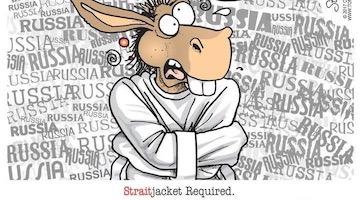 Russiagate hysteria is an international conspiracy, with British spooks spreading lies on three continents. Now Black Americans are slandered as “dupes” of Moscow.
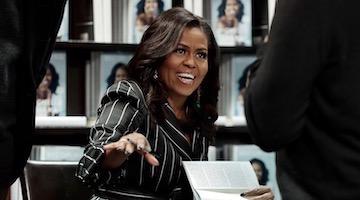 The Obamas are cashing in on their lifelong project to further the destruction of Black people, while blaming the victim.
 Democrats failed to get enough votes to repeal the FCC’s undoing of net neutrality, but there’s still time to change some member’s votes.
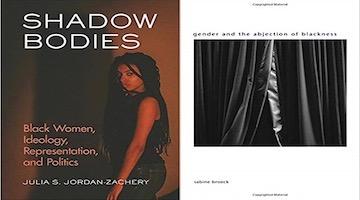 Our authors examine how white feminism became “junior partner to enslavist capitalist patriarchy,” and how do we “resist silences that limit the span of democracy?”
 The US could finance a “Green” New Deal in the same way that it paid for the first New Deal, during the Depression – with public “banking” institutions.



