A Black Agenda Radio Commentary by BAR managing editor Bruce A. Dixon New York City's Roosevelt Island and Rikers Island are on the same planet, but different worlds. For Hillary Clinton, the suicide of Kalief Browder, a New York city teen imprisoned for 3 years, two in solitary at Rikers who hanged himself on the eve of her inaugural New York City rally, was not important enough to mention before a friendly white audience. Apparently those are discussions reserved for black audiences only, or surrogates.
From Roosevelt Island to Rikers Island – Hillary Clinton Can't See Mass Incarceration A Black Agenda Radio Commentary by BAR managing editor Bruce A. Dixon "Hillary Clinton kicked off her campaign with a Roosevelt Island campaign rally, eagerly covered by Melissa Harris-Perry and MSNBC..."
In the first week of June 2015, young Kalief Browder committed suicide. Browder was arrested at the age of sixteen for the alleged theft of a backpack. Without being tried or even formally charged, Browder spent 3 years down at New York City's notorious Rikers Island complex, two of them in solitary confinement.
Lacking competent legal representation and isolated in part because he was not a member of any street organization, Browder was relentlessly beaten and abused by both staff and inmates during his incarceration. On the outside, in the hopeful estimation of his family and friends, Browder's condition seemed to be improving. Browder had made several prior suicide attempts during and after his time at Rikers, but at the time of his death was attending city college classes, his grades were going up and his panic attacks and other PTSD symptoms seemed to be retreating, until his mother found him hanging from an open window one morning.
Less than a week later, on the same planet, the same city, but in another world just six miles downstream from Rikers, Hillary Clinton kicked off her campaign with a Roosevelt Island campaign rally, eagerly covered by Melissa Harris-Perry and MSNBC. Being an island, Roosevelt Island is not a gated community, it's a moated community, inhabited in large part by UN employees and such, many quite well to do.
Hillary Rodham Clinton is no dummy, and she employs some of the cleverest marketers around to craft her every photo opportunity, appearance and most of the words that come from her mouth. Not much escapes their notice, except of course those matters they deem just not worth noticing. You can bet people on Hillary's team knew who Kalief Browder was. They knew Rikers was just 6 miles upstream, and they knew it wouldn't embarrass the mayor because deBlasio had already acknowledged it. They knew the crowd was Hillary's no matter what she did or did not say.
For Team Hillary, the life and death of Kalief Browder, and hundreds or thousands like him just didn't make the cut. Other points, other matters were too pressing, too urgent.
Since becoming a presidential candidate again in the last few weeks, Hillary has learned to make her lips say the words “mass incarceration.” She's said it more often in the last couple months than Bernie Sanders has in twenty years, but it seems to be one of those things she'll only come out with in front of black and other receptive audiences, as though black mass incarceration and the prison state were the exclusive creations or problems of black and brown Americans instead of something she and her husband expanded dramatically during their last terms in the White House.
As the entire black political class maneuvers to deliver the black vote to Hillary (sometimes through Bernie Sanders in the primary season) it's instructive to note that when their candidate has a free hand and a friendly white audience before which to speak, the prison state and mass incarceration which virtually define the black experience of government are simply not worth mentioning.
For Black Agenda Radio, I'm Bruce Dixon. Find us on the web at www.blackagendareport.com , where you can also subscribe to our free weekly email alerts.
Bruce A. Dixon is managing editor at Black Agenda Report. He lives and works near Marietta GA, where he is a partner in an IT firm and serves on the state committee of the Georgia Green Party. Contact him at bruce.dixon(at)blackagendareport.com.

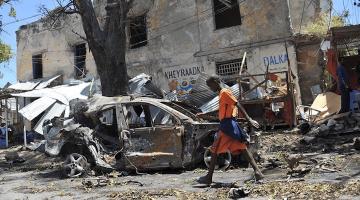 “Bombing Somali civilians is one of AFRICOM’s main projects,” writes Mohamed Haji Ingiriis, a young Somali historian.
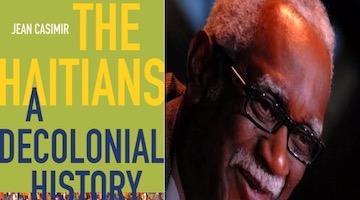 The worldview animating Haitian masses today is leading to a social context ungovernable within the framework of prevailing economic neo-liberalism.
 This book challenges the myth that 1994 was the turning point in South Africa -- because the liberation process is unfinished.
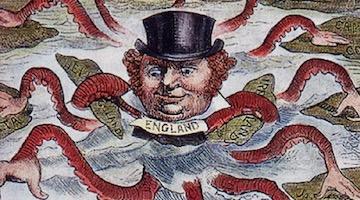 The craven fear of truth in imperial zones, bordering on psychopathic dread, has sustained systemic racism and hegemonic power domestically and globally.
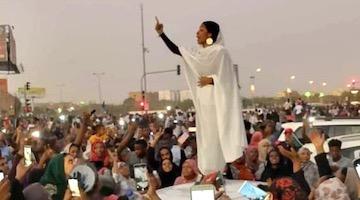 The not-yet-triumphant Sudan popular uprising was both sophisticated and thorough; it tried to learn from past mistakes and internalize lessons from revolutions of the first wave and elsewhere.


