“Oprah insults Black SNCC civil rights heroes, but she protects the white, rich Kennedys.”
Like all historical dramatic films, Selma is a political work, reflecting the political views of the producers. Oprah Winfrey is one of those producers, in addition to playing one of the characters in this version of the Selma story. Her handwriting – that is, her conservative Black political worldview – is all over the film, which demands and deserves a political response.
For the purposes of this brief radio commentary, I’m only going to register three complaints.
Number One: the film is a crude insult to SNCC, the Student Non-Violent Coordinating Committee workers who, along with a small minority of Black preachers like Dr. Martin Luther King, comprised the infrastructure of the civil rights movement in the Deep South. These hundreds of heroic young people, who had been organizing communities in Mississippi and Georgia and, yes, Lowndes County, Alabama for years, and who invited Dr. King to come to Selma, are personified in the film by one confused sounding, infantile behaving youth who we are supposed to believe is James Forman, the SNCC executive secretary who was, in real life, a Korean War veteran and former teacher and ground-breaking organizer about the same age as Dr. King. In the film, the James Forman character comes across as petty-minded, while Dr. King is made to seem like the only adult in town. Veterans of SNCC have a right to be hurt at being consigned to the dustbin of history by the likes of Oprah Winfrey. The rest of us should also be angry at having our history treated like a Saturday morning cartoon.
“King was seeking social transformation, a new system of living.”
Some people are missing from the film that absolutely should be in there. No, I’m not talking about Stokely Carmichael, although yes, he is quite relevant to the story. I mean the Kennedy brothers, John and Bobby, who were the ones who authorized the bugging of Dr. King’s phones and office and hotel rooms. But Oprah loves the Kennedys , and so the movie leads the audience to believe that J. Edgar Hoover and President Lyndon Johnson set out to surveil and destroy King because of his push for voting rights. But Attorney General Robert Kennedy signed the order , while his brother, who was then president, was still alive. Oprah insults Black SNCC civil rights heroes, but she protects the white, rich Kennedys.
Finally, near the end of the film, Dr. King is depicted as yearning for an end to mass protests, so that Black people could achieve real political power – quite clearly meaning the election of more Black people to office. As if that’s what the mass movement was all about, in King’s mind. We know that’s not true, because Dr. King said the opposite in countless sermons, speeches, books and essays; that he was seeking social transformation, a new system of living. Three years after Selma, King died, still seeking to revive the mass movement.
For Oprah Winfrey, Dr. King was just an opening act for a future President Obama, and for an age of billionaire Black TV celebrities.
As Prof. Abdul Alkalimat, of the University of Illinois, has written about the film Selma: “If the most militant person in the movie is played by Oprah, you know something is very, very wrong.”
For Black Agenda Radio, I’m Glen Ford. On the web, go to BlackAgendaReport.com, and sign up for email notifications of our new issues, each Wednesday.
BAR executive editor Glen Ford can be contacted at Glen.Ford@BlackAgendaReport.com.
Your browser does not support the audio element.

 In August 2020 the late Glen Ford spoke to former political prisoner Jihad Abdulmumit of the Jericho Movement about the origins and importance of Black August.
 Wilmer Leon and Margaret discussed the true reasons for antipathy towards Niger, and why other African nations are used as proxies for western interests.
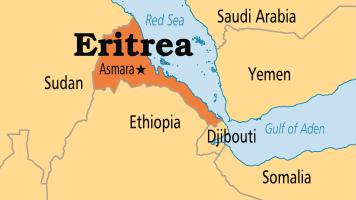 Eritrea is an example of an independent and self-determining African state. Its people are rightly proud of their history.
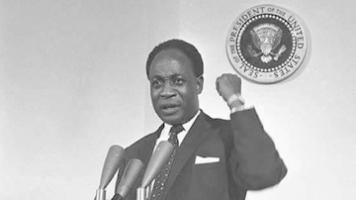 Sixty years ago, Nkrumah told us why it was important that Africa unite. Today, his message and roadmap for Pan-African unity is needed more than ever.
 The war against Africans intensifies, the puppets and stooges do as they are ordered, while others are satisfied with empty gestures. But the revolutionary path is unchanged, as Ajamu Baraka…


