A Black Agenda Radio commentary by executive editor Glen Ford
Before the pivotal elections of 2002, when corporate money started systematically wooing Black Democrats, the Congressional Black Caucus was a consistent voice on the (relatively) leftish side of the Congress. Only a few years later, the Black Caucus was more firmly in the pockets of huge telecom corporations than the rest of the Party. As a bloc, the CBC is no friend of Internet neutrality.
The Big Sell-Out: The Congressional Black Caucus and the Internet
A Black Agenda Radio commentary by executive editor Glen Ford
“Ten Black lawmakers have written letters against Internet neutrality, and eight in support of free access to all.”
ColorOfChange.org, which aims to “strengthen Black America’s voice” through skillful use of the Internet, is confronting a letter
We’re always glad when Color of Change names the bad actors in the Black Misleadership Class. In this case, it’s the usual rogue’s gallery of the Congressional Black Caucus: Sanford Bishop and David Scott, of Georgia; G.K. Butterfield of North Carolina; Bobby Rush of Illinois; Corrine Brown and Alcee Hastings, from Florida; Bennie Thompson, from Mississippi; Dallas, Texas, congressman Marck Veasey; Lacy Clay, of Missouri, and Gregory Meeks, the corporate sell-out from New York.
Color of Change also gives credit to those 36 Democratic lawmakers that wrote a letter demanding the FCC protect Internet neutrality
Massive Rightward Shift
The Black Agenda Report team has been tracking the steady slide to the Right in the Congressional Black Caucus since 2002. Back in June of 2006, when the BAR team was writing for The Black Commentator, we reported the massive sell-out to corporations by Blacks on Capitol Hill. Huge telecommunications firms took the lead in buying off Black lawmakers – most notably, AT&T’s successful capture of Chicago congressman Bobby Rush, the former Black Panther, who sold his vote for a million dollars and the promise of a technology center for his district that never materialized.
Internet neutrality was at stake in 2006, as it is today. In an article titled “Black Caucus Caves to Corporate Power
Because of such treachery, Congress failed to protect Internet neutrality in 2006. Now, the issue is before the FCC. Ten Black lawmakers have written letters against Internet neutrality, and eight in support of free access to all. My guess is that, eight years after the great sell-out, the majority of the Black Caucus remains firmly on the telecommunications plantation.
For Black Agenda Radio, I’m Glen Ford. On the web, go to BlackAgendaReport.com, and sign up for email notification each Wednesday, when a new issue of BAR appears.
BAR executive editor Glen Ford can be contacted at Glen.Ford@BlackAgendaReport.com .

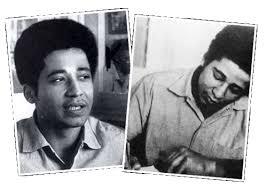 Kalonji Changa is co-founder of Black Power Media and founder of FTP Movement. He joins us from Atlanta to talk about Black August, which has been a fixture of the liberation movement for 43 years.
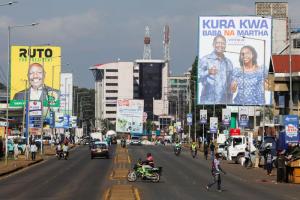 Irene Asuwa joins us from Nairobi, Kenya. She is co-convener of Ecological Justice and supports outreach at Ukombozi Library. We discuss the recent presidential election in that country.
 In a recent webinar hosted by the United National Antiwar Coalition (UNAC), Margaret Kimberley discussed what she witnessed during the commemoration events for the 43rd anniversary of the Sandinista…
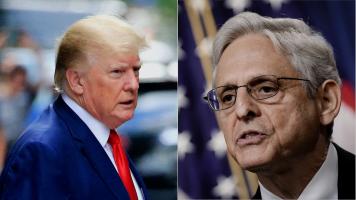 Why would Black people laud the FBI or criticize protection against self-incrimination? The FBI search of Donald Trump's home has reawakened Trump Derangement Syndrome.
 To commemorate Black August and in memory of the forty-two men massacred during the September 13, 1971 Attica Prison uprising we reproduce below an essay and petition from The Black Panther…


