A Black Agenda Radio commentary by executive editor Glen Ford
Sometime in the late Seventies, the Black political class decided that ownership of media was more important than making programming that is accountable to the African American public. Today, Blacks neither own nor control the TV programming they consume. Except for Armstrong Williams, the “rightwing propagandist and hustler” who wants the FCC to favor him with a diversity ruling.
Armstrong Williams Wants “Diversity” Favor from FCC
A Black Agenda Radio commentary by executive editor Glen Ford
“Williams claims that he is known to provide broadcast content that reflects a minority perspective.”
The Federal Communications Commission this week dealt at least a potential blow to the monopolists who have sucked every drop of social value out of American commercial television. The FCC ruled that TV stations that sell substantial portions of other TV stations advertizing, are the real owners of the station, and thus are violating rules against multiple ownerships in the same market. The practice of joint advertizing has meant that many stations are little more than shells for getting around the rules against monopolization. The National Association of Black Journalists applauds the FCC action, since shared advertizing agreements usually mean firing the whole newsroom of one of the stations. The Minority Media and Telecommunications Council
One person who’s not happy is Armstrong Williams, the Black rightwing propagandist and hustler who calls himself a journalist. Williams owns two stations mentor Django Unchained .
“The fact that the owner is Black doesn’t affect the stations’ broadcast schedules and program content one bit.”
But, more importantly, there is nothing on his TV stations that distinguishes them from any other corporate money machine. In Myrtle Beach, it’s a long day of Jerry Springer and People’s Court and Friends reruns, with news at 10 provided by a network owned by CBS and Warner Bros. In Michigan, his station is just another NBC affiliate, spewing the same bland corporate crap. The fact that the owner is Black doesn’t affect the stations’ broadcast schedules and program content one bit. It’s still garbage, of no socially redeeming value. Program-wise, it’s not even Black garbage.
Black people have no reason to be concerned about the survival of television stations that do not substantially serve their interests. It is true that Armstrong Williams has as much right as any white person to get rich from poisoning the airwaves – but that does not mean that we have to help him. And in fact, the airwaves still technically belong to the public. The government is obligated by law to ensure that the broadcast spectrum is put to uses that best serve the public. That means programming that is accountable to the public, including Black people.
There was a time when the FCC at least pretended to take public input seriously. The very fact that, two generations ago, the Black public could challenge the licenses of stations that ignored, abused or simply underserved them, created wondrous opportunities for intra-Black communications – opportunities that have been wiped out by corporate consolidation.
The FCC may well make an exception to its own joint advertizing ruling, on “diversity” grounds. And, that would be a victory – for Armstrong Williams. However, Black people as a whole will have won nothing, and lost a great deal.
For Black Agenda Radio, I’m Glen Ford. On the web, go to BlackAgendaReport.com.
BAR executive editor Glen Ford can be contacted at Glen.Ford@BlackAgendaReport.com

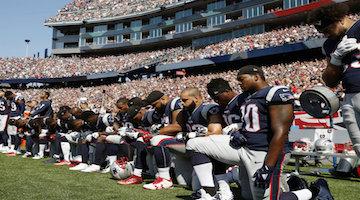 “NFL owners dared not go against players, who were outraged at Trump’s placing the SOB label upon them on behalf of the one percenters.”
 Africans on the Continent and in the Diaspora have been attracted to Islam.
 Omali Yeshitela on rescuing the movement from its rut, Ajamu Baraka on the black political clawss's endorsement of the Trump war budget, Margaret Kimberley on the white supremacist experiment that
 “Chávez created this philosophy, which is anti-imperialist and also humanist.”
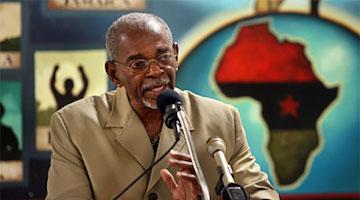 Black Is Back Coalition chairman Omali Yeshitela worries that a disturbing “new norm” is setting into the cycle of police atrocities and Black community response. Speaking in St.



