A Black Agenda Radio commentary by executive editor Glen Ford
The United States, which boasts that South Sudan owes its independence to Washington, seems poised to repossess the new nation’s sovereignty. With Sudan’s uniformed warlords locked in combat, the usual American “experts” are calling for the U.S. to assume trusteeship of the country – especially its oil.
South Sudan: When the Empire is Your Liberator, You're Not Really Independent
A Black Agenda Radio commentary by executive editor Glen Ford
“The South Sudanese military has broke up into its component warlord parts.”
For decades, the United States and Israel sought to bring about the fracturing of Sudan, which had been, geographically, the largest nation in Africa. Secession of the South was a special project of Israel, whose most enduring and fundamental foreign policy is to spread chaos and dissention in the Muslim and Arab worlds. Sudan, under the political control of the mostly Muslim North, joined the Arab League immediately upon independence, in 1956. Israel has sought to destabilize Sudan ever since, both to strike a blow at “Arabized” Africans and to curry favor among Christians on the continent.
John Garang, who rose to leader of the Sudanese People’s Liberation Army, received military training in Israel in 1970, during Sudan’s first civil war. However, Garang favored keeping the South in federation with a united Sudan. In 2005, under a Comprehensive Peace Agreement, Garang became vice president of the whole of Sudan and premier of the southern part of the country. He died in a mysterious helicopter crash six months later. Garang was succeeded by Salva Kiir, who sports a black cowboy hat given to him by President Bush, in 2006.
Dismembering Sudan became a U.S. obsession under Bill Clinton, who bombed a pharmaceuticals factory in the capital city, Khartoum, in 1998, falsely claiming it was a chemical weapons facility. After 9/11 Sudan moved to the top of President Bush’s enemies list. The U.S. and Israel provided arms and training to rebel groups in Darfur, in the west of the Sudan, fueling another front of civil war.
“Washington openly bragged that it was the Godfather of the South Sudanese state.”
President Obama entered the White House the year after AFRICOM, the U.S. Africa Command, came into being, and two years before the South Sudanese were to vote in a referendum on whether they wanted to become an independent nation. With much of Africa now under the sway of the U.S. military, Washington dropped all diplomatic pretense and openly bragged that it was the Godfather of the South Sudanese state that emerged in July of 2011. What was left of Khartoum’s part of Sudan lost most of its oil. China had good reason to be worried, having invested $20 billion in Sudan before it was split, and pledged $8 billion more to South Sudan after independence – but now the Americans were strutting around like they owned the place.
Then came the collapse, as the South Sudanese military broke up into its component warlord parts. Suddenly, the U.S. political class is talking about repossessing the country’s sovereignty. In the pages of the New York Times , Princeton Lyman G. Pascal Zachary
So, what have the South Sudanese won? Certainly, not independence. It’s just another oil rich, neocolonial spot on the map of U.S. empire.
For Black Agenda Radio, I’m Glen Ford. On the web, go to BlackAgendaReport.com.
BAR executive editor Glen Ford can be contacted at Glen.Ford@BlackAgendaReport.com .

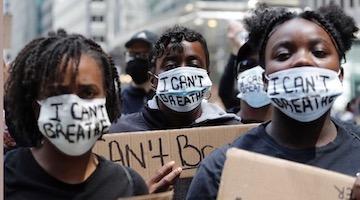 Some coronavirus deaths, especially early on, were mistakenly attributed to other causes.
 The same corporate media that shamelessly boosted Biden’s candidacy, even when his popularity plummeted, never question his sudden comeback at the polls.
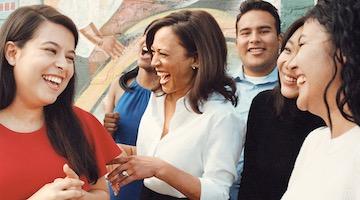 Harris’ identity as a woman of color has been propped up to cover for her decades-long loyalty to the ruling class, locking up working-class and poor people and deporting migrants.
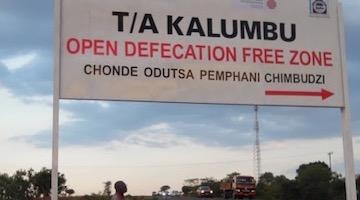 “Voluntourists” in Africa are actually jihadists for the West who defecate all over the continent in every way that defecation is possible.
 Creating Ownership, Equity and Income for College Athletes



