A Black Agenda Radio commentary by executive editor Glen Ford
The United States, which boasts that South Sudan owes its independence to Washington, seems poised to repossess the new nation’s sovereignty. With Sudan’s uniformed warlords locked in combat, the usual American “experts” are calling for the U.S. to assume trusteeship of the country – especially its oil.
South Sudan: When the Empire is Your Liberator, You're Not Really Independent
A Black Agenda Radio commentary by executive editor Glen Ford
“The South Sudanese military has broke up into its component warlord parts.”
For decades, the United States and Israel sought to bring about the fracturing of Sudan, which had been, geographically, the largest nation in Africa. Secession of the South was a special project of Israel, whose most enduring and fundamental foreign policy is to spread chaos and dissention in the Muslim and Arab worlds. Sudan, under the political control of the mostly Muslim North, joined the Arab League immediately upon independence, in 1956. Israel has sought to destabilize Sudan ever since, both to strike a blow at “Arabized” Africans and to curry favor among Christians on the continent.
John Garang, who rose to leader of the Sudanese People’s Liberation Army, received military training in Israel in 1970, during Sudan’s first civil war. However, Garang favored keeping the South in federation with a united Sudan. In 2005, under a Comprehensive Peace Agreement, Garang became vice president of the whole of Sudan and premier of the southern part of the country. He died in a mysterious helicopter crash six months later. Garang was succeeded by Salva Kiir, who sports a black cowboy hat given to him by President Bush, in 2006.
Dismembering Sudan became a U.S. obsession under Bill Clinton, who bombed a pharmaceuticals factory in the capital city, Khartoum, in 1998, falsely claiming it was a chemical weapons facility. After 9/11 Sudan moved to the top of President Bush’s enemies list. The U.S. and Israel provided arms and training to rebel groups in Darfur, in the west of the Sudan, fueling another front of civil war.
“Washington openly bragged that it was the Godfather of the South Sudanese state.”
President Obama entered the White House the year after AFRICOM, the U.S. Africa Command, came into being, and two years before the South Sudanese were to vote in a referendum on whether they wanted to become an independent nation. With much of Africa now under the sway of the U.S. military, Washington dropped all diplomatic pretense and openly bragged that it was the Godfather of the South Sudanese state that emerged in July of 2011. What was left of Khartoum’s part of Sudan lost most of its oil. China had good reason to be worried, having invested $20 billion in Sudan before it was split, and pledged $8 billion more to South Sudan after independence – but now the Americans were strutting around like they owned the place.
Then came the collapse, as the South Sudanese military broke up into its component warlord parts. Suddenly, the U.S. political class is talking about repossessing the country’s sovereignty. In the pages of the New York Times , Princeton Lyman G. Pascal Zachary
So, what have the South Sudanese won? Certainly, not independence. It’s just another oil rich, neocolonial spot on the map of U.S. empire.
For Black Agenda Radio, I’m Glen Ford. On the web, go to BlackAgendaReport.com.
BAR executive editor Glen Ford can be contacted at Glen.Ford@BlackAgendaReport.com .

 Police “Reform” = Counterinsurgency
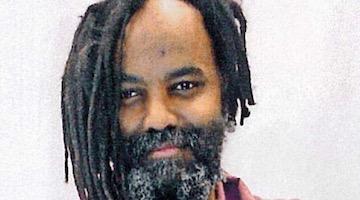 The polls were wrong in 2016, and they may be wrong this year, too, said Mumia Abu Jamal, the nation’s best known political prisoner, in an essay for Prison Radio.
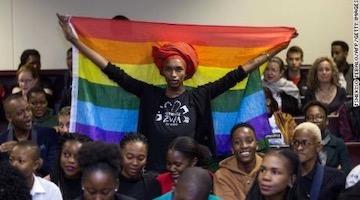 Thirty African countries have laws against homosexuality, but debate still rages over whether homophobia is endemic to Africa or a European import.
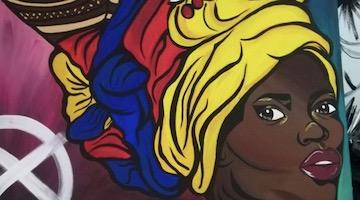 Anti-Black racism is not limited to the US, said Jomaira Salas, a doctoral candidate in sociology at Rutgers University and author of an article on Black Latina girls.
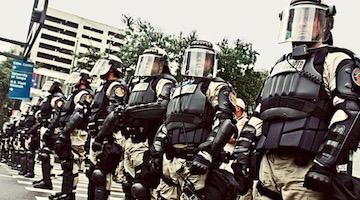 Attempts to “reform” the police through body cameras, so-called “community” policing and other such measures “all presume the continued presence of police” in oppressed communities, said Dy



