Black Agenda Report
Black Agenda Report
News, commentary and analysis from the black left.

  • Home
  • Africa
  • African America
  • Education
  • Environment
  • International
  • Media and Culture
  • Political Economy
  • Radio
  • US Politics
  • War and Empire

The African Union: Still Subservient After All These Years
05 Jun 2013
🖨️ Print Article

A Black Agenda Radio commentary by executive editor Glen Ford

The African Union made a show of rejecting the International Criminal Court’s “race hunting” methods, but the facts of dependence on the imperial powers remain. “Virtually all the armies of Africa, except for Eritrea, Zimbabwe and Sudan, have become integrated into either U.S. or French military structures.”


The African Union: Still Subservient After All These Years

A Black Agenda Radio commentary by executive editor Glen Ford

“The African Union’s little rebellion against the International Criminal Court simply shows that African leaders understand that the Americans have no loyalties.”

Developments at the recent African Union conference highlight the abject subservience to the West of the vast majority of states on the continent – and African leaders’ occasional attempts to contest their subordinate status. On an independent-minded note, the African Union rebuked the International Criminal Court for its fixation on indicting only Africans for crimes against humanity. Ethiopia’s prime minister, who was also chairman of the AU meeting, said the court’s “process has degenerated into some kind of race hunting rather than the objective of taking care of crimes and impunities.” To drive home the point, the AU voted almost unanimously to ask the court to refer its case against Kenyan President Uhuru Kenyatta and his vice president back to Kenyan courts, saying Kenya had the capacity to adjudicate the matter on its own. Only Botswana objected to the proposal.

The ICC is known to eagerly indict just about anyone – any African, that is – who falls out of favor with the United States. The U.S. clearly favored Uhuru Kenyatta’s opponent in the presidential race, Raila Odinga – which may have been one reason that Kenyans voted the other way. Yet, the AU’s slap in the face of the court and, indirectly, its U.S. backers, is much less than it seems. Kenya remains an unwavering puppet of U.S. policy in the Horn of Africa, having joined in the invasion of neighboring Somalia at Washington’s behest. And Ethiopia and Uganda provide the bulk of the troops occupying Somalia under U.S. direction. On paper, the war in Somalia is an African Union and United Nations mission, but the war is run by the CIA and largely financed by the Europeans. The African Union’s little rebellion against the International Criminal Court simply shows that African leaders understand that the Americans have no loyalties and are capable of turning on any one them when it suits their purposes, and having them tossed into prison by the International Criminal Court. The African heads of state were simply looking out for their own heads.

“A continental standing army?”

There was a lot of bluster in Addis Ababa about creating an independent African force to maintain order on the continent. The leaders voted to create an “intervening” military unit to rapidly deal with crises and coup d’etats. That would be followed by creation of a full-fledged African Standby Force – a kind of continental standing army – as early as 2015. AU spokesmen speculated that the force “could be 100 percent” African, in terms of men on the ground. However, it would still need logistical support from the so-called “international community” – a euphemism for the United States and Europe – who are, of course, the sworn enemies of African independence.

The truth is, virtually all the armies of Africa, except for Eritrea, Zimbabwe and Sudan, have become integrated into either U.S. or French military structures, and cannot act independently. African leaders claim they will try to break free by raising taxes on things like airline flights and hotel rooms – but that’s nonsense for home consumption. The African Union’s Peace and Security Commissioner, Ramtane Lamamra, spoke of the “historic nature and scope” of the AU’s tentative moves towards military independence. But they are parakeets in a cage, trying to sound like eagles, fifty years after the formation of the Organization of African Unity.

For Black Agenda Radio, I’m Glen Ford. On the web, go to BlackAgendaReport.com.

BAR executive editor Glen Ford can be contacted at Glen.Ford@BlackAgendaReport.com.


Your browser does not support the audio element.

listen
http://traffic.libsyn.com/blackagendareport/20130605_AU_Force.mp3

More Stories


  • EXCERPT: Brussels Conference Act of 1890
    Editors, The Black Agenda Review
    EXCERPT: Brussels Conference Act of 1890
    30 Nov 2022
    The 1890 Brussels Act provided Europeans with the legal and humanitarian justification for the colonization of Africa. Why have so few heard of it?

  • Worthy and Unworthy Protest
    Margaret Kimberley, BAR Executive Editor and Senior Columnist
    Worthy and Unworthy Protest
    30 Nov 2022
    Protesters in some nations are celebrated. Others are ignored. Protest is a human right to be respected but instead can be used as a pretext for nefarious motives such as regime change.
  • Club None Long To Belong To…*
    Raymond Nat Turner, BAR poet-in-residence
    Club None Long To Belong To…*
    30 Nov 2022
                                                         
  • An African View On Ukraine
    Jacqueline Luqman
    An African View On Ukraine
    30 Nov 2022
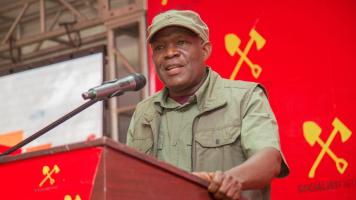
    Dr. Fred M'Membe, President of the Socialist Party of Zambia, was a recent guest on the Sputnik program, By Any Means Necessary. He discussed an African view of the crisis in Ukraine.
  • China's Leadership Shines Bright in Asia's Moment
    Danny Haiphong, BAR Contributing Editor
    China's Leadership Shines Bright in Asia's Moment
    30 Nov 2022
    China shows leadership in Asia while the U.S. relies on threats and interference to get its way.

  • Load More
Subscribe
connect with us
about us
contact us