A Black Agenda Radio commentary by BAR managing editor Bruce A. Dixon
The US has boots on the ground and manned & unmanned aircraft in the skies of Mali, to answer supposed threats to US national security poised by Al Qeda. If you believe that, you believe Saddam actually had nuclear weapons. The US and France are in Mali to prevent its civil society from controlling its land and water, & to preserve predatory Western leases on hundreds of square miles in Mali that prop up the recent reconquest of Libya.
US & France Intervene in Mali To Protect Land & Resource Grabs, Not Because of Al Qeda
A Black Agenda Radio commentary by BAR managing editor Bruce A. Dixon
On March 15, former General and AFRICOM commander Carter F. Ham testified before the House Armed Services Committee that the situation in the West African republic of Mali is, along with that in Nigeria and Somalia, “a direct threat to the national security of the United States .” In plain language, claiming a direct threat to US national security is the standard justification for murderous military intervention around the world, and Mali has just been added to the hit list.
Echoing official sources like General Ham, corporate media tell us that Al Qeda and related Islamist forces, flush with weapons from the recent conflict in Libya, are poised to overrun Mali. Should we believe them? Aren't they the same folks who once assured us Saddam, and nowadays Iran, have nuclear weapons? Of course they are, and the real reasons for US intervention are something else entirely.
Since the Clinton administration, the US has provided military aid, weapons and training to 52 out of 54 African nations, ensuring that Africa, the motherland of humanity, remains the poorest and most war-torn region on earth. The US is in Africa to lock down its resources, Africa's energy, water, minerals, timber, agriculture, and biodiversity for the Western corporate elite. Strong African civil societies are, in the view of the US and its allies, bad for business, because they would mean Africans controlling their own energy, water, minerals, timber, agriculture and biodiversity.
Al Qeda, the Islamists and Tuareg rebels aren't the big problem in Mali. The big problem is that Mali's so-called democratic government discredited itself by evicting tens of thousands of farmers and their villages to grant foreign concerns long term leases on vast tracts of prime farmland and water , so Malians didn't much care when it was swept aside by another government committed to the same policies, and seem in no rush to defend that regime either. So the US stepped in, and is currently airlifting, supplying, feeding and providing gasoline to a French mechanized infantry battalion in Mali to make sure foreigners keep that Malian land and water.
The largest of the predatory land grabs in Mali is called Malibya , that's M as in mother, A as in apple Libya, google it for yourself. Malibya was a deal signed with the Khadafi government to ensure Libya's food security with a long term lease of 150 square miles of Malian territory for a vast GMO rice and cattle plantation, irrigated by a 25 mile canal that would drain vast quantities of water from the Niger River. Libya produces vast amounts of oil but little food. Now that the US and their junior partners, the French, have re-established control over Libyan oil, they need Mali's water and agriculture to make their neocolonial contraption sustainable, even if Malians and the tens of millions downriver in other countries suffer. The Pentagon, and its local tentacle AFRICOM, also require Mali for drone, mercenary and special ops bases that can directly penetrate the dozen or so African states west of Nigeria.
Some of the forces of Malian civil society , such as Malian farmers were present at the recent World Social Forum last month in Tunisia. Western corporate media however, is uninterested in reporting their stories, and despite its highly visible and self-celebrating African American political class, there exists no effective constituency for Africa in the US.
For Black Agenda Radio I'm Bruce Dixon. Find us on the web at www.blackagendareport.com .
Bruce A. Dixon is managing editor at Black Agenda Report, and a state committee member of the Georgia Green Party. He lives and works near Marietta GA and can be contacted at bruce.dixon(at)blackagendareport.com or via this site's contact page.

 Writers, artists, community organizers and scholars have all contributed their analysis of the resource documents listed, below, and how they might be useful in assessing anti-Black structures arou
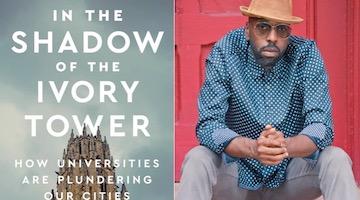 Universities have become today’s companies and our cities their company towns.
 The Age of Revolution (1770–1850), bookended by the American and French Revolutions on the one side and the Revolutions of 1848 on the other, is widely viewed as the progenitor of the modern Euro-A
 The struggle for workers’ rights in this country has been an ongoing battle for hundreds of years.
 Upon learning to read while enslaved, Frederick Douglass began his great journey of emancipation, as such journeys always begin, in the mind.


