A Black Agenda Radio commentary by executive editor Glen Ford
A new report says housing policies should be based on filling social needs rather than using housing as a wealth-building mechanism. “Housing should be treated as a right, and housing policies must be informed by the realities of race.”
Until Housing is a Right, Blacks Will Live Marginalized Lives
A Black Agenda Radio commentary by executive editor Glen Ford
“The very notion that housing should be affordable to all – much less that housing is a right – has all but disappeared from major party political discourse.”
This year’s Martin Luther King Day report from United for a Fair Economy critiques U.S. housing policy, which has always been geared towards individual family home ownership. In recent decades, as Wall Street consolidated its political and economic dominance, government policy has been to treat housing as an asset whose value is to be constantly boosted; that is, housing as a wealth-building mechanism. It is a policy that ultimately serves the financial capitalists – a class that produces nothing, but grows more and more wealthy by manipulating the value of assets ever upward. Artificially inflating the price of housing also creates value against which homeowners can borrow – which is great for the banks but creates artificial bubbles in the economy that finally burst with catastrophic consequences.
In all of this mad, artificial wealth and bubble building, the very notion that housing should be affordable to all – much less that housing is a right – has all but disappeared from major party political discourse. United for a Fair Economy’s report, State of the Dream 2013: A Long Way From Home
“The very presence of Blacks devalues the surrounding land and structures, in terms of market price.”
If anything, the report is understated. In a pervasively racist society like the United States, race becomes an overwhelming factor. Race has shaped the social geography of the United States – and, therefore, the geography of wealth – as in no other modern society. Just as Black life is devalued in the criminal justice system, so the very presence of Blacks devalues the surrounding land and structures, in terms of market price. Race – and by that, I mean white racism – distorts and deforms this country’s market system, lowering the value of assets based on their proximity to concentrations of Black people, and artificially boosting the value of land and buildings that are located at a distance from Black neighborhoods.
Informal racial redlining remains probably the most powerful pricing mechanism in the American real estate market. One can cross an invisible line from a largely Black and brown city to a mostly white town, and the property values immediately soar upward, regardless of the quality of the actual houses. Urban development schemes pre-suppose the breaking up or clearing out of Black population concentrations before any economic revitalization is even attempted. Public housing has been marked for extinction, based, at root, on the assumption that concentrations of Black people are bad for business and for society. These facts of American life require that Blacks demand that affordable housing be provided as a right, not as something that trickles down. Otherwise, African Americans will remain marginalized people living on marginalized properties.
For Black Agenda Radio, I’m Glen Ford. On the web, go to BlackAgendaReport.com.
BAR executive editor Glen Ford can be contacted at Glen.Ford@BlackAgendaReport.com .

 This week, we learn about a lawsuit by Black and Latino residents over the redrawing of an electoral district map that leaves them without representation. We discuss New York State's…
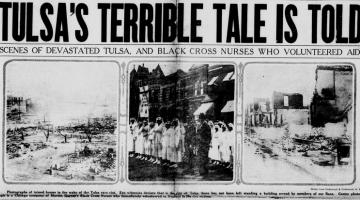 We are joined by Joe Torres to discuss the 1921 Tulsa Massacre and the media’s role in instigating the atrocity.
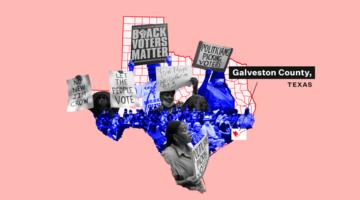 Yurij Rudensky joins us to discuss a lawsuit against Galveston County, Texas, brought by Black and Latino residents over its racially discriminatory district map.
 Melanie Dominguez joins us to discuss the conditions in New York State jails and prisons and explain why new legislation to expand and strengthen the State Commission of Correction is needed.
 Giving Juneteenth the imprimatur of a state stamp of approval makes it problematic, and no longer the people’s holiday it has been for nearly 100 years.


