by BAR editor and columnist Jared A. Ball
A recent Washington Post article by author and MSNBC personality Toure equates hip hop’s “failure” to combat the drug scourge with the damage inflicted by successive government “drug wars” in/against Black America. Toure creates a dangerous and distorted kind of moral equivalence, since his “premise is that hip-hop is equal somehow in power to monopoly capital and state power.” In reality, hip hop is a victim of the same forces that oppress Black people as a whole.
“Hip-Hop Toure’, Hoe, Hay, Hoe...”
by BAR editor and columnist Jared A. Ball
“Toure’ carefully emphasizes only corporate-sponsored rappers who are placed among us like agent provocateurs.”
No, Toure’ is not THE problem. One less Toure’ won’t mean liberation. And as long as intelligent people continue to see mainstream “news” outlets like the Washington Post as threats against our political consciousness the damage caused by those compelled to sell themselves to these outlets might be limited. But it sure is tiresome to read hip-hop’s “punditry” continue to discuss hip-hop as some distinct, autonomous and organized powerful force when it is, remains and apparently will continue to be, the brilliant colonized expression of a wonderful but still colonized Black nation.
So Toure writes this week for the venerable establishment press how the national war on drugs was bad, but only equal in blame to hip-hop for having “failed black America.” And then to again prop up these wholly false euphemisms – like this thing called a “war on drugs,” which is a war against Black people, poor people, oppressed nations; or this thing called “hip-hop” which is only the cultural force of unfree people – Toure’ carefully emphasizes only corporate-sponsored rappers who are placed among us like agent provocateurs to take up all the air in the room and with it all the thoughtfulness, analysis and action.
Toure’s premise is that hip-hop, equal somehow in power to monopoly capital and state power, chose willfully to adapt itself to a growing White audience that wanted the stereotypical gangster stories as opposed to any form of radical thought, specifically Black Nationalism. He writes, “When its audience was black, hip-hop embraced black nationalism, Afrocentrism and social consciousness; it was rebellious and almost always antidrug. After the audience whitened, many MCs embraced criminality and sold the image of the criminalblackman. Black nationalism was out, embodying drug dealers was in.”
Propaganda functions best when it looks real. So of course, when Black cultural expression is unchecked by imperial corporate dominance it is more likely to reflect the still un-met desire for liberation. It will naturally call out its nationalism. But Toure’ leaves out the important and real fact that audiences of that radical Black music were increasingly African diasporic, Asian and White. No shift in content was required to expand audiences. In fact, Black Nationalism in the decades preceding rap music’s rise had already proven itself as an inspiration to international mass movement-building.
“Subsidiaries to some of the largest corporations in the world got involved in music to subdue its radical tendencies.”
No, it wasn’t that rappers wanted to bling it up for White audiences. It was that White supremacist corporate colonial masters wanted to assure an end to the intriguing nationalism that ran amuck prior to their involvement. Subsidiaries to some of the largest corporations in the world got involved in music to subdue its radical tendencies and to disrupt any potential radical cross-racial, cross-national unity to develop. As interest in hip-hop grew beyond African America these corporate interlopers, these “legal fictions,” intervened so this increased engagement with the world would be based only on the form of that expression which had been sufficiently doped up and infantilized.
But Toure’ and his sponsor can neatly skip all of that silliness. As he writes, the United States, “surely failed its black male citizens by targeting and imprisoning them when joblessness and the crack epidemic left them with few real options. They were conveniently villainized, arrested and warehoused to help politicians, judges, prosecutors and police win the public trust." But just in case his readers might actually believe that or follow up on all this nicely-worded euphemism Toure' brings them back from the brink of reason. He continues, "But hip-hop also failed black America, and failed itself. It’s unavoidable that hip-hop and the war on drugs would become intertwined. But the music could have been a tool of resistance, informing on the drug war’s hypocrisies instead of acquiescing to them. Hip-hop didn’t have to become complicit in spreading the message of the criminalblackman, but the money it made from doing so was the drug it just couldn’t stop getting high on.”
Hip-hop never became “complicit” in speaking against its people. It has suffered the attack all autonomous nations suffer when facing empire. And yet if those outside corporate sponsorship are consulted these talented hip-hoppers show and prove that radicalism is live and well, just not in the pages of the establishment press.
For Black Agenda Radio, I’m Jared Ball. For more check us out online at: BlackAgendaReport.com.
Dr. Jared A. Ball is an associate professor of communication studies at Morgan State University in Baltimore, MD. He is author of I Mix What I Like! A Mixtape Manifesto and co-editor of the forthcoming A Lie of Reinvention: Correcting Manning Marable’s Malcolm X (Black Classic Press, 2012). He can be found online at IMIXWHATILIKE.ORG.

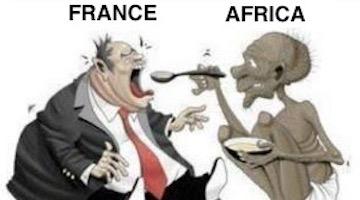 French bullying of Africa has been driven entirely by self-interest and greed.
 This book analyzes Early Modern English Drama as a form of cultural production in which the paradigm of Early Modern England was shifting to account for encounters with black Africans.
 Ideological exclusion and deportation from the United States, and how they has been consistently used as tools of political repression.
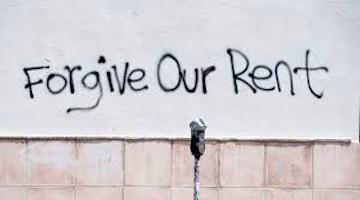 Over 40% of Black and Latinx households pay more than 30% of their income on rent, compared with 25% of white households.
 Black Agenda Radio for Week of July 19, 2021 Class Struggle Shapes Haiti Political Conflict


