A Black Agenda Radio commentary
by BAR Executive Editor Glen Ford
 The institutional banking practice of racist home mortgage interest gouging guarantees that successive generations of African Americans will lag further behind their white peers in wealth accumulation. Predatory lending ruins the life-chances of even the progeny of Blacks earning more than $150,000 a year, seven of ten of whom pay high interest rates on their homes, compared to only ten percent of whites in the same income bracket. The Black middle class is largely devoid of equity to finance the upward mobility of their children.
by BAR Executive Editor Glen Ford
"The high interest rate tax is subtracted every year from the future fortunes of our children."
It is common among white folks to assert that overt racism is a thing of the past, and that Blacks should "get over it" - stop complaining - and adjust to a "race neutral" America. Corporate media, corporate-owned politicians and even lots of Black politicians point to a Black "middle class" that is supposedly larger than it's ever been as evidence that African Americans have finally "arrived."
But the numbers tell a different story. The sub-prime lending crisis that broke into national headlines last month is not just a banking crisis, but the strongest indication that the vaunted "Black middle class" is far more insecure, far less capable of passing on wealth to its children, than the wishful narrative would have us believe.
Home ownership is the primary means of passing on wealth to one's descendants, in the form of equity. Because of racist housing policies in every generation since Emancipation, Black Americans have been denied effective access to this mode of wealth creation. The result: the median white family possesses eight to twelve times the wealth of the median Black family. This is the kind of wealth that finances college educations, starts young people out in business - in short, the "bootstrap" that people need to hoist themselves up in society, and pass on more wealth to their children. However, this portal to prosperity is systematically blocked to most Black people, as dramatically shown in the current sub-prime lending fiasco.
"Whole Black neighborhoods that look like prosperous ‘middle class' enclaves are, in fact, devoid of equity."
A study of mortgage lending practices in Greater Boston reveals that 71 percent of Black families with household incomes of more than $150,000 a year were paying high interest rates on their mortgages. Less than ten percent of whites in Greater Boston paid high interest rates.
Understand the meaning of these numbers. Even a relatively prosperous Black family making four times the median income pays a tax for the privilege of living in a home they can nominally call their own. That high interest rate tax is subtracted every year from the future fortunes of their children. There is far less home equity to borrow against to send the kids to college, or to finance a start-up business concept thought up by a brilliant son or daughter. Seventy percent of upscale Blacks pay this tax, compared to less than ten percent of whites in the same income bracket. It doesn't take a rocket scientist to predict the societal results that will accrue 20, 40 and 60 years from now: escalating white upward mobility, and a continuing downward spiral of African Americans. Current banking practices guarantee that ever-greater racial wealth disparities will be locked into the American future. We're not talking about the legacy of past discrimination, but contemporary institutional racism that manifests itself in a regressive tax on Black home ownership - a tax on the economic future of Black people.
For African Americans making far less than $150,000 a year, the future is bleak, indeed. The entire banking structure is arrayed against them and their children. Whole Black neighborhoods that look like prosperous "middle class" enclaves are, in fact, devoid of equity, because of race-based interest gouging. The bankers are stealing from our children, and there will be hell to pay, from now on.
For Black Agenda Radio, I'm Glen Ford.

 The reactionary government of the Dominican Republic has continued to pursue its racist policies against Haiti, deporting Haitians while exploiting the nation for its economic gain. Widespread sexual…
 Florida’s ban takes effect May 1, 2024, and the fate of Arizona’s abortion access is in the throes of legal, political, and legislative battles.
 President Bola Tinubu’s lifting of fuel subsidies and liberalization of currency trade has pleased the IMF and increased hunger in Africa’s most populous country.
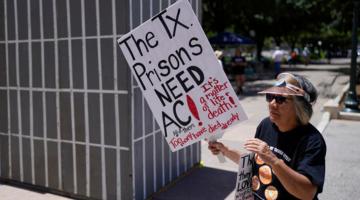 Incarcerated People in Texas Weather Extreme Heat in non-Air Conditioned Prisons.
 We revisit BAR’s 2017 analysis of the protection afforded Rwanda’s Paul Kagame by the human rights industrial complex and continue our discussion with BAR’s poet in residence about his upcoming…


