A Black Agenda Radio commentary by BAR editor and columnist Jared A. Ball
The Media Reform Conference and Democracy Now! share common characteristics: they are the best that the white left has to offer, and profoundly inadequate. Democracy Now! doesn’t just shortchange people of color, but unions as well. And the politics of periodic Media Reform conferences are as blindingly white as the corporate variety. “Black and Brown radicalism is omitted culturally by the same mechanisms through which Black and Brown radicalism is omitted politically.”
Race, Class, Unions and Media “Reform”
A Black Agenda Radio commentary by BAR editor and columnist Jared A. Ball
“Even the best news media that the left has to offer is still a space inhospitable to left-of-center Black politics.”
There is truly good reason for friends to remind me of my having gone back on a previously made promise to stop attending the very white and liberal National Conference for Media Reform. Again the conference gathered, this year in Boston a couple of weeks ago, and again nearly all of the Black and Brown people I spoke to expressed disappointment at being present but not so much heard. One friend promised to smack me and anyone else he hears about coming back in the future. Another more prominent Black woman within this and other related political struggles whose experience and work truly deserves more credit and attention than she gets simply raised her tired eyes above her glasses and asked me with all the frustration and fatigue in the world, “Jared, why do you come here?”
I told her it was because I get to see her and many others I truly admire and who I get to see too infrequently. I also told her that I come because there is legitimately a ton of great information and insight to glean from these events. Information, not so much analysis. But ultimately I told her I go because I hope it will lead to more of us doing what we need to do to collectively bring more focus to the struggles of Black, Brown and Indigenous communities in this country. So once again I am left with another critique of a so-called “movement” that I again will hope help inspire me and us to do more to do what we have to do to organize our media and political work to have greater impact.
So sure, I participated on a panel about the troubled state of hip-hop politics and we all made points regarding this and the fact that finding air time for thoughtful rap music is as difficult as finding space for any thoughtful Black or Brown politics. I made sure to be clear that this was not for any lack of either but was the result of an overwhelming fear of such expression even among the white Left. Black and Brown radicalism is omitted culturally by the same mechanisms through which Black and Brown radicalism is omitted politically. Hip-hop is reduced sonically to the same narrow nonsense imposed upon its discussion politically by the academic and journalistic community. And, as we had to repeatedly point out, this was also the case in spaces occupied by white liberals who claim differences between themselves and the mainstream or right wing. And when I mentioned how the media darling of the left, Democracy Now!, was actually worse than the mainstream Meet the Press in terms of Black participation several took note even if not all took it easy.
“Finding air time for thoughtful rap music is as difficult as finding space for any thoughtful Black or Brown politics.”
My point was and is simply that even the best, and it is the best, news media that the left has to offer is still a space inhospitable to left-of-center Black politics. And while this tendency seems solidly in place there is yet another way to see it. As BAR has long-ago reported, participation, particularly Black female participation, in this country’s labor unions is percentage-wise higher than any other segment of the population. So to now find that coverage of labor unions by the leading institution of the white left seems as bad as that of the mainstream shows yet another reason for members of the nation and world’s majority to be concerned.
John Nichols is a leading founder of and spokesperson for the media reform movement. During one of his talks at this year’s conference he pointed out the absence of coverage of labor unions in the nation’s liberal mainstream press, noting that rarely do they mention unions at all and more infrequently than that do they mention unions by name. Nichols also pointed out the fact that it is too easy to pick on right wing media for this kind of criticism because, as he said, even without the radical right media world the liberal mainstream would be as bad as it is. But is this also true of the white left who claim difference from that liberal mainstream?
Well, looking at Democracy Now!, the flagship white left news media program, during the calendar year prior to this most recent up-tick in coverage due to the labor strife in Wisconsin we find that out of roughly 250 potential programs only 30 or 12% mention labor unions at all and only 9 or 3.6% mention them by name.** In yet another potential area for the Black and Brown left to impact the national discussion there is, again, a similar blind eye. It is also one more in a long line of examples pointing to the need of the world’s majority to work more closely to increase the impact of our journalism and media work. We and the world desperately need it.
For Black Agenda Radio, I’m Jared Ball. Online visit us at BlackAgendaReport.com.
Dr. Jared A. Ball is author of I Mix What I Like: A Mixtape Manifesto (AK Press) and can be reached atIMixWhatILike.com.
** Democracy Now! online archives were searched between January 1, 2010 and the end of January, 2011. The show airs each weekday, hence the “roughly 250 potential programs,” out of which those that mentioned “labor unions” or “unions” in this country at all were counted. Those that made even one reference and in passing were counted. This actually gives undue credit to the program considering that many of these references accompanied no real discussion and less actual information about or perspective of union members regarding the issues covered in that program. The following program dates had any mention of unions and those in bold specified them by name:
1/4/11, 12/20/10, 12/13/10, 1/6/11, 12/29/10, 12/23/10, 12/10/10, 12/2/10, 11/30/10, 11/2/10, 10/28/10, 10/14/10, 10/4/10, 10/1/10, 9/24/10, 9/14/10, 9/20/10, 8/25/10, 7/27/10, 6/22/10, 6/18/10, 5/31/10, 5/18/10, 4/16/10, 3/26/10, 3/25/10, 3/18/10, 2/16/10, 1/15/10, 1/13/10

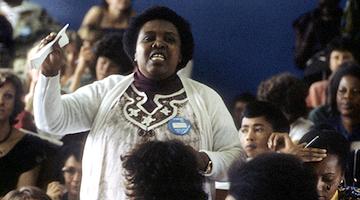 In 1985, African women tried to warn us about a world in crisis. Did we listen?
 Priest App
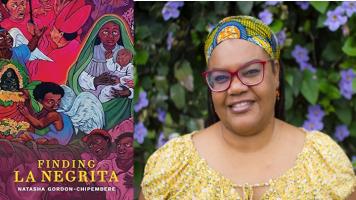 This week’s featured author is Natasha Gordon-Chipembere. Gordon-Chipembere holds a PhD in English from the University of South Africa. She was born in New York to a Costa Rican mom and a Panamanian…
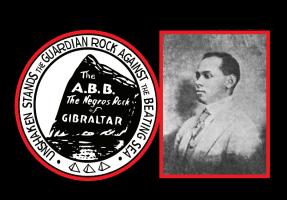 The author makes the case that liberalism is a dead end and that socialism is the only tool for Black liberation.
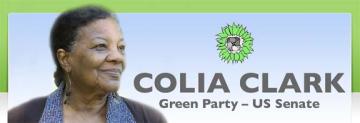 Colia Clark was a veteran of the Black Liberation Movement who worked with Medgar Evers, who was also affiliated with the NAACP and who served as Executive Secretary of the Student Non-Violent…


