A Black Agenda Radio commentary by Jared Ball
Wars produce veterans on both sides. Thus, opponents of the wars the U.S. government has waged since its inception against “enemies” within its territory are also veterans. “Nat Turner and his compatriots were once described as “insurgent[s]” as are those fighting today against the U.S. in Iraq, Afghanistan and elsewhere.” Nat Turner was a veteran, as was Sitting Bull. So are the dozens of political prisoners still held in the American Gulag. Let us commemorate their sacrifce, too, on November 11.
Redefining Veteran’s Day
A Black Agenda Radio commentary by Jared Ball
“Those we know as political prisoners are indeed veteran prisoners of war.”
I am officially a veteran. Like many I was conscripted by this country’s “poverty draft” and its associated judicial-military pipeline, the one that encourages military time over jail time, and then immediately pressed into service of this nation’s imperial projects. And while I recognize this reality and can still appreciate the position in which people like me have found themselves and the suffering some have endured for it, I prefer we praise another kind of veteran. On November 11th let us commemorate those who have fought, and still fight, those who have been exiled, assassinated or imprisoned as veterans of the many on-going wars against U.S. and Western imperialism. More than any they deserve our reflection and support.
Veteran’s Day began as “Armistice Day,” commemorating the end of what we now call World War I, what was called then the “war to end all wars.” But rabid empires can only expand. There can never be an armistice. So after a second so-called World War they simply dropped the “Armistice” and made it about the oh-so-many veterans that would be created and re-created by the permanency of war. This permanence of the nation’s war machine is evident in the permanence of this nation’s thirst for war. Simply interlace lists of American wars against Europe between 1776 and the massacre at Wounded Knee in 1890 which “settled” the matter of control over this land with lists of American invasions into every pocket of Latin America and the Caribbean from then until now. Then add the lists of repression of hundreds of African uprisings against enslavement and the domestic policing of internally-held colonies and suppression of labor organizers and you won’t find a 10 year period in this country’s history when it wasn’t at war. And all of this warfare creates veterans on all sides.
“The permanence of the nation’s war machine is evident in the permanence of this nation’s thirst for war.”
In the U.S. alone we currently have dozens of political prisoners still incarcerated for their veteran participation in these wars. We certainly have thousands more here and around the globe who have, in some form of solidarity, been engaged in anti-imperial, counter-terrorism but whose names and stories we don’t know and whose political legacy we have not carried on. Perhaps an aggressive attempt to redefine the state’s propaganda could help. Power over definition is essential. This is why Nat Turner and his compatriots were once described as “insurgent[s]” as are those fighting today against the U.S. in Iraq, Afghanistan and elsewhere. And it is also why, more than a century after Nat Turner, this same concept, applied to his political descendants, resulted in the FBI’s Counter Intelligence Program (COINTELPRO) application of “counter-insurgency” tactics against domestic targets. Malcolm X did say that, “the police do locally what the military does internationally.”
This, of course, is not mere semantics. Those we know as political prisoners are indeed veteran prisoners of war. These POWs, as former Black Liberation Army member and current political prisoner Jalil Muntaqim has explained, come from the Black, Indigenous and Latin American “nations” held in “domestic (neo) colonialism.” They, along with those oppressed along class lines, are “all fighting wars of national liberation, seeking independence and sovereignty from capitalist exploitation.” In fact, during the sentencing for Muntaqim, Albert ‘Nuh’ (Noah) Washington and Herman Bell, all members of the Black Liberation Army, the judge said as much, that if these are prisoners of war then they should see themselves as having been “captured by the enemy.” And so our commemoration of a Veteran’s Day should incorporate work to free our prisoners of war and to finally force this country into an armistice. This is the least we can do.
So as symbolism goes it is indeed fitting then that this year Veteran’s Day coincides with the release of Clint Eastwood’s J. Edgar, a film that is already said to be little more than praise to a “brilliant patriot” who was merely an “impediment to the civil rights movement” and who may have been gay. Yes, Veteran’s Day and J. Edgar, one praises those who do internationally what the other did domestically.
For Black Agenda Radio, I’m Jared Ball. Online visit us at BlackAgendaReport.com.
Dr. Jared A. Ball is an associate professor of communication studies at Morgan State University in Baltimore, MD. and is author of I Mix What I Like! A Mixtape Manifesto (AK Press). He can be found and reached online at: IMIXWHATILIKE.COM.

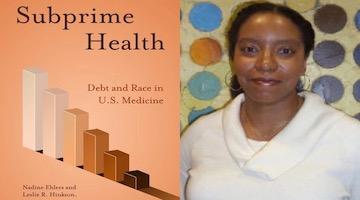 Race-based medicine in the US has solidified health inequality and is bound up with indebtedness.
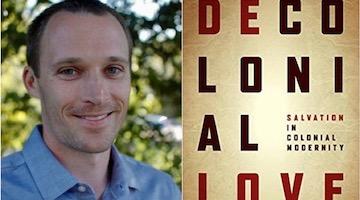 Colonial relations of power and ways of classifying human persons that were essential to political colonialism have persisted.
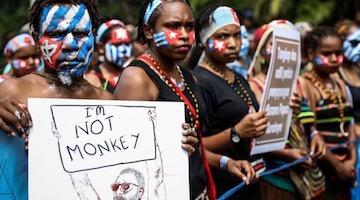 Papua and West Papua are subjected to violence and habitual repression from the Indonesian central authorities.
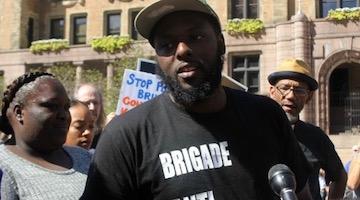 We figured out pretty fast that hashtags don’t move white supremacists, and petitions don’t change policy for Black lives.
 Viewing musicians as exploited workers and as beleaguered contractors helps contribute to a better understanding of their art form and art more generally.



