A Black Agenda Radio commentary by Glen Ford
After giving California prison officials weeks to demonstrate they were serious about negotiating five core demands, inmates at Pelican Bay state prison are preparing to go on hunger strike, again. The state seems intent on expanding its regime of torture and arbitrary solitary confinement. “Prison official Scott Kernan said the system planned to expand its solitary confinement regime to include all inmates categorized as being part of any ‘disruptive group.’”
California Prisons Hunger Strikes to Renew
A Black Agenda Radio commentary by Glen Ford
“Many of the Pelican Bay inmates are in a weakened state of health.”
Inmates at the infamous Security Housing Unit of California’s Pelican Bay state prison say they will go back on hunger strike on September 26 core demands
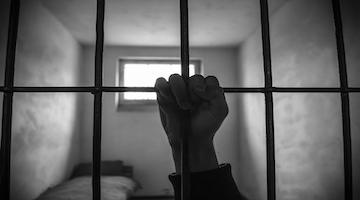
On July 20, inmate representatives voted to temporarily suspend their strike in order to give prison officials “a couple of weeks” to make good on their promise to give serious attention to the inmates five “core demands,” including clean, adequate and wholesome food, an end to group punishment, and a chance to get out of long-term isolation from human contact, in which inmates are held in solitary for 23 hours a day. But the weeks went by, and inmates finally concluded that prison officials were not about to meet any of the core demands. On September 1, Pelican Bay inmate representative Mutope Duguma told the San Francisco Bay View newspaper that the hunger strike would resume. There are indications that inmates at Calipatria State Prison will also be involved.
Supporters on the outside caution that this round of protest will be different than the first, both because many of the Pelican Bay inmates are in a weakened state of health, and because California authorities are anxious to keep the lid on the protest and avoid embarrassment for the state. On some levels, the authorities have gone on the offensive, claiming their practices are not torture, but meet constitutional standards, and that it is necessary to use the harshest methods to control what they claim are 3,000 gang “generals” – not captains or majors, but “generals” – who would otherwise kill guards and other prisoners on sight.
“Prison officials claim it is necessary to use the harshest methods to control what they claim are 3,000 gang ‘generals.’”
Rather than subjecting their policies to an honest review, prison officials seem prepared to turn up the heat. In a meeting of the California State Assembly’s Public Safety Committee, prison official Scott Kernan said the system planned to expand its solitary confinement regime to include all inmates categorized as being part of any “disruptive group.” That’s a code word for gangs, but in reality can mean anything the authorities want it to mean, including politically-inspired inmates or any of the tens of thousands of prisoners who are arbitrarily labeled as gang-affiliated.
Faced with such state intransigence, the inmates at Pelican Bay see no alternative but to resist. Prison officials justify their torture regime, describing the Securing Housing Unit, or SHU, inmates as the “worst of the worst.” These officials preside over a system that is in the business of dehumanizing men, on an industrial, military scale.
Pelican Bay and the other torture chambers of the American Prison Gulag are among the theaters of war waged against Black and brown people in the U.S., a war that has plunged millions into captivity – including lots of whites as collateral damage. Those confined to the SHU are the treated as the equivalent of enemy combatants, with no rights, and no protection. Human dignity cannot survive in a nation that tolerates the existence of Pelican Bay.
For Black Agenda Radio, I’m Glen Ford. On the web, go to www.BlackAgendaReport.com
BAR executive editor Glen Ford can be contacted at Glen.Ford@BlackAgendaReport.com.

 The ruling class is sending us a message,“You’re either with us or against us.”
 “Local governments offer subsidies, miss out on tax revenue, starve their citizens of vital social services, and fatten the profits of these modern-day robber
 “Americans can expect to live shorter and sicker lives, compared to people living in any other wealthy democracies.”
 “Poor people should not be confined in a death machine.”
 “I represent a new generation of freedom fighters who have learned from the mistakes of our fallen ancestors.”



