A Black Agenda Radio commentary by Glen Ford
More people die because of U.S. military and economic attacks in places like Somalia and Congo than in the more widely acknowledged wars of American empire. These “Other Wars” consume “hundreds of thousands – millions – of lives, and have resulted in, or contributed to, the two worst humanitarian crises in Africa over the past four years.” President Obama’s announcement of $105 million for Somalia is a cynical diversion from the fact of U.S. use of food as a weapon of war.
Starving Somalia: U.S. “Other Wars” Kill More than Afghanistan, Pakistan and Iraq
A Black Agenda Radio commentary by Glen Ford
“International aid agencies feared retribution from the Americans if they distributed food in Shabab-held territory.”
On August 20, the Black is Back Coalition for Social Justice, Peace and Reparations has called for an International Day of Action on the “Other Wars.” People’s first question is: What do you mean by “Other Wars.” Any explanation must include the U.S. war against Somalia, as part of the American project to militarize and dominate the Horn of Africa.
It is an undeclared war, like all of America’s “Other Wars” – the ones that the old-line, white-dominated U.S. anti-war movement doesn’t feel rate inclusion in their list of wars. Yet, these wars consume hundreds of thousands – millions – of lives, and have resulted in, or contributed to, the two worst humanitarian crises in Africa over the past four years. The U.S. has stolen not only the lives of the people of Somalia, but their sovereignty over their homeland. If that’s not war, then the very word is meaningless.
Somalia had a semblance of peace, and a government to protect the peace, for a very brief time before the U.S. armed and instigated an Ethiopian invasion of the country, in late 2006. They crushed and scattered the Islamist government – called the Islamic Courts – whose youth wing, the Shabab, then mounted a guerilla resistance. Almost immediately, the country was plunged into what the United Nations called “the worst humanitarian crisis in Africa.” The Americans used foreign soldiers from Uganda and Burundi, its African clients, to prop up a pitiful, fraudulent mini-state in the capital, Mogadishu. Unable to control the countryside, or even most of the capital, the U.S. then made it extremely difficult for foreign food providers to reach the people in Shabab-held areas. This set the stage for the next great humanitarian crisis, when the worst drought in 60 years struck much of the Horn of Africa, threatening tens of millions in Somalia, Kenya, Ethiopia and Djibouti. But the Somalis were the most exposed, because international aid agencies feared retribution
“Obama’s $105 million is less than half the assistance the U.S. sent to Somalia back in 2008.”
Now, President Obama has announced, with great fanfare, that the U.S. will set aside $105 million
Six million have died in Congo because of American proxy wars. Haiti’s sovereignty and dignity was snatched away by American force of arms. Colombia ranks number one on the planet in the number of displaced persons – most of them Indigenous and Afro-Colombians – as a result of U.S. colonization of that country. America’s “Other Wars” are, in fact, more destructive of human life than the recognized conflicts in Afghanistan, Pakistan and Iraq. Since Obama claims not to be at war with Libya, maybe that should also be called one of the “Other Wars.”
The Black Is Back Coalition’s August 20 Day of Action unfolds in cities around the United States and abroad. In New York, a teach-in will be held at St. Mary’s Church, in Harlem. Educate yourself about America’s many, simultaneous wars against humanity: the “Other Wars.” For Black Agenda Radio, I’m Glen Ford. On the web, go to www.BlackAgendaReport.com
BAR executive editor Glen Ford can be contacted at Glen.Ford@BlackAgendaReport.com .

 The Fourth Pan-African Congress in New York in 1927 was the first held in the Americas, and the first organized by women.
 Ann Garrison ends her reporting from the Horn of Africa with updates on the Grand Ethiopian Renaissance Dam and the conflict between Ethiopia and the TPLF.
 Reading, writing, ‘rithmetic of rifles (for Uvalde and other schools…)
 BAR Book Forum editor Roberto Sirvent and Julian Akil Rose discuss community organizing, Black Queer Feminism, the struggle for police and prison abolition, and an end to militarism.
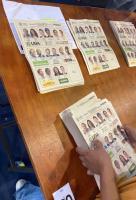 "From May 26 to May 31, I was in Cali, Colombia serving as an election observer with an international delegation of mostly Black women. This is a preliminary report."


