A Black Agenda Radio commentary by Glen Ford
In the immediate aftermath of Dr. Martin Luther King’s murder, myths were made and paradigms altered. To revisit the week of King's assassination is to take a personal stride across a chasm, from one epoch to the other. This crack in time opened for the author when he was an 18-year-old soldier.
A Crack in Time: April 1968
A Black Agenda Radio commentary by Glen Ford
“The Black clergy of Columbus, Georgia, like their brethren in most cities of the South, had collectively shut their doors to the Southern Christian Leadership Conference in the early Sixties.”
On Thursday, April 4, 1968, I was a paratrooper with the 82nd Airborne Division, which was deployed in a field exercise in the woods of the sprawling army reservation at Fort Bragg, North Carolina. Large tents in the division headquarters section, where my platoon acted as security, were filled with officers studying maps of Washington, DC, in preparation for a hypothetical occupation of the nation’s capital. That evening, we learned that Dr. Martin Luther King, Jr., had been assassinated in Memphis. We all knew what that meant. There was little doubt that our unit – which was 60 percent Black at the infantry level – would soon be going somewhere to impose order on other outraged Black people. The next day, Friday, we packed up our gear and moved back to barracks.
But, inexplicably, the commanding general failed to confine the troops to the post. Lots of us, myself included, took advantage of the oversight and left Fort Bragg. On Sunday morning, April 7, I was hundreds of miles away, in Columbus, Georgia, where my father was a very popular radio disc jockey. On that Sunday morning, scores of the area’s Black preachers were lined up outside the radio station, waiting their turn at the microphone. Each one affirmed how he had been a staunch supporter of Dr. King and his work – and every one of them was lying.
The truth was that the Black clergy of Columbus, Georgia, like their brethren in most cities of the South, had collectively shut their doors to the Southern Christian Leadership Conference in the early Sixties when Dr. King was urgently seeking a suitable southern city in which to deploy his direct action strategy. As a Baptist preacher, King needed an invitation from another preacher to set up shop. Columbus, Georgia was at the top of his list. But the local Black clergy formed a solid wall of opposition to King’s coming to town, for fear of upsetting their accommodation with the local white power structure. Dr. King wound up in the much smaller town of Albany, Georgia, where one preacher had sent him an invitation, in 1962.
“We had only one mission in Washington: to prevent the white troops from doing harm to Black civilians.”
But there they were, the assembled men of GAWD, three days after King’s murder, inventing, right there on the spot, the myth of the Black church as Dr. King’s stalwart soldiers in the army of social change in the South – when the truth was, for the most part, diametrically the opposite.
Monday morning, I was back at Fort Bragg. The fires had been raging all weekend in a hundred cities – although not Columbus, Georgia. I and other stragglers caught up with our unit in Washington, DC, where the officers already knew the street layout from their map studies out in the field just days before. The brothers of the 82nd Airborne Division considered that we had only one mission in Washington: to prevent the white troops from doing harm to Black civilians. There would be no repeat of the white New Jersey National Guard's lynch mob behavior in occupying Newark, New Jersey, a year earlier.
In Vietnam, Long Binh jail was filling up with Black soldiers and would explode in August with great loss of life. In a few years, mass Black incarceration would become national policy in the United States – payback for the Black Freedom Movement in all its manifestations.
For Black Agenda Radio, I'm Glen Ford. On the web, go to www.BlackAgendaReport.com.
BAR executive editor Glen Ford can be contacted at Glen.Ford@BlackAgendaReport.com.

 The following is a manifesto in the full sense of the word; a Black anarchist’s proposal for a sweeping approach to a nation and world without capitalism.
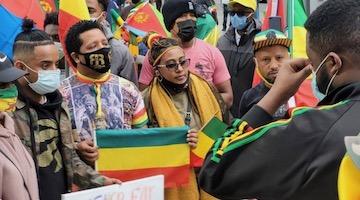 The US bid for sanctions against Eritrea was rebuked by the UN Security Council, so the imperial bloc had to settle for European sanctions against the fiercely independent African government.
 $13 billion aircraft carriers, $10 pencils and $500 hammers, renamed “portable hand-held transcribing devices” and “impact fasteners;” so war-profiteer pimps—war
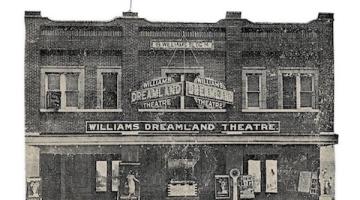 In 1921 thousands of whites attacked the Black population of Tulsa, Oklahoma with machine guns, airplanes, fire and pure hatred, killing at least 300.
 More policing rarely results in justice for anyone, and only puts Black, Indigenous, and other communities of color (BIPOC), including Asian people, at risk for more violence.



