A Black Agenda Radio commentary by Glen Ford
The Black poet-author-activist Amiri Baraka has turned his pen on Barack Obama, a man he defended like a pit bull as recently as…it seems like yesterday. “Baraka kept up the abusive barrage against anti-Obama ‘rascals’ of the left, right up to the president’s assault on Libya.” But, a change of heart is not sufficient. Baraka and a bunch of other ex-Obamites need to practice some serious and public self-criticism.
Amiri Baracka and Obama – Then and Now
A Black Agenda Radio commentary by Glen Ford
“All of a sudden, Obama was ‘a negro selling his own folk, delivering us to slavery.’”
It took a savage assault on Libya by America’s First Black President and his European colonial allies – but Amiri Baraka seems to have finally given up on Barack Obama. Sorry, but I’m not one of those who is ready to say: All is forgiven, Brother Baraka. Because, although he has given Obama a tongue-lashing, in his inimitable, slashing and gutting style in the poem “The New Invasion of Africa,” Amiri Baraka has neglected to criticize himself for serving as a Left attack dog for Obama for more than three years. During that time, Amiri Baraka excoriated and defamed Obama’s “Black and progressive critics” as “anarchists,” “criminal” and whatever other insults traveled from his mind to his mouth. He said that it “is criminal for these people claiming to be radical or intellectual to oppose or refuse to support Obama.” That was back in June, 2008. He called Green Party candidate Cynthia McKinney a “pipsqueak” and disparaged as “rascals” all Blacks who did not swear fidelity to the Obama campaign. “We should be supportive of what Obama is trying to do,” said Baraka. “We should spend our energy opposing the far right and the Republicans.” Obama was not to be challenged. Instead, Baraka declared, “It is time for the left to really make some kind of Left Bloc to support Obama.”
Thus, Amiri Baraka was among those who proposed to create a left flank for Obama, in order to shut down left criticism of Obama. The theory was that Obama would help the left if the left helped him become president, with no questions asked. Which is really too stupid to be called a “strategy” – as history was very quick to demonstrate.
“Baraka excoriated and defamed Obama’s ‘Black and progressive critics’ as ‘anarchists,’ ‘criminal’ and whatever other insults traveled from his mind to his mouth.”
Amiri Baraka kept up the abusive barrage against anti-Obama “rascals” of the left, right up to the president’s assault on Libya. Then, all of a sudden, Obama was “the negro yapping” to make imperial aggression “seem right” – “a negro selling his own folk, delivering us to slavery.”
Some of us who have been wise to corporate, center-right Obama for going on eight years consider Baraka’s recent epiphany to have come far too late for redemption. Others say, better late than never. But surely, his new position is incomplete without an explanation and recantation of his politics of the last three years.
Bill Fletcher is an even worse case. Fletcher was a founder of Progressives for Obama, with the same idea as Amiri Baraka: to shut down Obama critics on the left. But, you wouldn't know that to hear him now. Fletcher claims the left's mistake was not making demands on Obama from the beginning – without acknowledging his own role in preventing any such thing from happening.
New Black Panther Party leader Malik Zulu Shabazz, who put up a spirited, although weak, defense of Obama at one of our Great Debates in Harlem, right after the election, now shouts that Obama “represents the White Man” and that his wife ought to leave him.
And there are plenty of others, too many others, who used whatever influence they had to ensure that Obama was not challenged from Blacks and progressives in 2008 and the two dismal years that followed. Failure to provide a genuine self-criticism reflects not only on their judgment – which is already discredited – but on their character. For Black Agenda Radio, I'm Glen Ford. On the web, go to www.BlackAgendaReport.com.
BAR executive editor Glen Ford can be contacted at Glen.Ford@BlackAgendaReport.com.

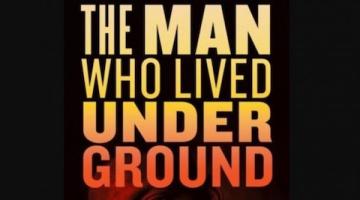 Richard Wright’s 1942 novel was testing the limits of what the white novel-reading public would have found imaginable.
 Writers, artists, community organizers and scholars have all contributed their analysis of the resource documents listed, below, and how they might be useful in assessing anti-Black structures arou
 Universities have become today’s companies and our cities their company towns.
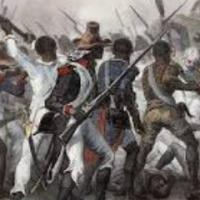 The Age of Revolution (1770–1850), bookended by the American and French Revolutions on the one side and the Revolutions of 1848 on the other, is widely viewed as the progenitor of the modern Euro-A
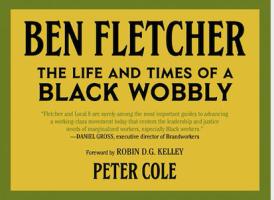 The struggle for workers’ rights in this country has been an ongoing battle for hundreds of years.



