A Black Agenda Radio commentary by BAR editor and columnist Jared A. Ball
Monopolies get over like fat rats no matter what the overall state of the economy – because they control the entire process. Competition is a farce, and the music industry is no different. “This is the kind of rivalry the powerful like. Coke and Pepsi, Democrats and Republicans, it assures success in the illusion of choice.”
The Music Industry Reloads: It’s Not Dead Because We Didn’t Kill It!
A Black Agenda Radio commentary by BAR editor and columnist Jared A. Ball
“The music industry won’t just die a slow natural death.”
Look around and you will find no shortage of people describing what they call “the death of the music industry.” Music sales are down and, therefore, the industry is done. On the political Left this is a great thing occurring as the result of homogenized music not appealing to audiences who along with artists are increasingly using the internet to revolutionize music distribution which offers more opportunity for communities to determine artist popularity. On the political Right this is the obvious result of street corner bootleggers and internet pirates terrorizing innocent artists and the legitimate business practices of record labels. But the fatal flaw in either analysis is that they’re nearly exclusively focused on sales, which ignores the social nature of profit or, in this case, the benefit derived from controlling popularity. Besides, the music industry won’t just die a slow natural death. We have to kill it.
A drop in overall sales says nothing about who owns what is sold or made popular through dominant media outlets. It also says nothing of how much money is still generated by those sales or who gets all of it. Sound familiar? Think Obama and austerity or Wisconsin and union worker cutbacks. Maybe an even better analogy is the 31 NFL owners who tell 2500 players that getting 50% of generated revenues is fair. That’s why they can afford a lockout. Sales can drop and they will be fine since they get most of what is sold. The music industry is the same, in fact, it is worse considering the benefits accumulated by the owners go far beyond money. Besides, if the industry were truly in such shambles and the risks were so great why are so many of the wealthiest individuals, private equity groups, conglomerates and banks all fighting so hard for their share of it?
“Sales can drop and they will be fine since they get most of what is sold.”
The music industry is fine financially. In fact, digital sales are improving and some now claim that those sales and other merchandising are “more than offsetting” declines in CD sales. Plus, plenty of folks appear to be happily buying in and swapping jobs and all making tons of cash while maintaining absolute control over popularity. This week it was Doug Morris, the super CEO music executive, who jumped from the number one music label in the world, Universal Music Group (UMG), to take a turn running number two, Sony Music Entertainment (SME). He isn’t alone. In fact, it is being said that this means a bitter “rivalry… for artists and executives” between the two music industry giants. And sure it is. This is the kind of rivalry the powerful like. Coke and Pepsi, Democrats and Republicans, it assures success in the illusion of choice. And in each case, even when sales or votes are off, the top executives make plenty of financial and social capital.
How bad can it be? Sony routinely has 60-80% of the most popular songs on radio each week and it is said that Doug Morris will now make $10 million a year. And for even the number three of the Big 3, Warner Music Group, its top executives Edgar Bronfman, Jr. and Lyor Cohen made a combined $83 million between 2005 and 2010 even as their company lost more than $400 million.
And its not just these individuals. They are the executive fronts for so many interlocked individual, corporate and banking entities precisely because of the financial, but even more so that social capital, that cultural control offers. And now, predictably, sales are going back up and so did Universal Music’s revenues go up two percent in 2010. And remember, that only represents six percent of their parent company Vivendi’s total holdings. Vivendi’s revenues went up six percent by itself in 2010 to roughly $40 billion. And better still, with Universal artists like Lil’ Wayne and Nicki Minaj on the radio 10,000 times a week who has to worry about hearing from Lah Tere or Skipp Coon? That also means no more Public Enemy or Bob Marley either. And that is, for them, priceless.
For Black Agenda Radio, I’m Jared Ball. Online visit www.BlackAgendaReport.com.
Dr. Jared A. Ball can be reached via email at: freemixradio@gmail.com.

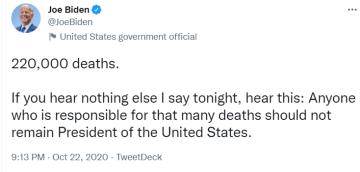 Presidential candidate Joe Biden promised action on issues that had broad public support. But once in office he refused to do what the people wanted.
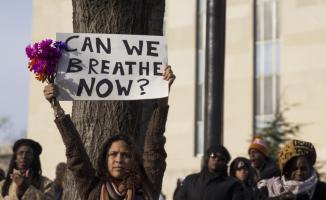 Like all of his predecessors, Joe Biden is in the pocket of fossil fuel corporations and other polluters. Environmental racism is a byproduct of this corruption.
 The use of the word democracy in this country is farcical. It is meant to hide that an oligarchy is in power.
 A remark by the former U.S. ambassador to Haiti fuels suspicion of American involvement in the assassination of president Jovenel Moise.
 The U.S. regime change effort in Nicaragua has failed. The people are determined to assert their rights of self-determination and the U.S. is not the only player on the world stage.


