A Black Agenda Radio commentary by BAR Executive Editor Glen Ford
What's a super-power to do when its puppet is too weak to wage a proxy war on the big guy's behalf? Starve the population, to make the whole country scream. The U.S. used the UN Security Council to sabotage the international body's aid program for Somalia, endangering the lives of millions. So much for Washington's doctrine of “humanitarian intervention.”
U.S. Pushes for Somalia Offensive, But Settles for Starving Somali Civilians
A Black Agenda Radio commentary by Glen Ford
“Washington’s Somali puppets have far too few troops to launch an offensive against anyone.”
The American-backed offensive in Somalia was supposed to be underway by now, based on months of Pentagon-planted stories in the corporate press. But there is, as yet, no offensive, because the puppet regime doesn’t even have enough soldiers to hang on to its little corner of Somalia’s capital city, Mogadishu. This is a big problem for the Obama administration, which is anxious to expand its imperial offensive from Yemen across the Red Sea to the Horn of Africa. Unfortunately for Washington, its Somali puppets have far too few troops to launch an offensive against anyone.
Unable to make headway against the Shabab Islamic militants that control 95 percent of south and central Somalia, the Americans step up their war against the civilian population, withholding food from the millions that depend on foreign aid to keep from starving.
The subjugation of Somalia is a Euro-American affair. The European Union is paying for the training of 2,000 Somali recruits in Uganda, Washington’s always-eager mercenary best friend in Black Africa. Uganda also provides thousands of its own troops to guard the Mogadishu airport, without which the puppet Somali reg ime would be cut off from the outside world.
Another 2,500 new Somali recruits are in neighboring Kenya , but there’s a problem getting them into action, as well. Many of the ethnic Somali recruits are Kenyan citizens. The traditional Somali homeland includes huge chunks of Kenya and Ethiopia , as well as the French and American outpost in Djibouti. The Kenyans are afraid they will lose control of these Somali soldiers if they are turned over to the regime in Mogadishu. Kenya wants their Somalis to guard the Kenyan border against other Somalis, and has refused to turn them loose for service to the U.S. -backed puppet government.
“The Americans used one section of the United Nations to attack the UN aid mission in Somalia.”
Ethiopia, which invaded Somalia in late 2006 at the instigation of the United States, is also careful which Somalis get guns and training, and where they are stationed. Ethiopia has vetoed the deployment of some Somali militias, fearful they will wind up turning on Ethiopia . But the Ethiopians have also armed other Somali militias that promise to fight the Shabab Islamists in Mogadishu.
Frustrated that unlimited American money and military resources still can't get an offensive going against the rag-tag Shabab, Washington earlier this year decided to starve out the Somali population, to force the Shabab to surrender. But United Nations and international food agencies loudly protested, forcing U.S. Ambassador to the UN Susan Rice to temporarily back off from charges that United Nations food was being diverted to the Shabab. The Americans then made an end run around the United Nations Secretariat structure, using the more compliant Security Council apparatus to issue a “report” backing up U.S. claims. Thus, the Americans used one section of the United Nations to attack the UN aid mission in Somalia. The ultimate casualties are, o f course, the millions of displaced and hungry Somalis who were plunged into humanitarian crisis by the U,S. and Ethiopian invasion, more than three years ago.
BAR executive editor Glen Ford can be contacted at Glen.Ford@BlackAgendaReport.com.

 A book by Dominican politician and historian Juan Bosch explains the connections between U.S. foreign policy, permanent war, and the defense industries.
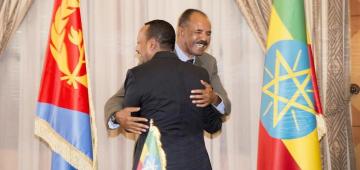 The US seems willing to accept Ethiopia’s defeat of its former puppet, the Tigray People’s Liberation Front (TPLF), if it can just drive a wedge between Ethiopia and Eritrea.
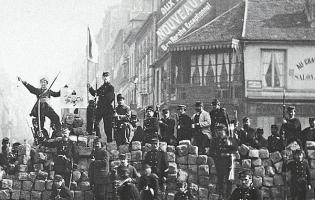 Music in Montreal: Our song, “The Internationale!”
 This week’s featured author is Cristina Mejia Visperas. Visperas is Assistant Professor of Communication at the University of Southern California. Her book is Skin Theory: Visual Culture and the…
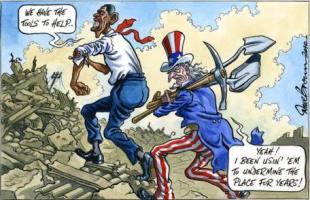 If Haiti is "the poorest country in the hemisphere" it is because imperialist policies continue to impoverish and destabilize that nation.


