A Black Agenda Radio commentary by Glen Ford
Embedded corporate media rose to new heights of non-journalism as, on command, they conjured up an end to (America's) Iraq War based on nothing more than a change of nomenclature. Combat soldiers woke up one morning as "advise and assist" troops whose "bases" were magically transformed into "fortified compounds." Still, the U.S. empire has no intention of leaving Iraq - especially when there are so many available euphemisms for staying.
U.S. Withdrawal from Iraq is Fiction
A Black Agenda Radio commentary by Glen Ford
"The United States is an empire that has never voluntarily withdrawn from any of its bases or 'fortified compounds.'"
It was perversely hilarious to observe the corporate media, last week, as they collectively celebrated an event that never happened. "Last combat soldiers leave Baghdad" read the Washington Post headline, with variations on the same fantasy theme in Newsweek, UPI, Reuters...virtually everywhere. One had to turn to the Army Times newspaper for an accurate headline:"Combat Brigades in Iraq Under Different Name."
It is a wonderment to watch the blind enthusiasm with which the corporate media embrace name changes as if they are actual facts. As the Washington Post announced the departure from Iraq of the 2nd Infantry Division's 4th Stryker Brigade, describing the unit as the "final U.S. combat brigade to be pulled out of the country," seven brigades just like the 4th brigade remain on Iraqi soil. There is no difference in armament, equipment, configuration and training between the 4th Stryker Brigade that exited for Kuwait, and the Stryker Brigades that remain behind - except, the name change. The in-country Stryker units are now called "Advise and Assist Brigades." The two National Guard infantry brigades left behind in Iraq have also undergone a nomenclatural transformation: they are no longer "combat" units, but "security" forces.
There are also 4,500 Special Forces troops in Iraq, who are prepared to train other soldiers in the daytime and kill all night long.
Army Times readers are primarily military people, their families, and retirees - folks that know a little something about the U.S. military and have a strong interest in learning the plain truth about the realities of U.S. deployments in the world. The Army Timesappears to respect their intelligence. The New York Times and its sister publications, on the other hand, seem to think that their readers will believe anything, no matter how ridiculous on its face. For example, The Times has adopted the new practice of calling U.S. bases in Iraq "fortified compounds." Combat soldiers, you see, live on bases. Personnel involved in advising and assisting Iraqis live in fortified compounds.
"Powerful figures in the Obama administration say they are confident they can talk the Iraqis into allowing 10,000 uniformed American troops to stay in the country after the deadline."
In addition to the fantasy reporting, American military and civilian authorities are conducting fantasy arguments behind closed doors about whether the U.S. is going to withdraw all of its military forces, regardless of the nomenclature, by the end 0f 2011 - as required by solemn agreement with the Iraqis. One faction favors deploying a force of up to 10,000 mercenaries, complete with their own armored trucks, air force and missile-firing drones. But powerful figures in the Obama administration say they are confident they can talk the Iraqis into allowing 10,000 uniformed American troops to stay in the country after the deadline. Certainly, billions of dollars in bribes can sometimes work wonders - but U.S. plans for an eternity in Iraq have repeatedly been thwarted by the Iraqi people, themselves.
One thing is perfectly clear: the United States is an empire that has never voluntarily withdrawn from any of its bases or "fortified compounds." The Americans are playing word games. They will leave Iraq only when they are forced to do so.
For Black Agenda Radio, I'm Glen Ford. On the web, go to www.BlackAgendaReport.com.
BAR executive editor Glen Ford can be contacted at Glen.Ford@BlackAgendaReport.com.

 I’m a Seoul Man, da-da-da—dat-da-da-da I’m a Seoul Man, da-da-da—dat-da-da-da I’m also a Pyongyang, Managua, Manilla, Teheran Man, too—As opposed to despot As I am to coup!
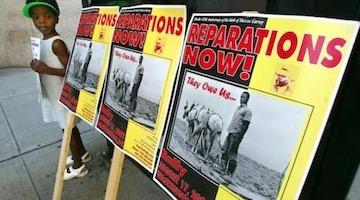 Reparations should not be a topic for national discussion until there is something akin to a consensus among black people about what to demand and how to do it.
 Western propaganda about the Rwandan Genocide has been so triumphant that a Rwandan Hutu on trial in the West faces inevitable jury bias.
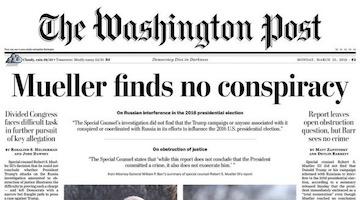 The Mueller Report’s conclusion cannot reverse the damage that has been done to left journalism and activism by the fake news witch hunt.
 This week readers discussed Tulsi Gabbard’s relationship with the Democratic Party and the New York Times coverage of Africa. Letters came for



