A Black Agenda Radio commentary by Glen Ford
It is a false love of Black people that compels so many African Americans to forgive Black notables of the crimes they commit against Black people. In terms of the national security state and drug enforcement, Attorney General Eric Holder's Justice Department is in many ways identical to its Republican predecessor. Yet, too many Black misleaders "want only to bask in the glow of the first Black Attorney General."
Racial Narcissism Vs. Love of Black People and Justice
A Black Agenda Radio commentary by Glen Ford
"The Newburgh travesty of justice is near-identical to the Bush administration's successful prosecution of poor, harmless Black men in Miami, Florida - only the complexion of the Attorney General is different."
When a people are presented with new opportunities to make a choice - a choice they were never before permitted - there is the natural tendency to celebrate the new opportunity, while giving little thought and analysis to the actual substance of the choice at hand. Certainly, we have observed this phenomenon in the history of Black people in the United States. Having had so few choices in a racist society, we have reveled in those opportunities that came our way, sometimes to the detriment of serious contemplation of the consequences of those choices.
This axiom applies to individuals as well as groups. During World War One, the great scholar and leading figure in the recently formed NAACP, W.E.B. Dubois, was offered an officer's commission in U.S. military intelligence. The job was essentially to spy on other African Americans who might be collaborating with socialists or others to impede President Woodrow Wilson's national mobilization for war. Dubois decided to accept the commission, as did other Black notables of the day, arguing only about whether he would be a captain or a major. The military later withdrew the intelligence job offer to Dubois, deciding that he was also politically suspect, but that was their decision. Dubois' overriding consideration in accepting the commission was that it was a new opportunity for the Negro, and such opportunities should not be passed up.
As it soon transpired, this World War One domestic spying apparatus became the direct precursor to the establishment of a national secret police network that would lead to generations of FBI assaults on civil liberties, the infamous COINTELPRO program and a wave of assassinations of Black leaders.
"Yet Black misleaders want only to bask in the glow of the first Black Attorney General."
Nearly 100 years later, the keynote speech at a reunion of the Student Non-Violent Coordinating Committee, SNCC, was delivered by Eric Holder, the first Black Attorney General of the United States. It did not matter to the aging SNCC activists that Holder's Justice Department continues to build on the national security state that went into hyperdrive under George Bush. The SNCC veterans, at their North Carolina reunion earlier this year, were undeterred by Holder's Justice Department's campaign of entrapment against poor, Black Muslim men in Newburgh, New York, who posed no threat whatsoever to the security of the United States, but who now face life in prison for a terror plot conceived from beginning to end by a paid FBI operative. The Newburgh travesty of justice is near-identical to the Bush administration's successful prosecution of poor, harmless Black men in Miami, Florida - only the complexion of the Attorney General is different. Eric Holder's Justice Department has devised new and more dangerous ways of using grand juries to target peace activists. And Holder promises to continue federal marijuana prosecutions in California, even if voters in that state decide to decriminalize pot next month. This, despite the huge role that drug arrest disparities play in the mass incarceration crisis that is destroying Black society. Yet Black misleaders want only to bask in the glow of the first Black Attorney General. For them, the impact of law enforcement on the quality of justice is less important than the opportunity to see a Black face in a previously all-white place. What we are seeing in this skin worship, is a shallow racial narcissism, rather than a genuine love for Black people.
For Black Agenda Radio, I'm Glen Ford. On the web, go to www.BlackAgendaReport.com.
BAR executive editor Glen Ford can be contacted at Glen.Ford@BlackAgendaReport.com.

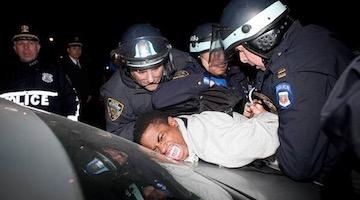 The antidote to police lawlessness isn’t more training, or fancy equipment, but putting the community in charge of the cops.
 One approach treats injustice as discreet individual actions, the other recognizes the weight of world history.
 The global depression has fossil fuel corporations reeling, but only a people’s movement can take away their power to poison the planet.
 The Historical Quest for a Black Nation
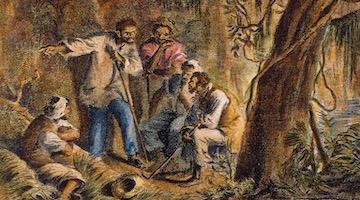 The contemporary Black struggle should draw on the experience and example of maroons, the escaped slaves that formed communities of freedom beyond the reach of the slave masters, said



