A Black Agenda Radio commentary by BAR columnist Dr. Jared A. Ball
A Black Agenda Radio commentary by BAR columnist Dr. Jared A. Ball
The 55th anniversary of the Bandung conference that solidified the global Non-Aligned Movement, is a good vantage from which to observe the continuity of imperial policies toward what used to be called the “Third World.” Unfortunately, many of the oppressed have still not learned history’s lessons that could lead them to a “class and racial and religious consciousness on a global scale.”
The Anniversary of Bandung and Durban II: Eisenhower to Obama What We Haven’t Learned About “Unity in Diversity!”
A Black Agenda Radio commentary by BAR columnist Dr. Jared A. Ball
“Then as now the wealth-producing nations of the so-called ‘Third World’ are essential as colonies of the West.”
55 years ago this week 29 African and Asian nations gathered in Bandung, Indonesia to develop organized resistance to Western imperialism. One year ago this week 141 mostly African, Asian and Latin American nations were gathered at the World Conference Against Racism (Durban II) in Geneva, Switzerland looking to, among other things, develop collective strategies in a struggle against racism, xenophobia and “related intolerance problems.” In each case the world’s majority joined together to speak and organize against the ravages of Western dominance; in each case many well-meaning people were inspired; in each case the West refused full acceptance or participation; and in each case the hopes and unity have yet to be realized.
In 1955 President Eisenhower refused to send a delegation despite having not been invited. In 2009, despite being invited, president Obama refused U.S. participation just as Bush had refused participation in the 2001 original World Conference Against Racism in Durban, South Africa. In 1955 the West was not invited. In 2009 the West was invited but 9 of the 23 Western nations walked out or boycotted. Whatever were the given reasons for their lack of involvement in 2009, the reasons were in fact the same as those which led to their not being invited in 1955. If the responses of the colonized are to include equality, reparations or overthrows of currently-held relationships of power the West, regardless of the particular hue of its leadership, is not interested. Then as now the wealth-producing nations of the so-called “Third World” are essential as colonies of the West. It is we who have not learned our lessons.
“If the responses of the colonized are to include equality, reparations or overthrows of currently-held relationships of power the West is not interested.”
In 1955 Black American leadership knew the importance of such a gathering. In 2009, with few notable exceptions such as Cynthia McKinney, established leadership was silent both in terms of attendance and in criticism of the president’s decision not to go. Looking back on Bandung in 1963 Malcolm X noted in his “Message to the Grassroots” the importance of this kind of unity and expressed the inspirational impact it had on him. Recognizing the power in the oppressed leading their own struggles for freedom he noted that the “… number-one thing that was not allowed to attend the Bandung conference was the white man. He couldn’t come… This is the thing that you and I have to understand. And these people who came together didn’t have nuclear weapons; they didn’t have jet planes; they didn’t have all of the heavy armaments that the white man has. But they had unity.”
And in at least two cases, for W.E.B. DuBois and Paul Robeson, it took government interference to keep them from attending. Robeson sent his blessings and summarized not only his support but the precise purpose for the gathering. “How I should have loved to have been in Bandung,” he exclaimed. He added that, “The time has come when the colored peoples of the world will no longer allow the great natural wealth of their countries to be exploited and expropriated by the Western world while they are beset by hunger, disease and poverty.”
The Black leaders who could make it, included Richard Wright and Adam Clayton Powell, Jr. Wright would later say, “Here were class and racial and religious consciousness on a global scale [...] And what had these nations in common? Nothing, it seemed to me, but what their past relationship to the Western world had made them feel. This meeting of the rejected was in itself a kind of judgment upon that Western world!" Powell, in assessing his country’s refusal to participate said that they had, “deliberately and calculatedly imperiled the future of the United States of America for perhaps the rest of our lives.”
And given that today throughout Asia poverty remains rampant and gaps in wealth grow, and that the theft of Africa’s wealth remains key to the hegemony of the West, or that for African America the crisis of economic instability has been described as “permanent,” there remains much we can learn from the need for Bandung then and similar unification now. As then president Sukarno of Indonesia exclaimed in 1955 we today also need, “unity in diversity!”
Jared A. Ball, Ph.D. can be contacted at freemixradio@gmail.com

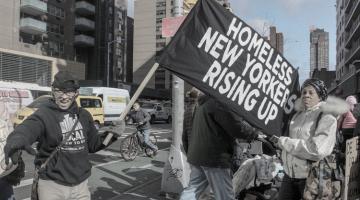 Milton Perez joins us to discuss the lack of affordable housing in New York City and the housing access voucher program.
 Dr. Bertrhude Albert joins us to discuss the construction of the Ouanaminthe Canal, the history of the Massacre River, and the project's importance to the Haitian people.
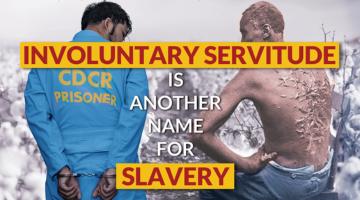 Dorsey Nunn joins us to discuss a proposed amendment to California’s state constitution, ACA 8, which aims to abolish involuntary servitude as a form of criminal punishment.
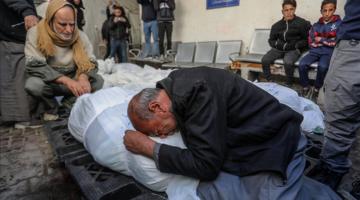 Israel is crowing about rescuing four people held hostage and killing more than 200 Palestinians in the process. It is typical behavior for the apartheid state but all of the pressure it exerts can’t…
 This short history of the Workers Party of Jamaica (WPJ) demonstrates that there was a moment in time when a radical remaking of Jamaican society seemed possible.


