A Black Agenda Radio commentary by Jared A. Ball, Ph.D.
Rev. Al Sharpton preached that her death was a "breaking point" - but he's said that too many times before. Even the police execution of a child fails as a catalyst for change. "These issues are the result of a legacy of enslavement which has seemingly permanently inscribed an archetype of Black people as property and predators."
Click here to download the MP3 of this BA Radio commentary.
Her Name Was Aiyana Jones
A Black Agenda Radio commentary by Jared A. Ball, Ph.D.
"Police brutality and mass incarceration are just not seen by Black leadership as issues worthy of popular attention."
Her name was Aiyana Jones. She was 7, Black, in a poor family, living in Detroit and was killed by the police. She was the victim of an unbroken and thoroughly vicious cycle of police brutality, followed by temporary, short-lived outcry and then the soon-to-come oppressive silence or worse, acceptance. Most will never hear the story, fewer will hear and follow up on it and fewer still will have yet another name to list during self-aggrandizing moments on podia, panels or in various forms of media commentary. The national eulogizer Al Sharpton spoke at Aiyana's funeral this week and said, again, that "this child is the breaking point... enough is enough" which I am sure a search would show he has said in one form or another at the never-ending cavalcade of funerals he does. But is it really enough? Is Aiyana really a "breaking point?" Absolutely not and we know it.
Precise numbers are hard to pin down but one study concluded that from 1990-2005 an average of one person per day was killed by the police. And in Chicago, for example, of the 84 people killed by police since 2000 only one was determined to be unjustified. But between under-reporting and unjust legal conclusions of incidents that are reported there remains this unbroken cycle. This cycle is irritatingly too easy to foresee and has, of course, already begun in the case of Aiyana Jones. This includes the obligatory and already mentioned Sharpton eulogy, followed by some basic local and national news coverage. Some have raised important questions about, for instance, the television show "The First 48" which was there filming the police raid which led to Aiyana's death and the role of what has to be euphemistically called "reality" t.v. in general in encouraging more action or prompting a greater degree of excessive behavior among the police. Some have asked about the "muted media" whose lack of substantive coverage prevents an appropriate societal education about police brutality or race in America. Of course, others prefer to focus on allegations that the Jones family was not well liked in their community and were themselves seen as a bad element, especially since the police were there looking for a murder suspect who was found either in or right next to the Jones household.
"One study concluded that from 1990-2005 an average of one person per day was killed by the police."
But other news reported recently speaks to the true nature of this cycle. For example, Black Agenda Report carried a story last week that was a follow up to the Jena Six case, the last major pre-Haiti earthquake cause celebre, which showed that rather than progress there has only been further repression and targeting of families and individuals who supported the six Black victims of that case. The federal probe into police killings of Black people in post-Katrina New Orleans is still on-going more than 5 years later.
And Jon Burge, the former Chicago police chief who "ran a torture ring that abused approximately 200 suspects" during the 1970s and 80s, finally goes on trial this week, decades later.
During a recent discussion with the powerful sibling duo of Michelle and Leslie Alexander whose scholarship and activism centers around the history of criminalizing Blackness the two made the point that these issues are the result of a legacy of enslavement which has seemingly permanently inscribed an archetype of Black people as property and predators demanding levels of "social control" which are only viewed as extreme or unjust if applied outside that context or outside those communities. They also both noted the "human rights nightmare" of police brutality and mass incarceration are just not seen by Black leadership as issues worthy of popular attention precisely because they often involve segments of our communities we'd rather escape from or simply not acknowledge. It is the concern summarized by Obama's willingness to defend his similarly classed Skip Gates while dismissing as issues the killings of the under-classed Sean Bell or Oscar Grant. And it is also why this cycle is so vicious and why it is predictable that this little girls name will soon be added to the list of the forgotten. Her name was Aiyana Jones.
For Black Agenda Radio, I'm Jared Ball. Online go to www.blackagendareport.com.
Jared Ball can be reache at jared.ball(at)morgan.edu

 NATO’s depleted uranium weapons leave a deadly legacy—cancer, birth defects, and environmental ruin in war-torn regions. The silent genocide continues long after the bombs stop falling.
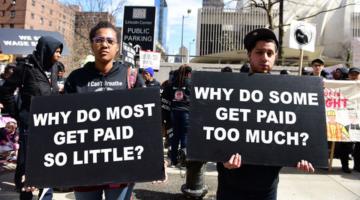 For millions, a job is no longer enough to afford housing—yet the myth that homeless people don’t work still dominates public opinion.
 In this week’s segment we discuss New York state proposals to change rules on discovery, the sharing of evidence between defense attorneys and prosecutors.
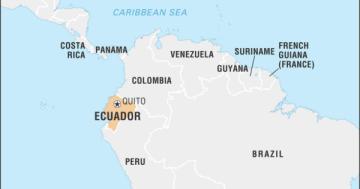 Ajamu Baraka is a Black Agenda Report contributing editor and director of the North-South Project for People(s)-Centered Human Rights, a project of the Black Alliance for Peace. He recently…
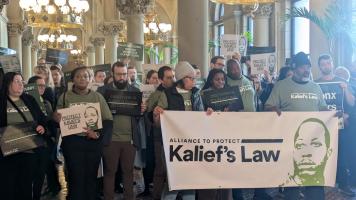 We are joined by Conrad Blackburn, policy counsel and staff attorney in the Criminal Defense Practice of the Bronx Defenders. The Bronx Defenders is a public defender non-profit organization and a…


