A Black Agenda Radio commentary by BAR editor and columnist Jared A. Ball
Sam Yette chose to speak and write as a Black man and a professional, thus making himself no longer employable at Newsweek magazine during the Black Freedom Movement. In his book, Yette concluded that “black Americans are obsolete people.” It is up to Black people to refuse to accept America’s verdict – and dare to make our own verdict on America.
Samuel Yette and The Choice: Black Survival in the United States
A Black Agenda Radio commentary by BAR editor and columnist Jared A. Ball
“Yette said that he could have kept his nice job had, ‘I been a nigger instead of Black, a spy instead of a reporter, a tool instead of a man, I could have stayed at Newsweek indefinitely.’”
Samuel Yette died last week and the choice he wrote of, a choice long ago reached by this country, is a choice we’ve still not caught up to. It is a choice of this nation to more or less discard an increasingly unnecessary Black population and a choice poised to that Black population as to how to respond. Our range of acceptable responses seems to have dwindled since Yette wrote the book and much of the bases upon which he developed his concerns seem to have only worsened. Having suffered heavy losses in the fight against the national will to discard its Black population, we have accepted the choices often imposed on the defeated, the colonized.
Yette was the first Black Washington correspondent at Newsweek magazine and author, in 1971, of The Choice: The Issue of Black Survival in America, the book that got him fired from that position. He said he was compelled to write his book after witnessing an absence of change over the decade of struggle in the 1960s. He said that he could have kept his nice job had, “I been a nigger instead of Black, a spy instead of a reporter, a tool instead of a man, I could have stayed at Newsweek indefinitely.” Instead Yette wrote in The Choice that at the dawn of the 1970s the United States was simultaneously at war with the “colonized colored people of Indochina” and “the colonized colored people of the United States.” He referenced the then exploding numbers of Black un- and under-employment and the statement made by the labor secretary that the nation was “piling up a human scrap heap” of surplus laborers. Yette concluded that “black Americans are obsolete people.” And since then these rates of un- and under-employment have risen while so many more of the Black surplus are siphoned off into the prison-industrial-complex, the post-1970s big boom business which scholar Lawrence Bobo also says is creating “Black internal colonies.” It is no wonder then that the Economic Policy Institute report from 2008 concluded then that Black America is in a “permanent recession.”
“Black elected leadership means nothing in the face of a system whose choice has been made regarding Black people.”
And there are more painful similarities. Yette wrote in 1971 of the many preferred distractions liberals maintain to avoid an inward look at the treatment of the domestically colonized. He said that while it may have become more in vogue to focus on the “environment… that it is Blackness that is unsightly in America.” He said that while others feel the war is a more “pressing” issue that it remains “racism” whose “arrogance of superiority” demands “economic and military exploitation” as much here as abroad. And especially given the popularity over the last two decades of the television show and all its spin-offs, it is important that Yette pointed out for those who thought that “Law and Order” was of prime importance that the phrase is but a Nixonian “euphemism… for the total repression and possible extermination of those in the society who cry for justice where little justice can be found.”
Yette also pointed out the fact that Black elected leadership means nothing in the face of a system whose choice has been made regarding Black people. He said these officials are “powerless” but that the “fault” was not with them but “the system” itself. Even they knew, he said, that their elections were false hope that inspired an equally false “confidence” in the political system. But ultimately Yette was clear, the nation had made a choice and it was one that threatens the long-term survival of Black people. And before we are too quick to run off to find solace in the heavily promulgated images of Black success, let us remember what legal scholar and professor Derrick Bell said not too long ago. He equated the nation’s public policies as having the equivalent impact of weekly, random selections of Black people who would be taken to a “secluded place and shot.” Black suffering and the permanent, worsening conditions we face are not an accident of fate or the result of uncorrectable patterns of Black behavior. No, they are intentional. They are national policy.
The nation has made its choice. We, however, seem to have also made ours. Our willingness to not break with convention, to not assume our own agenda and to advocate and implement our own alternatives theoretically, practically and with some degree of unison has resulted in our choice being to go along and hope for a brighter day. Let us heed the warning in his death that we did not during his life. The Choice Samuel Yette wrote of was theirs, but now must become ours.
For Black Agenda Radio, I’m Jared Ball. Online go to www.BlackAgendaReport.com.
Dr. Jared A. Ball can be reached via email at: freemixradio@gmail.com.

 Slow-witted Joe Biden appears to think that we’re still in the age of the sole superpower, when in fact that era has come and gone.
 Neither AOC nor the rest of the Squad has mounted any significant challenge to the party’s corporate leadership, despite being elected for this exact purpose.
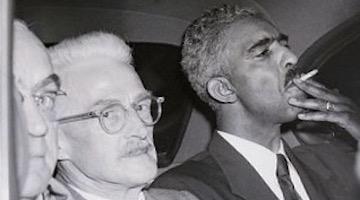 A pamphlet written 70 years ago by an exiled Black American communist reveals an African continent seething to break free from European colonization.
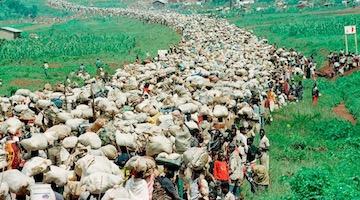 The real story of the Rwandan genocide begins in 1990, when exiled Tutsis from Uganda invaded northern Rwanda, unleashing a deadly campaign that uprooted a million Hutu peasants and set ethnic tens
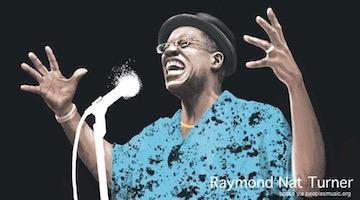 Northeast, midwest, southwest, south, down south, up south, out south—south of the Canadian border—Slouched down in his cruiser, slow-rollin’ the ‘hood; Or a-


