by BAR editor and columnist Jared A. Ball
Cornell University’s acclaimed Africana Studies and Research Center has been stripped of its autonomy, a bad omen for survival of independent Black studies at institutions across the nation. Black Studies was born of the Black Freedom Movement, which is no longer capable of defending its constituent parts. The move at Cornell “is meant to finish off one of the few remaining vestiges of an insurgent struggle that forced Black Studies into the nation’s institutions of higher learning.”
Black Studies and the Canary in Our National Mine
by BAR editor and columnist Jared A. Ball
“Black Studies was initially the intellectual arm of a broader Black and African Liberation Movement.”
Cornell University’s Provost announced recently that the Africana Studies and Research Center would no longer report directly to his office as it has done for the last 41 years. The center will no longer retain its relative autonomy as a department and will be subsumed within the College of Arts and Sciences as a “unit.” This will effectively weaken control over budgets, faculty hiring and the determination of ideological direction and intellectual inquiry. And it is meant to finish off one of the few remaining vestiges of an insurgent struggle that forced Black Studies into the nation’s institutions of higher learning. And precisely because Black Studies was initially the intellectual arm of a broader Black and African Liberation Movement it cannot be but seen as emblematic of that movement’s poor state. If it is true that you cannot protect with letters that which you attained by force then we will need far more than petitions, Facebook pages and radio commentaries to save the Africana Center, Black Studies or indeed ourselves.
The Africana Studies and Research Center was born of mass struggle. As broader political struggles brought what had been a tradition of extra-institutional study onto the nation’s leading campuses, for Black students at Cornell these efforts culminated in the April 1969 hostile takeover of Willard Straight Hall. These intellectual insurgents, openly willing to engage in armed self-defense against hostile white students and area residents alike, demanded and attained the Africana Center and Dr. James Turner as their founding director. For 41 years the center survived as a role model and a pastoral where some of the African world’s finest minds would come and assist in developing the field of Black Studies and in particular defining that field as “Africana Studies” or the study of the African world holistically transcending colonial boundaries and imposed distinctions of national separateness inspired by European imperialism.
“The program and even culture of counter-revolution has demobilized the movements which made Black Studies a historic phenomenon.”
This week Africana faculty, students, alumni and comrades have raised a call to the world both to save the center itself but to also warn of what is likely to come to others absent organized preparation. They explained this as a unilateral decision on the part of the university’s administration, one made with no input from or warning to faculty or students. James Turner said this is about managing ideas which are a “world of contestation and conflict.” Claims by the provost that this move is about helping Africana in reaching its goals were described by professor Carole Boyce Davies as part of a tradition of “infantilizing the colonized,” the old, “trust us, we know better than you how to take care of you” type of thing. Professors N’Dri Assie-Lumumba and Locksley Edmondson said this is about the “fear of” and “a need to control a minority” and to guard against “African thought.” Current director Robert Harris noted that in his more than 30 years at Cornell that he had never witnessed this level of disrespect and echoed the words of DuBois, saying that he now understood what it meant to be “in Cornell but not of Cornell.” He then also posed the serious question of what this means, what are the lessons to be learned?
For Dr. Chris Tinson, an outside ally of the Africana center and current professor of Black Studies at Hampshire College, the lessons are to be found in the “professionalization” of the field over the last 40 years. This has meant both “a direct challenge to American educational and institutional norms and values” and a “gradual erosion of curricular autonomy… which has distanced Black/Africana studies from the communities it was founded to serve.” This disconnect may speak to the relative silence from the broader community on this and similar attacks nationwide on Black Studies.
For professor Greg Thomas, another Africana ally and current professor at Syracuse University, these kinds of attacks should be no surprise but rather speak ultimately to this latest incident as being the canary in our national mine. As he says, this is the “program and even culture of counter-revolution” that has “demobilized the movement or movements which made Black Studies a historic phenomenon by any and every means… This is always Plan A, B & C of the white institution, ever corporatizing and constitutively hostile to the very idea of Black Studies uncompromised. And such plans are always put in practice with the use of known and unknown Negro collaborators.”
For Black Agenda Radio, I’m Jared Ball. On the web visit and bookmark us at BlackAgendaReport.com.
Jared A. Ball, a proud graduate of the Africana Studies and Research Center, can be reached via email at freemixradio@gmail.com.

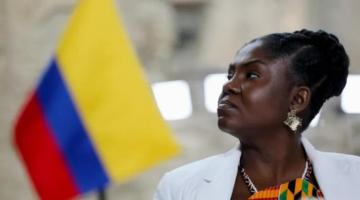 Francia Marquez's rise to Colombia's vice presidency has put a target on her back, but she also brings with her hope for a real change in Colombian politics. As in the U.S., Black political…
 The ruling elite uses black misleaders to shore up support for imperialist objectives. Currently, these misleaders are freely and happily offering their services in support of the invasion and…
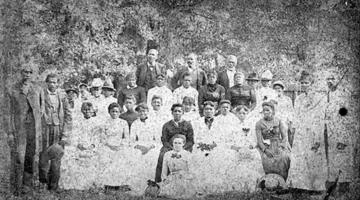 Juneteenth was a people's holiday with deep meaning for the descendants of enslaved people. But the declaration of an official federal holiday has turned it into an opportunity for corporate…
 With its recent historic loss of the Parliament majority, the African National Congress has formed a coalition with the Democratic Alliance, heir to the old apartheid regime, demonstrating its…
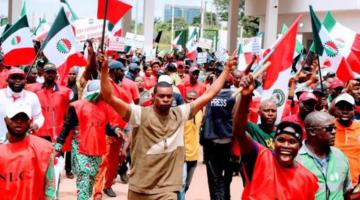 Newly elected President Bola Tinubu, the Chair of ECOWAS, has mounting political problems while advocating military intervention in neighboring Niger.


