
New Orleans Blacks Win Partial Katrina Legal Victory
A federal court ruled that Blacks whose homes were damaged by Hurrican Katrina were systemically shortchanged for repair and replacement aid, under the “Road Home” program. However, the court declined to rectify the awards that have already been made. Damon Hewitt, of theNAACP Legal Defense and Educational Fund, says “there are people in place in the federal government who can make this right if they wanted to, right now.”
Vampire Economy Vs. Main Street
“The vampire economy of the banks,” hedge funds, etc. and “the derivatives they produce is parasitic on the real economy that produces actual things for the public good,” says Anthony Monteiro, professor of African American Studies, Temple University. “The Wall Street vampire economy has been saved from complete collapse, but the future of the Main Street economy is in question.”
White Nationalists Gone Wild
BAR editor and senior columnist Margaret Kimberley believes the controversy over a planned Muslim community center in lower Manhattan may energize enough white nationalists to affect the November elections. “There are enough people,” she says, “who are that racist and that stupid that they will vote for or against a party based on whether a Muslim group can build a cultural center or not.”
“Race to the Top” is Extortion
Arne Duncan, President Obama’s Education Secretary, is “handing out stacks of cash like Al Capone” to those states that go along with school privatization, says Danny Weil, the education writer and union activist. “It’s a form of extortion. Under capitalism as it is now, the country has been bankrupted for militarism.” States that don’t go along with the Race to the Top program “get nothing.”
A Bankers’ Conference on Housing
The recent Conference on Future of Housing Finance, in Washington, put finance capital at center stage in the administration’s plans for restoring the housing market. But, said Eileen Markey, contributing editor to City Limits, the New York-based public interest publication, “it’s always good to remember that it was the ACORNs and the small non-profits that five, ten years ago were talking about predatory lending and ringing the warning bell.” Nellie Bailey, executive director, Harlem Tenants Council, said the Obama administration "thumbed its nose at affordable housing advocates, who were excluded from this conference."

 Seventy years after the civil preparedness film Duck and Cover, it is long past time to reckon with the way white supremacy shaped U.S.
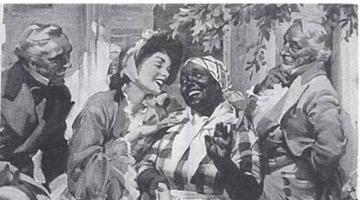 Textbooks are a battleground in which the humanity and status of black Americans are contested
 Amazon will not stop squeezing every drop from workers until those workers have more power.
 The Swazi military has reportedly warned the population to “obey instructions” or “face full wraith of troops.”
 Farmers of color received less than one percent of the payments even though they are five percent of all U.S. farmers.



