China is rising not merely out of colonial underdevelopment but into a position of global leadership.
“Black American activists in particular took a strong stance against U.S. aggression in Asia.”
The following are remarks given by the author at No Cold War’s online webinar entitled “Uniting Against Racism and the New Cold War” held on November 14th, 2020.
From its inception, racism has been a critical force in the development of U.S. capitalism and imperialism. We cannot speak of racism without remembering how the enslavement of Africans and the colonization of Indigenous peoples form the roots of U.S. economic, military, and political development. We also cannot speak of racism as an ideology and system confined to national boundaries. Racism has always been an international phenomenon.
Cold War politics and racism are connected by their shared vision of preserving the power and hegemony of one system of development over another. During the first Cold War, the United States was ascending as a superpower at the same time that capitalism was descending as a legitimate economic model of development. Cold War anti-communism sought to delegitimize mass movements for social and political transformation wherever they emerged. In the U.S., the most vibrant political movement has always been the struggle for the human rights of Black Americans and other social groups terrorized by racism. Black Freedom organizations such as the NAACP and the Student Non-Violent Coordinating Committee (SNCC) were routinely targeted as communist plots and repressed by all forms of law enforcement.
“Cold War anti-communism sought to delegitimize mass movements for social and political transformation wherever they emerged.”
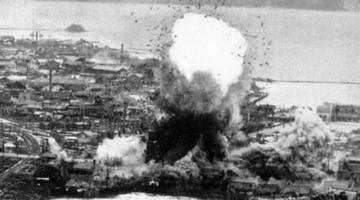
The rise of New China in 1949 intensified the U.S.’s Cold War abroad. U.S. military strategists lamented over the “loss” of China to communism. The U.S. swiftly placed economic and diplomatic sanctions on the newly formed People’s Republic of China. The U.S. invasion of Korea in 1950 renewed Yellow Peril racism in the United States and placed U.S. military forces and the People’s Liberation Army in direct conflict with each other. U.S. forces would go on to murder more than two million Korean civilians, including tens of thousands of Chinese forces fighting by their side. During this period, racism provided cover for the use of napalm and other weapons of mass destruction and helped erase the war from the American psyche. While the people of Korea and China see the war as a pivotal moment in history, the U.S. calls its own participation in the conflict “The Forgotten War” to this very day.
Not everyone in the United States agreed with U.S. hostilities toward China during the first Cold War. Black American activists in particular took a strong stance against U.S. aggression in Asia and saw the struggle of New China for true independence as a source of inspiration for their own cause of freedom. In a poem, Black activist Claudia Jones wrote of China:
No idle dreamers these—
and yet they dared to dream
The dream—long-planned
Unfolds in Socialist China
In 1959, Black scholar and activist W.E.B. Du Bois described China as
“the most populous nation on this ancient earth, which has burst its shackles, not by boasting and strutting, not by lying about its history and its conquests, but by patience and long suffering, by blind struggle, moved up and on toward the crimson sky.”
Du Bois and Jones were not isolated in the opinion that China’s successful revolution to end its “century of humiliation” at the hands of foreign powers was intimately connected to the centuries of racist humiliation endured by Blacks in the United States. China was viewed by many Black movement activists as a political and ideological place of refuge from the threat of white imperial rule. NAACP activist Robert Williams took refuge in China after being driven out of the country by white vigilantes and law enforcement. The Black Panther Party visited China twice before Richard Nixon made the trip that led to a normalization of relations between the two countries.
“China was viewed by many Black movement activists as a political and ideological place of refuge.”
That Black freedom fighters contributed immensely to a politics of internationalism and friendship with countries such as China remains relevant in this dangerous period for U.S.-China relations. A New Cold War on China has emerged in recent years, and it is once again led by the United States. The first Cold War utilized racism to justify the dehumanization of countries and peoples choosing their own path to independence from colonialism. The hope was that they would reject socialism as their path of development. The New Cold War on China employs the same logic in a period when the U.S. and its model of unipolar dominance is in a process of decline and crisis.
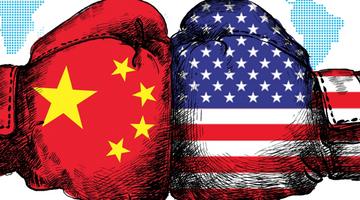
China’s rise as an economic superpower and influential force in the areas of poverty alleviation, ecological sustainability, and respect for international law has been deemed a threat to the U.S.’ primacy. This has led to a host of hostile policies that include the military encirclement of China, the sanctioning of its tech corporations, a blatant interference in China’s internal affairs, and a non-stop demonization campaign surrounding China’s pandemic response. Anti-China racism forms the skeleton of the New Cold War on China. China and its people have returned to the position of “Red Menace” in the eyes of many Americans to add to the host of other racist stereotypes that have shaped U.S. thinking about China for more than a century.
“Anti-China racism forms the skeleton of the New Cold War on China.”
The internationalism that Black Freedom activists and their allies expressed during the first Cold War provides numerous lessons for those who hope to build a world defined by peace and a respect for self-determination. Internationalism is first and foremost a project that humanizes those who have been dehumanized. Black Freedom activists affirmed the humanity of the Chinese people and people all over the world as a critical step in devising a joint vision of a world free from war, racism, and want. Their example demonstrates what it means to stand up for principles of justice, liberation, and peace for all people who have ever been deprived of them.
Internationalism is not merely a rejection of war, but a rejection of the racist ideas that fuel war. It is a conscious decision to stand up for the truth buried underneath Cold War politics. And the truth is that China is rising just as it was in the first Cold War. This time, however, China is rising not merely out of colonial underdevelopment but into a position of global leadership. China’s economy will surpass the U.S. economy in less than a decade and do so on its own terms. Rather than colonize, occupy, and plunder other countries, China has built a truly globalized planned economy which offers an example to the Global South of how prosperity and people’s centered development can exist simultaneously.
The first Cold War brought the world tremendous challenges but also offered opportunities for anti-racist forces to build ties of solidarity with nations such as China rising out of colonialism and foreign domination. Similar opportunities exist in the era of the New Cold War. But history must be our guide to truly unite against the dangerous course laid by the United States. History shows that racism and war are not defeated with denunciations alone but rather by the action humanity takes to foster peaceful relations and bonds of solidarity. To truly reject racism, anti-racist and anti-war movements must adopt the approach of modeling what peaceful relations look like in the real world. That means both denouncing the New Cold War and extending a hand of friendship to China in its pursuit of a global order defined by cooperation and international law instead of aggression and racial domination.
Danny Haiphong is co-coordinator of the Black Alliance for Peace Supporter Network and organizer with No Cold War. He and Roberto Sirvent are co-authors of the book entitled American Exceptionalism and American Innocence: A People’s History of Fake News--From the Revolutionary War to the War on Terror (Skyhorse Publishing). His articles are re-published widely as well as on Patreon at patreon.com/dannyhaiphong. He is also the co-host with BAR Editor Margaret Kimberley of the Youtube show BAR Presents: The Left Lens and can be reached on Twitter @spiritofho, and email at wakeupriseup1990@gmail.com.
COMMENTS?
Please join the conversation on Black Agenda Report's Facebook page at http://facebook.com/blackagendareport
Or, you can comment by emailing us at comments@blackagendareport.com




 The Islamic Revolutionary Guard Corps (IRGC) has issued a letter addressed to the American people, outlining its views on recent developments and Iran-U.S. relations.
 The Trump administration's new sanctions on Cuba, are part of a dual strategy to create unendurable hardship while simultaneously making Cuba financially dependent on the United States.
 The armed groups in Haiti are not a spontaneous wave of banditry, but a scheme orchestrated by imperialist powers in concert with a reactionary and subservient Haitian political class. The…
 A coalition of Pan-African and socialist organizations has launched an international campaign to defend Cuba, arguing that African peoples must remember the sacrifices Cuban internationalists made…
 If international law and justice are buried in the rubble of Gaza, the global community will ultimately be digging its own grave.


