“In the period since 1969, one can detect the same old close ties between right-wing U.S. academics, think tanks, foundations, and the U.S. Government…”
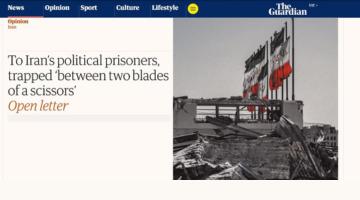
What is the role of the scholar in the face of imperial onslaught? What is the work of the anti-imperialist scholar? These questions have been fiercely debated since the publication of a recent open letter published August 20, 2026, in The Guardian, equating the defensive posture of the Islamic Republic of Iran with the genocidal imperial actions of the U.S. and the zionist entity – all under the cover of solidarity with political prisoners. The letter, signed by a slate of well-known western scholars (many of them Black), who self-identify as “radicals,” has raised a host of tough questions about scholarly ethics, politics, and, in this particular case, the performance of solidarity.
There is no need to rehash these debates and questions here, or to revisit the contents of the letter or its virtue-signaling signatories (or, for that matter, its desperately back-sliding rescinders). We should use this moment, however, to remember that the scholars of radicalism far outnumber the radical scholars–and that for every anti-imperialist intellectual there is an intellectual working in the service of empire.
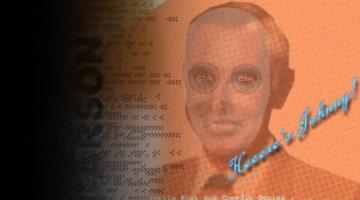
This is the lesson of Robert Molteno’s investigation, "The CIA and Studies on Guerrilla Warfare.” First published in 1977 in the journal African Youth, newsletter of the African Youth Movement for Liberation and Unity, and reprinted two years later in Covert Action Information Bulletin, Molteno’s research unearths the attempts by US academics to infiltrate and study southern African liberation movements on behalf of the CIA, the State Department, and various US foundations. Molteno, a white South African academic and editor at Zed Books, names names – both individuals and institutions – while providing a rich example of the kinds of methodological approaches one needs to study intellectuals and imperialism.
When, a few years before his death in 2022, Molteno was asked what motivated his research, he responded: “To see US academics wanting to investigate in great detail what the various movements were doing seemed utterly inappropriate to me in a situation of armed struggles going on, and equally inappropriate to many other people; particularly given the revelations of US subversion of so many movements and governments in Latin America, Asia etc.” Molteno’s response raises questions of those who seek to publicize and profit from scholarly research on the “hidden transcripts” of resistance, and who mine the archives of radicalism for the purposes of promotion and tenure.
On the question of the duty of the intellectual, Moteno concluded his essay by stating: “The first duty of the radical intellectual in this situation is vigilance. The second is to inform the liberation movements. Academics who ally themselves with imperialism in
Southern Africa must be held in general condemnation as the enemies of freedom.”
For contemporary anti-imperialist intellectuals, both duties remain, desperate to be fulfilled. Meanwhile, today’s imperialist intellectuals remain the enemies of freedom.
We reprint Robert Molteno’s "Hidden Sources of Subversion: North American Academics and the Southern African Struggle” below.
The CIA and Studies on Guerrilla Warfare
Robert Molteno
The liberation wars in Southern Africa escalated rapidly in the late 1960s. MPLA [People's Movement for the Liberation of Angola] opened its very successful Eastern front in Angola in 1966, the same year as SWAPO [South West Africa People's Organisation (Namibia)] reacted to the World Court judgement on Namibia by starting low-keyed armed struggle in Owambo and the Caprivi strip. The following year, 1967, joint ZAPU/ANC (SA) forces began a series of campaigns (1967-1970) which, although defeated, forced South Africa to send in troops to prop up the Smith regime. FRELIMO [transl. Mozambique Liberation Front] then opened the second Tete Province Front and in 1972 ZANU [Zimbabwe African National Union] started what proved to be a sustained and ever-expanding zone of combat in Northeastern and Eastern Zimbabwe. These immense successes – sketched so hastily here, but involving so much sacrifice and courage – clearly showed the U.S. Government that the days of white minority rule were numbered, unless something was done about it.
The USA has had for a long time a CIA presence in Zambia. Let me brief, but specific. The CIA presence has taken several forms of which the following are known to the author:
- American academics who come to Zambia and who then (or previously?) join the CIA. The best documented but not widely known, case is Dr. Stephen Goodman. He was an economist who taught at the University of Zambia soon after it opened in 1966. He subsequently wrote an article in Africa Report (June 1970), which stated he “specialises in Southern African research for the U.S. Central Intelligence Agency.” The second case was Dr. John Helgerson who in 1970 did his doctoral research for Duke University on the Zambia National Assembly and its MPs. He now works in Washington, according to two friends of his, for the CIA.
- CIA agents stationed in the U.S. Embassy, Lusaka. The stationing of CIA agents within U.S. embassies is common practice. In Lusaka, the U.S. Embassy has always had at least one official, often with the cover post of consular officer, whose job is to penetrate the liberation movements. In 1968, the man was Frank Crump. In 1974 it was Clagett J. Taylor and possibly Mike D. Stempel.* Clagett Taylor has an interesting history. Some years ago, he was a teacher in Rhodesia and came to know several Zimbabwean leaders. He then (so he told me) decided to join the State Department and had to learn Spanish as a second language. Some time afterwards, he was posted to the U.S. Embassy, Lusaka, Zambia. There he suffered the unfortunate experience of being exposed.
It happened this way: For years, it was known that the Mozambican organization COREMO [Revolutionary Committee of Mozambique] was a puppet body of small size that was being supported by the United States as an alternative to the radical and mass-supported FRELIMO. But only in early 1975 did Paul Gumane, COREMO's head, admit publicly that Mr. Clagett Taylor of the U.S. Embassy in Lusaka had been financing COREMO at least since the April 1974 coup in Portugal. Mr. Gumane stated that Clagett Taylor had instructed COREMO to act against FRELIMO in that crucial period before Portugal recognised FRELIMO as its legitimate successor. The U.S. Government hastily redeployed Mr. Taylor to Caracas, Venezuela. This rather reduced the weight of the U.S. Embassy denial that Taylor had been subsidising COREMO from CIA funds.
The CIA's other activities in Zambia: These include notably the setting up of Nkumbi International College, where many young people from the liberation movements went to school under largely American teachers. The Zambian Government took over the college after documentation came to light showing the College's links with U.S. Government foreign policy. The second case has been a series of CIA attempts to penetrate the Zambian labor movement. These attempts used the African-American Labor Center — known in radical labor circles to be a CIA front, and an attempt in 1973 by Mr. Mike Stempel of the U.S. Embassy to use a University of Zambia lecturer as an intermediary between CIA agents who flew in from Malawi and the Zambian Confederation of Trade Unions.
It is against this background that the attempts by U.S. academics to penetrate the liberation movements must be seen.
Case 1: MIT, Professor Griffith, and Robert M. Bates
So far as I can find out, the first major U.S. academic attempt to use Zambia as a base from which to investigate guerrilla warfare goes back to early 1969. In March of that year. Professor Lincoln Bloomfield, director of the Massachusetts Institute of Technology (MIT)'s Center for International Studies' "arms control project," designed and carried out CONEX III. CONEX III was a sophisticated (two-day-long, TV-monitored, and with computer-processed data) simulation of the likely conduct of U.S. and other leaders in a Southern African conflict situation. This simulation was part of the Center's project to study “the control [sic—by the USA?] of local conflict.” Two findings emerged which must have alarmed U.S. policy makers. The first was that, as the Southern African conflict escalated, so socialist (Soviet and Chinese) support for freedom fighters soared, and the USSR also lent Zambia SAM-2's for her protection. The second finding was that the USA refused to take any action; in the words of the report of the simulation, "The U.S. would let the regional conflict run its course without substantial assistance or intervention." (Incidentally, it may be of interest to political scientists to see how tragically wrong this latter finding of the "game" has proved to be: see the open CIA money, arms, planes and mercenaries in Angola at the present time.)
Soon after this simulation, a new event happened which further shook the U.S. Government. In 1970 China finally agreed firmly to build the TanZam Railway from Dares Salaam in Tanzania to Kapiri Mposhi in Zambia over a period of five years. Actual construction started in 1970. It was shortly after this that Professor W.E. Griffith of MIT visited Zambia. Griffith, who incidentally is Ford Professor of Political Science, is an old Cold War warrior whose record goes back nearly 30 years. In an amusing interview with the author. Professor Griffith expressed skepticism when told that there were almost no Chinese in Lusaka. His skepticism unfortunately was soon to bear fruit in a new MIT initiative.
Case 2: MIT, Professor Robert I. Rotberg, and the Ford Foundation
On 19 October 1970, Professor Robert I, Rotberg of the Department of Political Science, MIT, wrote to the head of Political Science at the University of Zambia: "I hope that
you and other members of your department may want to take part in a study of the politics, psychology and tactics of African liberation movements ... Their internal dynamics are little understood, and their potential as revolutionaries (from a methodological point of view) is little known.” The Department of Political Science at the University of Zambia (UNZA)—led by its South African members—saw the obvious dangers (to Zambia and the liberation movements) of such a project. There was also the extraordinary lack of information which Rotberg had provided. We began by asking four questions: What is the purpose of the study? Where are its funds coming from? Who will the researchers be? And what is the intended time span? The Head of Political Science communicated these questions to Rotberg, who replied as follows on 30 December . 1970 (my comments follow in brackets):
1) "I hope that several of our Ph.D. candidates could gather thesis material in Zambia." [i.e., most of the researchers would be Americans]
2) "The ideal minimum duration of the study is five years." [i.e., this was not to be a normal research project of limited duration, but an ongoing monitoring of the liberation movements]
3) "At the moment we have money for about a year from MIT. An application has been made to the Ford Foundation." [Clearly Rotberg was in a hurry, got university financial support immediately and then turned for larger scale funds to a Foundation which, as we have seen, had been active in South Africa before.]
Rotberg then made a crucial mistake. When pressed by the UNZA political science staff as to whether he had asked and got the support of anyone in the liberation movements, he replied with only one name—an African academic associated with one of the movements. I then spoke to this person, who denied having consented to collaborate with the project and who expressed his shock at its implications. This the Department communicated to Rotberg in due course, presumably much to his embarrassment.
The Department also examined Rotberg's Research Proposal, which he had now sent us. It was clearly hostile to liberation and aiming to do a very thorough job of penetrating the movements. The proposal stated, "Almost every African country is a present or a potential target [sic] of a liberationist movement." ('Liberationist' is a cute new word, presumably to be equated in connotation with communist or extremist.) He also put "Liberated" inside quotation marks, thereby further betraying his attitude. But Rotberg was not just hostile; his intentions were manipulative as well and so closely related to U.S. Government policy. Thus, Reason No. (3) for studying the liberation movements was:
To learn about the strategy and tactics of liberation movements is to gain knowledge about small-scale internal and external wars and how such wars may be promoted, contained, or prevented.
As for the scope of the five-year study, it would include:
an analysis of their operational attitudes—their techniques of recruitment, training, mobilization, and communications in their target areas, their strategy and tactics, their leadership and internal politics, and their ideology and international relations. In its initial phase the study will concentrate on the more important movements, those directed against [sic] South Africa, South West Africa, Rhodesia, Angola, Mozambique and Malawi Data will be collected by structured interview, survey, participant observation [!!!], and analysis of printed ephemera, the press, and other records.
It is clear, I suggest, that this proposed research was as comprehensive and detailed as anything military intelligence could desire.
UNZA's Department of Political Science was unanimous that the study must be blocked. As one member of the Department (not myself) wrote in an internal minute on 22 January, 1971, "I am sure I would not be alone in reading possible sinister motives into the proposed project…Our best course of action would be to prevent actively on the grounds that it would compromise the activities of other research students, is unlikely to succeed, and is embarrassing to Government if not to the liberation movements themselves."
When the Department turned down Rotberg's proposal on 12 February, 1971, he was furious. On 8 April, he replied to the Head of the Department: "I was a little surprised at your letter of 12 February. ... By rejecting cooperation out of hand, you obviously limit the extent to which your Department can influence the shape of the work … I fully understand the underlying theme of your letter and even what I take to be a possible anti-American tone."
Still Rotberg refused to give the project up, and he said he would fly out to Zambia in mid-1971. There now existed a very real danger that Rotberg would use his contacts with
very high levels of the Zambian Government, misrepresent his project, and get permission to go ahead. So the Department did two things: First, it alerted key liberation movements (ANC, FRELIMO, MPLA, and ZANU). They were unanimous that "this research would not be countenanced by the liberation movements; they felt it was ideologically unacceptable, politically inopportune, and practically unfeasible. It was their unanimous opinion, most forcefully expressed, that they would not be prepared to go along with the outlined research proposal." Secondly, the Department alerted the Vice Chancellor and the Director of the University’s Institute of Africa Studies (IAS). They agreed in the words of the Director, "It is clear that UNZA should on no account be associated in any form with this incredible (indeed, crazy) and, if I may say so, politically suspect project. I would go further and suggest that this man with his dangerous 'research' should be kept out of the country altogether." The Vice Chancellor agreed and on 1 June, took appropriate action to stop the project. This did not stop Rotberg from flying into Zambia and trying to persuade the Zambian Government directly—apparently without success. It has since been learned that, he (like Carter and the others before him) is now engaged in the study of African political activity in the Bantustans, the South African Government having let him into South Africa for this purpose.
The Department naively thought that this had put a permanent end to American attempts to infiltrate liberation movements via placing academics in Zambia. We were wrong. And the reason we were wrong was that we did not foresee the likely U.S. reaction to the huge increase in the liberation wars which FRELIMO and ZANU brought about from 1972 on.
Case 3: Dr. Bowyer Bell, Columbia's Institute of IVar and Peace Studies, and Dr. Sheridan Johns III
In 1973 Sheridan Johns found himself working at the Institute of Communist Studies at Columbia University. His office happened to be near that of Dr. J. Bowyer Bell, who worked at Columbia's Institute of War and Peace Studies. Bowyer Bell is a man of considerable eminence in the hazy field between right wing academia and U.S. intelligence services. His field of specialty is guerrilla struggles and he has written extensively on the subject. There are other interesting details about Bowyer Bell. He is extremely well off, having a house not only in the United States, but also in the exclusive Rutland Gate area of London. Although he himself says, "I can always be persuaded to write 50 pages for a thousand dollars," he must have a much more lucrative source of income than publication fees. Bowyer Bell works closely with the U.S. Government. When he travels around the world's war zones, as he frequently does, he often stays with U.S. Embassy officials and he admits that most of his information on freedom fighters comes from governmental sources. It is not surprising to discover that Bowyer Bell is extremely hostile to liberation movements. Thus on his visit to Rhodesia he was given lots of confidential information by the Rhodesian military. As he admits, "All the relevant departments of the Rhodesia Government offered the most detailed and generous cooperation." His article reflected the bias of this cooperation.
As early as 1969/70, Bowyer Bell became interested in the Southern African liberation war situation. He visited Lusaka (skillfully not calling at the University of Zambia), Dar es Salaam and Addis Ababa, as well as being taken round Rhodesia. It seems that Bowyer Bell was at MIT at this time; he certainly was two years later. If so, his Southern African trip may well have been a precursor of the large-scale Rotberg project which saw the light of day in 1970.
The next time Bowyer Bell became involved in Southern Africa was in late 1973. By this time he was at the Institute of War and Peace Studies at Columbia University, where he met Johns. Luckily for Bell, he had also made the acquaintance of a member of staff at the University of Zambia when Bell had been investigating the guerrilla situation in another part of Africa. Avoiding Rotberg's formal approach to the Department of Political Science, Bowyer Bell wrote privately to this acquaintance of his in March, 1974, asking him to sound out the liberation movements about whether they would be prepared to cooperate in being investigated. The letter is an extraordinary one, which was unfortunate for him, since he was incorrect in assuming that his acquaintance would be sympathetic to his purposes. The letter described his research project briefly as "a vast trans-national study out of Columbia" of the nationalist movements "and their ilk." The research was apparently to be done solely by Americans, thereby avoiding the complications which Rotberg's had got into in approaching non-American political scientists to cooperate. In other respects, however, the project was clearly the same as Rotberg's 1970/71 proposal—the same range of countries, the same comprehensive coverage of movements, and the same indefinite duration. Bell then made another mistake—he states that Dan Johns was shortly coming to Zambia (as a Fulbright Senior Lecturer from June 1974) and that he would brief Johns fully about the project and Johns could then spearhead its Zambian end.
What happened then is instructive. Details of the intended research and Bowyer Bell's background were given to one of the liberation movements. This movement circulated this information amongst the others and took it to the newspapers. The net result was that Johns found it virtually impossible to contact the Liberation Centre and the movements after his arrival. It seems that at least the Zambian end of Bell's project has been successfully scotched. An interesting final detail is that Johns repeatedly denied all knowledge of the project. And since Bowyer Bell had stated in his letter that unfortunately he could not manage Africa "on my terrorism tour this year," we were not able to ask him for more details!
Case 4: Professor Ali Mazrui
At the very time that Bowyer Bell was setting up his project in early 1974, a similar initiative was being taken by Professor Mazrui. At first sight. Professor Mazrui's liberation struggle project is different from its predecessors. After all, he is a citizen of an African state and his approach was through the newly formed African Association of Political Science (AAPS), It is my contention that Mazrui's initiative, although much more skillful than the previous ones, was in fact the same U.S. penetration project, this time with a heavier camouflage.
What in fact happened? On 20 February 1974, he wrote to a member of the Political Science Department at the University of Dar es Salaam. Mazrui requested him to bring before the next executive meeting of the African Association of Political Science an application for recognition. "We are applying to be recognised by the Association as a Research Committee on Armed Forces in African Societies." If one turns to the enclosed memorandum on this Research Committee, one discovers some very interesting things. Firstly, the "we" is never explained. Presuming Professor Mazrui does not use the "Royal We" when referring to himself, it is a legitimate inference to suppose he has some American colleagues whose names he prefers not to disclose. Secondly, the projected Committee's concern with liberation movements is buried amongst seven other topics. Thirdly, the proposal was apparently drafted in such a hurry (is this related to the rapid escalation in the armed freedom struggle in Mozambique and Zimbabwe in early 1974?) that Mazrui had no time to get the consent of the projected other founder members of his Committee; nor apparently did Professor Mazrui regard it as proper for the African Association of Political Science's Executive itself to appoint members to its own Committee!
There are other points to note about this proposal. Professor Mazrui was an opponent of President Milton Obote, who was a militant foe of apartheid; indeed Mazrui welcomed the coup of General Amin publicly. When he left Africa he accepted a University of Michigan offer (worth some $70,000 per annum, all told) to join their staff. But it was as Senior Visiting Fellow at the Hoover Institution that he wrote to the AAPS. Since he does not submit any request for funds to the AAPS, perhaps he was already confident of getting funds from American sources. Finally, Mazrui was a close colleage [sic] of another academic concerned with monitoring liberation movements—Robert Rotberg. They had indeed edited a book together.
The skill of Mazrui's attempt was considerable. It used an African citizen as the public initiator of the project and then tried to get the stamp of legitimacy via affiliation to the AAPS. The location of the liberation section of the Committee would have been Dar es Salaam—a sensible choice both in view of the failures to get into Zambia and the importance of Tanzania in relation to FRELIMO, MPLA, ANC(SA), ZANU and ZAPU. (Remember that this attempt, like Bowyer Bell's, was before the Portuguese coup of April 1974.) And being a committee, it would also be an ongoing institution, highly suitable for longterm monitoring of the liberation wars. Luckily, the African Association of Political Science saw through the whole ploy and turned it down.
Case 5: Dr. C.P. Potholm, Bowdoin College, and the Rockefeller Foundation
Within a couple of months of the collapse of the Bowyer Bell and Mazrui attempts in 1974, another one was made— this time by Professor Christian P. Potholm of Bowdoin College, Brunswick, Maine. His research proposal was as follows:
This study seeks to focus on the international transfer of aid (to refugees) particularly as it affects Africa and is designed to develop strategies to: (i) increase the generation of aid (ii) ensure that the African nations receive a greater percentage of the total and (iii) co-ordinate and maximise the flow of international refugee relief to Africa.
Since almost the only refugees in Lusaka are from the unliberated territories of Southern Africa and since they are mostly activists in the various liberation movements, Potholm's research on refugees would in effect have given him full access (from January to May 1975) to all the liberation movements. But this research proposal clearly could not reflect Potholm's real purposes. For, as the Department of Political and Administrative Studies (as it was now called) stated when consulted, "He is suggesting that by coming to Zambia to talk to various people about refugee aid he will be in a position to help increase the flow and effectiveness of aid." The subject then rejected the proposal—"the research proposal of Potholm does not appear ... to represent serious scholarship." Or, as the Director of IAS wrote on 7 October 1974, "it is couched in very attractive terms and one wonders whether this is a smokescreen to blind us to what the man really wants to come and do.”
What Potholm wanted to come and do soon became even clearer. His source of funds provided one clue: "I have recently received the good news that the Rockefeller Foundation [that old financier of Owen Carter's research] will be sponsoring my research project dealing with international aid and refugee resettlement with particular emphasis on Southern Africa." But it was his curriculum vitae that gave the game away. The following facts emerged:
1) Potholm had never been interested in aid or refugees before.
2) Potholm's association with Rockefeller went years back to the period 1958-62 when he held a Rockefeller Scholarship at Bowdoin College.\
3) Potholm also had close links with the State Department; in 1971 he was awarded what his curriculum vitae called "Scholar-Diplomat Seminar for African Affairs, U.S. State Department.”
4) Under "Field of Major Research Interest," he listed four areas, of which the first was "International Espionage Sub-cultures"!!
5) His interest in spying and his general rightwing sym pathy was borne out by some of his publications. These included several on the police and "insurgency techniques" in Africa, as well as a revealing article entitled "Rejuvenation of the ROTC Program," the ROTC being the Reserve Officers Training Corps which operates on American campuses.
On 12 November 1974, the IAS wrote to Potholm, "The subject you have chosen is not one which falls within the research priorities of the country at this stage." Potholm never replied.
General Conclusions
As liberation wars rise in intensity and scale, so certain American academics become more persistent in their attempts to penetrate and monitor the liberation movements. When the wars in Zimbabwe and South Africa escalate, we must expect further attempts.
These U.S. academics who are reactionary refuse to take NO for an answer; they merely resort to more subtle subterfuges. These include the withholding of relevant information; misrepresentation of research intentions; use of black intermediaries; bypassing the relevant authorities, etc.
In the period since 1969, one can detect the same old close ties between right wing USA academics, think-tanks, foundations and the U.S. Government as existed in the earlier period.
The first duty of the radical intellectual in this situation is vigilance. The second is to inform the liberation movements. Academics who ally themselves with imperialism in
Southern Africa must be held in general condemnation as the enemies of freedom.




 Trump is terrorizing Minnesota’s Somali Americans in a desperate xenophobic and racist appeal to voters in the state’s white farming and mining communities.
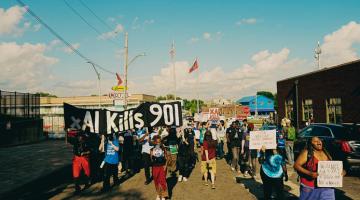 Artificial intelligence and hyperscale data center buildout constitute a new front of environmental racism and a project to optimize white supremacy, with Black communities targeted as sacrifice…
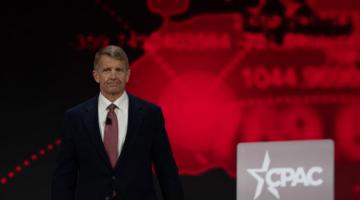 Erik Prince's mercenary operations in the Democratic Republic of the Congo serve U.S. imperial and corporate interests in critical minerals and violate the Congolese peoples' sovereignty.
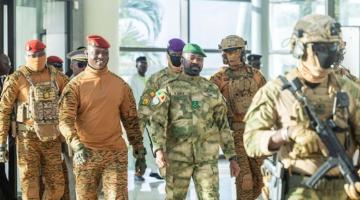 Mali, Burkina Faso, and Niger are leading the way toward the realization of Pan-Africanism and the struggle against imperialism in the 21st century.
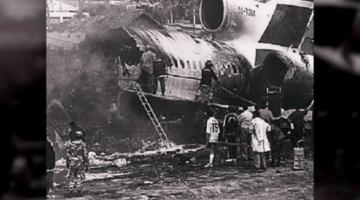 The 1976 bombing of Cubana Flight 455 was part of a six-decade U.S.-orchestrated campaign of destabilization against Cuba, which has now escalated into a genocidal siege aimed at starving the Cuban…


