UN tanker truck offloading the raw sewage of MINUSTAH Peacekeepers at Morne Cabrit sewage treatment plant in January 2013. Photo: Isabeau Doucet
What are the environmental and ecological impacts of large-scale military occupations by the United Nations “peacekeeping” missions? The deadly cholera epidemic unleashed on the Haitian people by UN soldiers is an extension of a totality of violence - material, political, and ecological – enacted by a presumably humanitarian peacekeeping mission.
When we consider the current ecological threat to the earth and its inhabitants, we cannot forget the outsized place of war and empire in exacerbating climate change and enabling environmental catastrophe. The ongoing United Nations occupation of Haiti provides an example. As does the introduction of a cholera epidemic by UN soldiers. Cholera is an extension of the totality of violence - material, political, and ecological – enacted by a presumably humanitarian peacekeeping mission.
Do people ever wonder how a tiny island nation such as Haiti handles the environmental consequences of a multi-year, multi-billion-dollar foreign military occupation which, at any given time, had between 6000 and 12,000 military troops and police stationed in Haiti alongside thousands of civilian personnel? We know, for instance, that the U.S. military – with its vast global infrastructure of cargo planes, container ships, trucks, and drones to supply its operations in 800 military bases, as well as its arsenal of weapons and ammunition – is the largest polluter on the planet. What are the environmental and ecological impacts of a large-scale military occupation by the United Nations?
A report from 2008 calculated that UN military occupations are responsible for more than half of the organization’s climate footprint. Another study reveals that a mission of 15,000 occupying troops produces “about 11,000 tons of solid waste a year, not including the waste resulting from the use of ammunition, the development and changing state of the land used by the UN bases, water use, and emissions.” That same report tells us that “the average Malian generates 237.3 kilograms of waste per year, while a UN peacekeeper produces 677 kilograms a year.” Imagine how many tons of “occupation waste” that Haiti has had to absorb during the two decades of a racist foreign military occupation.
Ecological ruination is built into the infrastructure of occupation. In Haiti, the United Nations completely disfigured the built environment. While the large multi-acre MINUSTAH headquarters was in Port-au-Prince, near the Toussaint Louverture International Airport for access to airfields and airspace, there were permanent and semi-permanent encampments built all over the country--UN constructed bases, camps, and outposts. Painted in bold blue and guarded by armed soldiers, these encampments, large and small, become prominent markers on the landscape. The building of encampments also meant the appropriation of land and other resources from predominantly poor villagers throughout the country. Indeed, one of the common names for MINUSTAH occupation soldiers was “vòlè kabrit,” goat thieves.
In the fall of 2010, the United Nations “peacekeeping” mission, MINUSTAH, brought cholera to Haiti. When the epidemic was first discovered, those in the global north quickly pulled from the ready arsenal of racist justifications, linking the origins of the disease to Haiti’s poverty and presumably unsanitary behavior. But this was quickly rebuffed by local communities who led reporters to the exact source of the epidemic – the MINUSTAH Méyè base located a few meters from a stream flowing from the Artibonite river, the main water source for the many villages around the area. Apparently, the UN base regularly used the river as a dumping site for their soldiers’ fecal waste. This was in addition to literal shit-holes -- large pools of feces -- left in fields nearby. The UN can desecrate Haitian villagers’ land and water this way because its officials and underlings have a blatant disregard for poor Black Haitian people as human beings. Because, surely, the killing of 30,000 white Canadians or Australians would generate more outrage.
But these soldiers are also equated with the filth and violence of cholera, a disease that takes away one’s dignity. “Minista, kolera!” signs swept the cities and the countryside of Haiti at the height of the epidemic, a bold effort to force these armed foreign occupiers to take ownership of a degrading disease that, along with their feces, they believed that Black people deserved.
Cholera victims – victims of the UN’s occupation waste – suffered multifold indignities. The so-called peacekeeping operations of the UN are dirty occupations, ecological and environmental disasters for the victim-nations. It is not an accident that most humanitarian “peacekeeping” occupations these days occur primarily in nonwhite countries, and especially in Black countries – on the African continent and in Haiti. And in the end, the United Nations claimed immunity and refused to compensate the hundreds of thousands impacted by their dirty disease.
It took three years to bring cholera under control, and by then the disease had killed 30,000 to 50,000 people and destroyed millions of lives. Haitian cholera victims may be the forgotten casualties of the ecological catastrophe of a foreign military occupation under the guise of humanitarianism. But all of Haiti’s ecology – its rivers, lakes, farmland, its air quality – is an environmental and imperialist crime scene.
Jemima Pierre is a BAR editor and contributor, the coordinator for the Haiti/Americas Committee of the Black Alliance for Peace, and a Black Studies and anthropology professor at UCLA.


 “I believe that the Movement of Nonaligned Countries…can buttress the united will of the Arab nation and help it to prevail against intervention and aggression.”
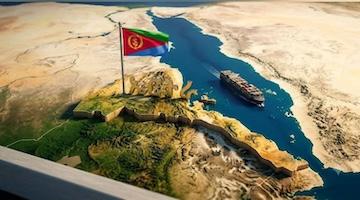 There is no evidence that Eritrea has surrendered its Red Sea Coast in exchange for relief from US sanctions.
 The liberal news media treat U.S. violence and oppression as aberrations from the country's founding ideals rather than expressions of its fundamental character as a settler colony, empire,…
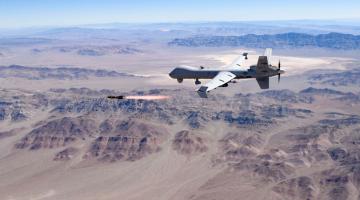 The U.S. relocation of MQ-9 Reaper drones from Africa to Latin America is not a drawdown of imperial aggression but a strategic reallocation, with the drones likely to be used against Cuba, Venezuela…
 Race is a sociopolitical construct, not a biological truth. The real determinants of health are structural factors such as zip code, environmental pollution, and access to resources.


