The same week Cuba mobilized millions to defend its revolution, the White House imposed even more illegal measures in an effort to strangle the country into submission.
Originally published in CounterCurrents.
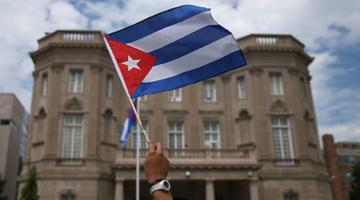
May Day is the most important public celebration in Cuba. This year, which marked the 100th anniversary of Fidel Castro’s birth, carried special significance in light of heightened US aggression. Over 5 million Cubans reportedly mobilized island-wide under the slogan of la patria se defiende (the homeland must be defended). The largest demonstration took place in Havana in front of the US embassy.
The symbolism of International Workers’ Day was not lost on the White House. President Trump chose that day, May 1, to impose yet more sanctions on top of the already draconian illegal measures immiserating Cuba. Cuban journalist Norland Rosendo González called this latest escalation Trump’s “imperial order to kill the Cuban people without bullets.”
The world’s leading imperial power falsely claims that Cuba poses “threats to United States national security.” Secretary of State Marco Rubio subsequently announced additional measures to “defend” the US homeland from its peaceful neighbor.
Jill Clark-Gollub with the Americas Without Sanctions Campaign explains the underlying reason for Washington’s animosity: “Cuba is sanctioned for the crime of being a good example.” A small, formerly colonized country, Cuba simply claims its sovereign right to determine its own destiny without foreign interference.
Regime-change campaign
That Washington continues to intensify its six-decade campaign against the Cuban Revolution testifies to the island’s resilience and strength.
The Center for Economic and Policy Research (CEPR) cites a broad range of recent US measures against Cuba, including restrictions on transactions with state enterprises, tighter export controls, a renewed terrorism designation, limits on travel and remittances, lawsuits targeting foreign companies doing business in Cuba, pressure on countries hosting Cuban medical missions, and especially intensified fuel blockades.
Responsible Statecraft describes US policy as “bent on breaking the island.” The Guardian reports “an epidemic of flies, rats, waste and foul odors.” A New York Times opinion piece by US representatives Pramila Jayapal and Jonathan L. Jackson found “shocking” conditions in Cuba.
These accounts sympathetically portray Cuban hardship but largely overlook Cuban social achievements.
Perhaps unintentionally, they echo Washington’s self-serving narrative that Cuba is a “failed nation.” They do not interrogate the ideological assumption that posits capitalism as the natural state of humanity. Such a worldview perceives socialism as an abortive experiment which is – in the words of Trump’s executive order – “repugnant to the moral and political values of free and democratic societies.”
Referenda on socialism
In 1976, Cuban voters ratified a constitutional referendum with a reported 97% approval rate and high voter turnout, which formally defined Cuba as a socialist state. Last year in the United States, the House of Representatives passed a resolution “denouncing the horrors of socialism” by a lopsided bipartisan margin of 285–98.
Capitalism itself, however, has never been subject to a democratic vote of the American people. Perhaps for good reason: recent polls show a growing popularity for socialism, especially among the youth.
Shortly before May Day, President Miguel Díaz-Canel addressed the Cuban nation: “The socialist character of our revolution is not a phrase from the past; it is the shield of the present and the guarantee of the future.” With characteristic Cuban humility, he acknowledged “our own mistakes in this process of social construction” but added that “the main cause of our problems is the genocidal blockade.”
Directly addressing Washington – “gentlemen of manipulation and lies” – Díaz-Canel proclaimed: “Cuba is not a failed state; Cuba is a besieged state.”
Cuban Foreign Minister Bruno Rodríguez condemned Washington’s “genocidal intention.” Cubans view their economic difficulties, shortages, and infrastructure problems as the direct and cumulative result of decades of coercive measures designed to suffocate the country.
Doing so much with so little
CEPR documents a dramatic increase in infant mortality – rising to 9.9 per 1,000 live births, attributable to deteriorating living conditions caused by the US economic war. Yet Cuba’s infant mortality rate remains among the lowest in the region: Panama (11), Dominican Republic (16), El Salvador (12), Honduras (15), Guatemala (20), Jamaica (12), Haiti (45-50). And even lower than for African Americans in the US (10.9). This reflects the demonstrated success of Cuba’s social medicine model, even under the most challenging of circumstances.
Among Cuba’s public health achievements are its international medical brigades, excellence in advanced research, effective response to the pandemic, service to underserved populations, south-south cooperation initiatives, and the world’s highest doctor-to-patient ratios.
The Cuban socialist model has also produced notable successes in sports and public education.
Writing from Cuba, Carlos Fernandez de Cossio defended the country’s accomplishments over the past decade despite the “intense economic war,” including:
- sustaining the national electrical system while expanding renewable energy
- strengthening telecommunications and expanding internet access
- supporting vulnerable populations through food cultivation
- improving water infrastructure in underserved communities
- developing COVID vaccines and other medicines
- expanding domestic industry including the assembly of electric vehicles
For a small, natural resource-poor island, Cuba has achieved so much with so little and under such extraordinarily adverse conditions. The nation asks only that the jackboot of imperialism be lifted so that it may truly flourish.
Which is the failed state?
In contrast and despite enormous national wealth, the US is experiencing record levels of homelessness. Millions remain uninsured in the only high-income industrial country without universal health coverage. Maternal and infant mortality rates are significantly worse than in comparable nations. Life expectancy has declined, while the infrastructure continues to deteriorate.
The so-called land of the free has unparalleled levels of gun violence and one of the world’s highest incarceration rates. Ironically, the US accuses Cuba of holding political prisoners while itself detaining captives at Guantánamo – on occupied Cuban soil – where due process has been widely denied and torture documented.
The US exhibits some of the highest levels of wealth inequality among peer states, producing extreme disparities in political power. Even The Wall Street Journal acknowledges that the bottom 50% holds only 2.5% of the nation’s wealth. In a country where “political spending” – really paying off politicians – is protected as free speech by the highest court, half the population is effectively disenfranchised.
What is at stake
Cuba enjoys broad international backing. The UN General Assembly has repeatedly and overwhelmingly condemned Washington’s blockade for more than three decades. Pontiffs since John Paul II in 1998 have denounced the blockade. China, Russia, and Mexico among others have all provided major material aid.
On May 14, CIA Director John Ratcliffe made an unprecedented visit to Cuba presumably to deliver a mafia-style ultimatum. That same day, Cuba’s energy minister reportedly announced on state television: “We have absolutely no fuel oil…no more reserves.” Multiple major news outlets report Washington is preparing to indite former Cuban president Raúl Castro.
Ominously, US military flights off the coast of Cuba are “surging,” raising concerns of an imminent US military action. The signals are similar to the lead-ups to the recent US “interventions” in Venezuela and Iran.
Black Studies professor Isaac Saney describes the Cuban Revolution as “both a symbolic and a concrete anchor in the struggle for a more just world.” He warns: “This is precisely why Cuba must not fall. The crushing of the Cuban Revolution would embolden imperial aggression everywhere. It would reinforce the doctrine that no country, however principled its aspirations, can defy the dictates of global capital and survive.” Because of its resilient achievements under powerful sanctions, Cuba has and will continue to prevail.
Roger D. Harris is with the Task Force on the Americas and the Venezuela Solidarity Network.
Sara Flounders is with the United National Anti-war Coalition (UNAC) and the SanctionsKill! Campaign.

 The armed groups in Haiti are not a spontaneous wave of banditry, but a scheme orchestrated by imperialist powers in concert with a reactionary and subservient Haitian political class. The…
 A coalition of Pan-African and socialist organizations has launched an international campaign to defend Cuba, arguing that African peoples must remember the sacrifices Cuban internationalists made…
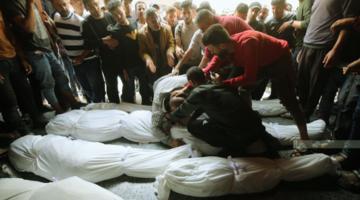 If international law and justice are buried in the rubble of Gaza, the global community will ultimately be digging its own grave.
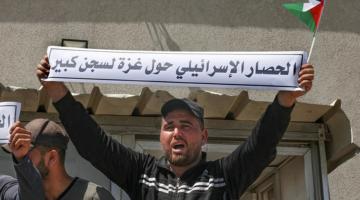 Three years into Israel's genocide in Gaza, the consequences of a decision driven by siege, settlement expansion, and assaults on Al-Aqsa are still unfolding.
 In this week’s segment we hear about the right-wing politics of the anti-migrant movement in South Africa, ANC failures, and upcoming elections in that country. But we begin with the first and only…


