Oprah Winfrey's $40 million gift of a school for South African girls, although laudable, has been criticized for failing to produce the "greatest good for the greatest number." The author cautions that Ms. Winfrey's philanthropy may be seen as a kind of benevolent paternalism - or worse, as a shrine to herself.
"Grassroots activists say Oprah's gift fails to produce the greatest good for the greatest number."
The Oprah Winfrey Leadership Academy for Girls in Henley-on-Klip, just 25 miles south of Johannesburg, opened on January 2 . Zeroing in on the country's substandard educational system, Oprah's academy is one huge step toward remediation. But Oprah's generous gift has received condemnation at home and abroad, questioning her philanthropic motives, and raising ethical questions of what it means for Americans to give to Third World countries without imposing self-serving agendas and their own moral imperatives.
In a country plagued by HIV/AIDS, on a continent with approximately 53 million orphans, 12 million of whom lost at least one parent to AIDS, and with all the diseases and concomitant problems that come with poverty, Oprah's extravagance for only 152 girls has many people wondering. Why would she spend $40 million on one school when she could have spent $1 million on 40 schools - if her objective is to improve and democratize education for girls throughout South Africa. For many grassroots organizations and activists in South Africa, fails to distribute her huge donation in a way that produces the greatest good for the greatest number. In the eyes of Oprah's critics, the academy is a world stage shrine built to herself, disguised as good will.
Many South African educators worry that Oprah is replicating the American paradigm of elite education. While they applaud Ms. Winfrey's goal to educate young girls to become the country's future leaders, they worry that the project might produce a privileged class that will not only become disconnected from their families and friends, but also disinterested in the ongoing struggles of their communities. Too many of Africa's educated classes leave family and village for a chance at success, never to return. Consequently, the monies and resources poured into these students never benefit their communities, and contribute to their country's brain-drain.
"In the eyes of Oprah's critics, the academy is a world stage shrine built to herself, disguised as good will."
Another criticism of Oprah's excesses is in the design of the school: luxuries the girls have never seen the likes of such as fireplaces in each building, white duvets for each bed, a beauty parlor, and yoga spa. Oprah's critics feel that she's imposing a vision of American "bling bling," when most South African students would be content with school uniforms, books and meals. On the other hand, these critics may seem to suggest that because these young black girls have not had such creature comforts in their lives they do not deserve them.
Others ask why the question of gender was not raised during the international effort to rescue the "Lost Boys of Sudan" who were displaced or orphaned in their country's second civil war.
In South Africa there is another type of war going on that profoundly and disproportionately impacts females. Violence against women has not abated since the end of Apartheid. South Africa has come to be known as the rape capitol of the world. The Medical Research Council reports that 58% of young boys and girls between the ages of 10 and 19 do not view forced sex as sexual violence, and believe that girls and women do not have a right to say no to their boyfriends and husbands. Every six hours a South African woman is killed by her partner, lesbians are often subjected to gang-rape to punish them for not being "real women," and millions of women are infected with HIV/AIDS because of gender-based violence.
"South Africa has come to be known as the rape capitol of the world."
Unquestionably, Oprah should be applauded for her effort to empower young South African girls. However, she disempowers them and diminishes her gift by ignoring community sensitivities.
While it is admirable for Americans to want to help Third World countries in need, it is equally as important for us to respectfully ask how we can best meet those needs - the cardinal rule in International Philanthropy 101. Otherwise, Americans' donations - albeit motivated by good intentions, as Oprah's is - will continue to be perceived by Third World countries as unexamined acts of benevolent paternalism, at best, or unbridled colonialism, at worst. Why? Because how we give matters as much as what we give.
Rev. Irene Monroe is a public speaker and free-lance journalist based in Cambridge, MA. She can be contacted at revimonroe@earthlink.net.


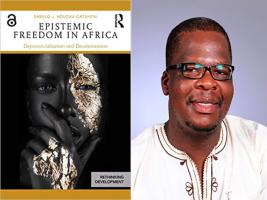 This week’s featured author is Sabelo J. Ndlovu-Gatsheni. Dr. Ndlovu-Gatsheni is Chair of Epistemologies of the Global South, Faculty of Humanities and Social Sciences and Vice-Dean: Research, Africa…
 This week, we interview Courtney Cox. Dr. Courtney M. Cox is an assistant professor in the Department of Indigenous, Race, and Ethnic Studies at the University of Oregon. Her research examines issues…
 The prison system links corporate interests, the military industrial complex, and policing into a web of oppression impacting more than 2 million people in this country. The Mapping Project reports…
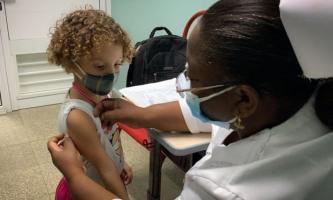 To move from 59 infant deaths out of every 1,000 live births to no infant deaths in the matter of a few decades is an extraordinary feat.
 The western capitalist axis of domination is responsible for most of the world's crises. The crisis of legitimacy extends from the UK to Japan, and U.S. imperialism is involved in every new…


