Demonstrators protest Elon Musk’s xAI data center in Memphis, Tennessee, on April 25, 2025. (Photo: Brandon Dill for The Washington Post via Getty Images)
There is near unanimity of opinion against data centers in the U.S. But elitist and compromised environmental groups and the climate industry should not lead this fight.
The data center subject has become a ubiquitous element of the U.S. polity that has implications for many pillars of U.S. society - economic, political/electoral, and environmental to name a few. The subject is very much an economic one as poor and working class United Statesians have been subjected to a meteoric rise in their electric bills - in one region of the country, customers who live close to data centers have seen their electricity costs rise as much as %267 in the last five years. Economic impacts associated with the data center subject in concert with specific impacts on the finances of poor and working class voters has made it very political during the current Midterm election cycle. Political pundits have suggested that candidates’ positions on data centers to be a key factor determining whether or not they are supported.
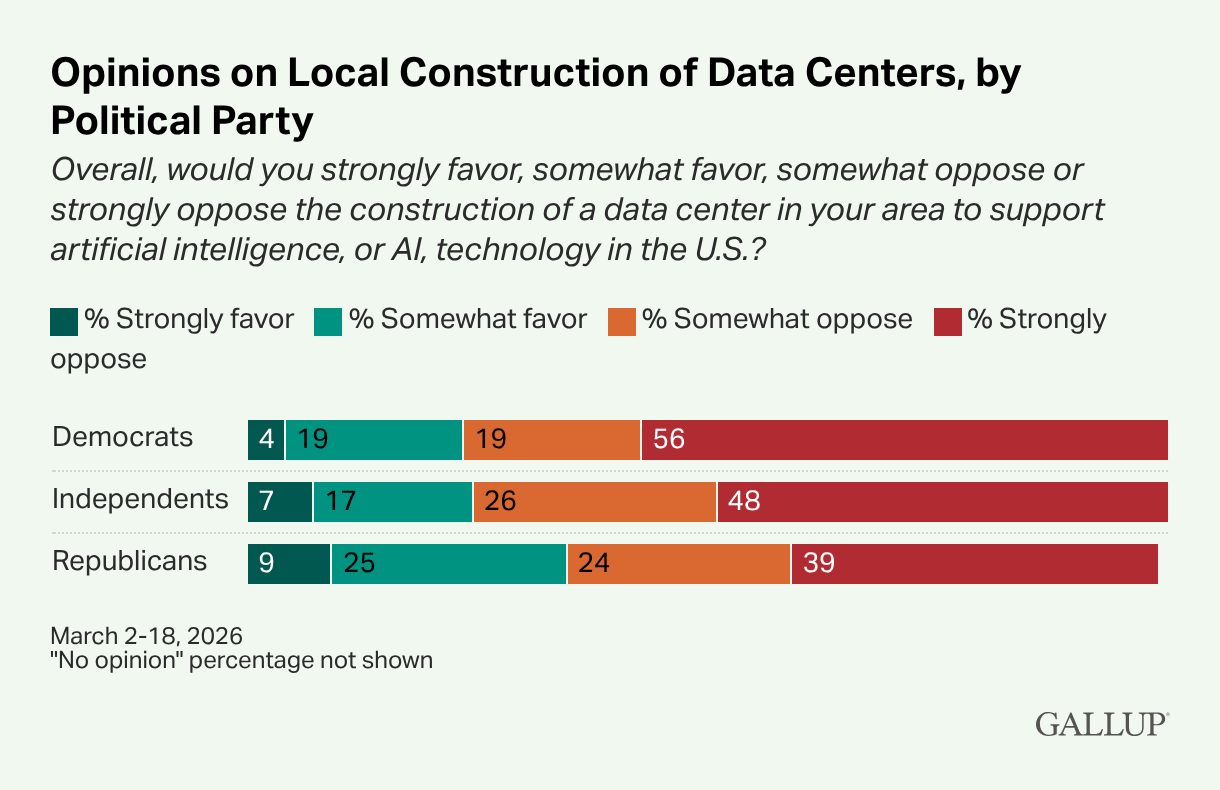
Lawmakers - Democrats and Republicans alike - are hearing from their constituents on the subject, and in many cases are facing backlash and demands for immediate interventions. For instance, in New York, Governor Kathy Hochul, a Democrat, recently issued an executive order that placed a moratorium on new data centers, using 50 megawatts of power or more, for a period of one year. And earlier this week in Texas, Governor Greg Abbot, a Republican, issued a moratorium on all data centers until, “[State] regulatory agencies can audit proposed data centers seeking connection to the state’s electric grid” in response to growing public pushback. By some estimates, over 500 local laws have been enacted to restrict or ban data centers in the last year alone. Laws enacted to ban or restrict data centers parallel a national trend that reveals nearly 70% of United Statesians oppose data center construction in their communities including a majority of registered Democrats, Independents, and Republicans according to a Gallup survey conducted in March. You will be hard pressed to find tripartisan alignment on any other subject and the question becomes, as posited by writers Zoya Teirstein and Kate Yoder in a piece they wrote in June, if backlash against data centers can remain this way.
As Teirstein and Yoder point out in their piece, “Political scientists and organizers tracking the backlash say the opposition is not driven by a single ideology so much as a recurring set of local grievances: rising electricity bills, water scarcity, noise, land use, tax breaks, distrust of tech companies and the billionaires who own them, and the fear that communities are being asked to share their resources with an industry that will provide little in return.” They go on to note that what makes the data center subject different in a political sense is its recent emergence in the political lexicon that, for now, allows it to escape being weighed down by what they refer to as “political baggage.”
The writers offer an admonishment of what could happen to the data center subject if it becomes captured by political consultants who attempt to render it into a variable to be utilized as a wedge issue, “Or [the date center subject] might be in its pre-partisan phase, waiting to be absorbed by the political tribalism that has shaped fights over climate, energy, housing, and so many of the other issues that have fallen victim to the culture wars.”
The rapacious energy, land, and water appetite to sustain data centers have thrust them into the environmental discussion with renowned activists like Erin Brockavich (famous for her standing as an environmental activist and her work that was depicted in a movie starring Hollywood icon, Julia Roberts) not only taking a stance against them, but also developing resources to increase public awareness. Mainstream environmental organizations, journalists, and operatives have also entered the frey seeking to leverage increasing public interest in, and concern with data centers as a means to establish, re-affirm, and increase their relevancy and influence in the overarching political discussion. Yet, as I discuss later, this growing interest of elements of the non profit industrial complex (NPIC), its philanthropic arm, and the bourgeois press may prove to be more an impediment than beneficial as noted by Teirstein and Yoder.
To this end, If I’m being honest, I must posit that even though it would seem like an ineluctable conclusion, given the direct assaults to land, air, and water associated with data center build out, that the U.S. climate “movement” would be best to lead this fight, I must protest. The climate “movement” in its current form is not fit to lead the fight to curtail and/or abolish data center buildout, and there are many reasons for this but one that stands out the most. Simply put, We don’t have a climate “movement” as much as we have a climate industry - tainted and polluted with the same variables that define the culture of for profit-corporations including, but not limited to, competition, contradictions, libel, slander, pariah campaigns, anglocentrism and, too often, blatant machinations and exercises of white “supremacy” ideology. In short, the climate industry operates from both a capitalist and liberal mindset that represents a clear and present danger for the data center subject that is rapidly being rendered into an issue by the U.S. climate industry and the larger non profit industrial complex (NPIC) rather than advanced as an organizing opportunity with the potential to build off tripartisan data center opposition and expand the base of poor and working class people working collectively to construct and maintain independent social and political power.
We are already observing many individuals and their organizations who hold up the U.S. climate industry attempting to reduce the data center subject into a political and/or electoral issue. For instance, two weeks ago, journalist Zach Colman penned a piece for the outlet Politico entitled ‘A Better Way to Be Relevant’: Greens Embrace the Data Center Fight. Therein, Colman quotes Jane Kleeb - a prominent member of the Democrat Party and Executive Director of the environmental non profit, BOLD Alliance - who suggested, “There is not a better way to be relevant that is as prevalent as data centers.” Colman goes on to note that organizations that make up the U.S. climate industry are hopeful that the data center issue leads to increased philanthropic largesse, “National groups said they’re hopeful more philanthropic money materializes after years of decline since the post-Trump “Resistance” boom in 2016 and 2017.” This sentiment both exposes the U.S. climate industry for what it is, while also vindicating the notion that it must not be permitted to minimize the data center subject into an issue that continues the NPIC’s commodification of social justice.
As Laleh Khalili points out in their latest book Extractive Capitalism: How Commodities and Cronyism Drive the Global Economy, “Anything can be turned into a commodity. Humans and their labour, flora and fauna, livestock and crops.” I would argue that issues from the data center subject to social justice, writ large, can also be commodified. Khalili offers an instructive observation to this effect, “Commercial contracts and financial devices became instruments of conquest, colonisation and commodification.” This sentiment can easily be applied to the U.S. climate industry as well as the idea that cronyism drives the NPIC economy and determines who receives philanthropic support, and the amount, and who doesn’t. Commodities can also be viewed as resources, natural resources in particular, which is an easy idea to comprehend as natural resources have indeed been commodified. The U.S. climate industry and the larger NPIC tend to treat issues, as they are doing now with the data center subject, like commodities and resources - whether to be extracted or gained via increased philanthropy (essentially investment - foundations, after all, are basically hedge fund managers of the philanthropic wing of wealthy family fortunes that are increased by hedge funds and the people managing them). When a resource dries up/or an issue no longer commands the attention of the masses as it once used to, you do what any capitalist would do - you move on and find another valuable resource or, in the case of the U.S. climate industry, the next viable and valuable issue.
The truth of the matter is that the U.S. climate industry has been searching for another issue-commodity since the Green New Deal bottomed out and lost its value - politically/electorally, socially, and economically. The U.S. climate industry attempted to sell the Inflation Reduction Act (IRA) as the next big commodified issue to philanthropy - some bought it, but the IRA, which was a lackadaisical, soporific, and iniquitous piece of legislation at once due to its adverse impacts to environmental justice communities and its classist elements as most of the law’s provisions disproportionately benefited affluent and wealthy households. Now that the IRA is ultimately little more than a legislative corpse that was summarily choked out by President Trump - a staple of his current administration thus far - data centers, which have become omnipresent, represent the hot new commodified issue as if it was a stock for one of the so-called “Magnificent 7” corporations.
As it pertains to the data center subject, the U.S. climate industry fails to comprehend, willingly and otherwise, that the commodification of social justice likely plays a big part in why we have witnessed such a reduction of social justice over the years - especially at the hands of the state, but certainly within our own social justice spaces. This most definitely includes the U.S. climate industry that continues to wear the idea of being a “movement” like a poorly put together Halloween costume that delivers far more tricks than treats. This further vindicates why the U.S. climate industry is not fit to lead the data center subject and its “relevancy” rests more in its ability to understand its place in the data centers fight as part of a larger anti war/anti imperialist mass movement - domestically and globally. By reducing the data center subject to an issue-commodity in lieu of viewing it as a profound organizing opportunity, as we are seeing with the climate community at present, indicates that the U.S. climate industry is ill-prepared to embrace the full moment that we’re in when the enemy is in the midst of post haste consolidation of power as part of a larger program of full spectrum dominance through state repression as recently showcased by President Trump’s National Security Presidential Memorandum - 7, that he signed last September.
Rather than allow the data center subject to be commodified by the U.S climate industry, it’s incumbent upon the masses to decolonize the data center subject. As Kwame N’Krumah reminds us, “Decolonisation’ is a word much and unctuously used by imperialist spokesmen to describe the transfer of political control from colonialist to African sovereignty. The motive spring of colonialism, however, still controls the sovereignty.” This can absolutely be applied to data centers in the sense of it being reduced to an “issue” as a form of commodification and colonization - who controls the issue and who gets paid for their leadership on it. How else can you describe the white supremacist hubris of U.S. climate industry groups like the Sierra Club whose Principal Advisor for Climate and Energy, Jeremy Fisher, suggested in Colman’s article that his organization seeks to guide grassroots opposition to data centers, “The local opposition that you’re seeing is organic in nature. “We’re trying to lend an overall structure.” Suggesting that climate industry groups like the Sierra Club can bring structure to the grassroots formations that have been taking on and defeating data center build out independent of Big Green, is comedic given that the success of the grassroots is in large part due to their independence from the climate industry in the first place.
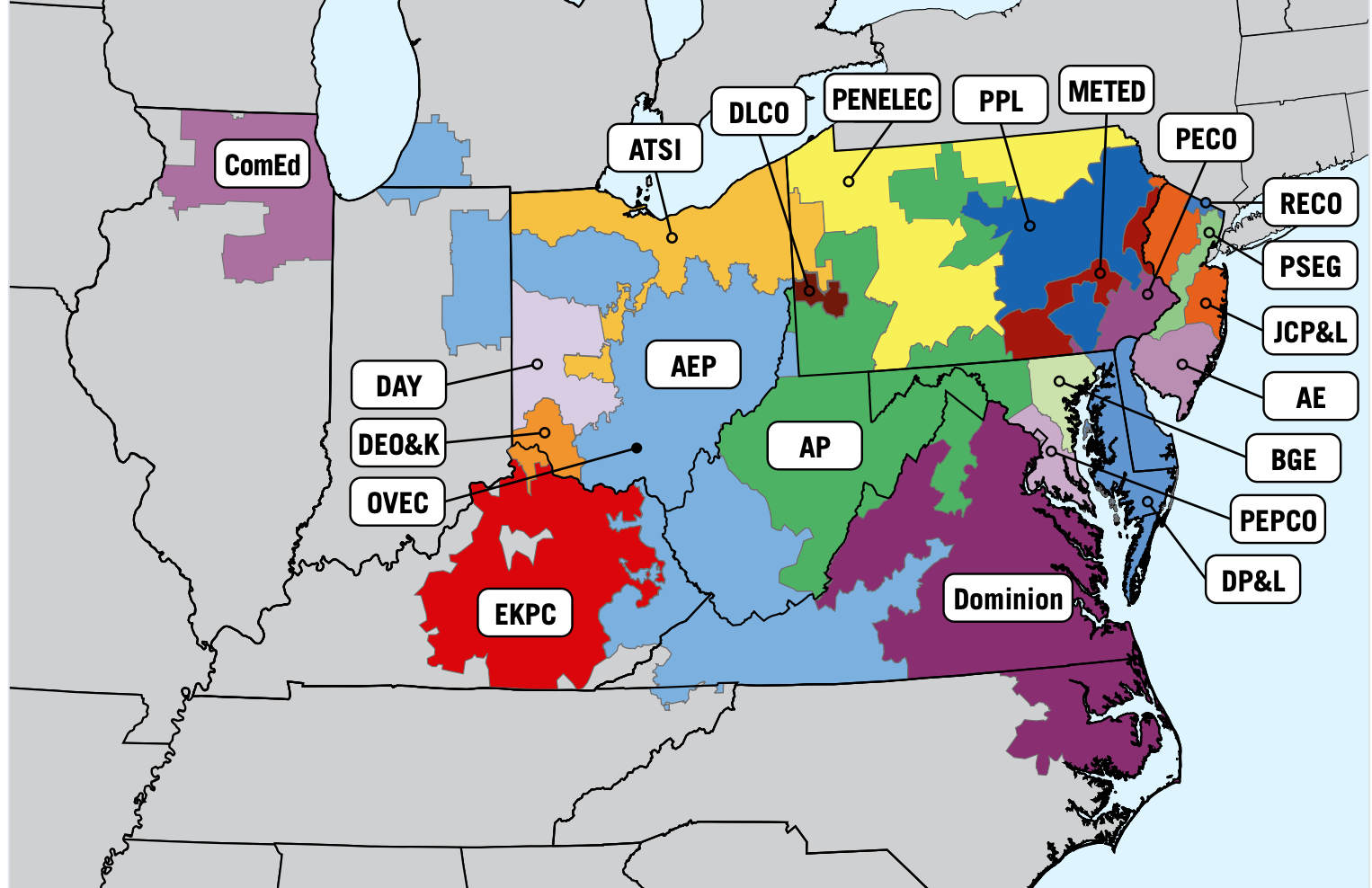
Commodification and the issue-ation of data centers informs the praxis of organizing against them. The climate industry approach not only neglects the organizing opportunity, but also fails to see that the best way to confront and dismantle the network of data centers is through translocalism. University of Innsbruck Professor Simon A. Peth loosely defines translocalism as, “a variety of enduring, open, and non-linear processes, which produce close interrelations between different places and people.” He continues, “These interrelations and various forms of exchange are created through migration flows and networks that are constantly questioned and reworked.” This is particularly salient in the context of the data centers because they don’t only have implications for a given city or county, they also impact entire grid regions that traverse multiple states. For instance, the PJM interconnected grid region, the largest in the U.S., covers all or parts of 13 states and Washington, D.C., and serves approximately 67 million people. As such, while stopping data centers in Pennsylvania would certainly be a good thing, if data centers are not stopped in Virginia as well the people of Pennsylvania will still be impacted as would people as far away as Chicago and Detroit as indicated by the figure below depicting the PJM grid region.
PJM Grid Region
The Black Alliance for Peace’s Climate, Environment, and Militarism Initiative have been lifting the need for a more translocalism approach to data center organizing as part of a larger requisite intervention into the data center subject. The need for a more translocal approach is imperative for two key reasons. First, a regional approach can more quickly connect a larger base of people fighting data centers and potentially allow them to work more cooperatively regardless of their political affiliations or leanings. We are seeing the potential for this at work already in places like Tennessee where Republican voters in rural communities are considering voting for Democrats due to their similar stance on opposing data centers. Even former members and leaders of the Tea Party movement are getting into the mix and recently organized a national day of protest against 140 data centers in 42 states.
This leads to the second reason why a translocal approach to data centers is critical. If the growing rural resistance to data centers - led by majority working class white folk - is ignored, neglected or not fused into the larger data center fight, we run a high risk for the data center subject to be rendered into a culture wars tool as noted by Teirstein and Yoder. This could then lead to what BAP Co-founder and current Director of the North South Project for People’s Centered Human Rights, Ajamu Baraka, describes as cross-class white “supremacy” front, characterized as the recruitment of working-class and middle-class white folk into a shared racial alliance to the detriment of non white, colonized and oppressed peoples. This would be a massive blow to the organizing opportunity associated with the data center subject that would pit communities against each other rather than in solidarity with each other.
Will, then, we allow the data center subject be reduced to merely a niche issue, a commodity of the climate industry, or will the masses view data centers for what they represent - a massive, if not generational, organizing opportunity with the potential to forge a popular front - perhaps even a united front that can be used as a catalyst to broaden the base and build/sustain intergenerational and interGENDERational multi racial/ethnic poor and working class solidarity through increased independent social and political power? The way the question is answered through praxis will determine the fate of data centers and much more in the U.S. polity, non profit spaces, and the efficacy of the grassroots. The answer will also influence how much more repressive the state becomes, the frequency of militarism, the efficiency of imperialism, and the ultimate conclusion of late stage racialized and monopolized capitalism - in short the basic ability to be human and retain humanity in relationship with all of earth’s species and their respective and interdependent biotas.
Issues are like sympathy - intermittent, ephemeral, arbitrary, and, in probably too many cases, even vacuous. Organizing opportunities, especially through translocalism, are like empathy - sustained, symbiotic, interdependent, intentional, and, for the most part, genuine. That in itself forms an irrefutable case for ensuring the data center subject is not reduced to an issue du jour. However, another salient reason for the colonized and oppressed masses to marshal the data center subject is because we stand to lose the most if we allow for the elite capture and non-profitization of the data center subject and otherwise permit it to be reduced to an issue. The environmental impacts in many ways are adversely impacted EJ communities that are already disproportionately impacted by the climate crisis. And these same people, and their communities, in turn, are disproportionately impacted -domestically and globally - by the catalyzed imperialism, militarism, and surveillance resulting from fossil fueled data centers that in turn power Artificial Intelligence.
Much like the masses must seize the means of production as part of the means for survival (and this includes full public and democratic control over utilities like water and energy) from oligarchal corporations, we must also seize the data center subject from the oligarchal NPIC including all elements of it that sustain the conditions of a climate industry in lieu of a climate movement. BAP’s “No Compromise, No Retreat” ethos and accompanying analysis that engenders a praxis for independent social and political power is requisite, a data centers as an issue or a tool to re-establish relevancy derives from the same liberal and capitalist mindset that dominates the climate industry and greatly contributes to its perpetual failure to achieve or sustain efficacy. We cannot afford to let that happen with the data center subject, we must not let it be limited to specific geographies or a geography of small thinking - not when there’s a galaxy of organizing opportunities for the grassroots to realize, seize, and maximize, while leading the process of building from the bottom up as part of ensuring that the data center subject isn’t reduced to strongly written sign on letter taking the place of strongly carried out translocal organizing initiatives.
Anthony Karefa Rogers-Wright is an international climate and environmental liberation advocate, a racial justice practitioner, and a writer and policy expert residing in the United States with his family and their mischievous cat, “Evil” Ernie. He is a proud and active member of the Black Alliance for Peace and the Movement for Black Lives. His radio program, “Full Spectrum with Anthony Rogers-Wright,” airs on the Mighty WPFW network every Tuesday at 6:00 PM EST.


 There is no evidence that Eritrea has surrendered its Red Sea Coast in exchange for relief from US sanctions.
 The liberal news media treat U.S. violence and oppression as aberrations from the country's founding ideals rather than expressions of its fundamental character as a settler colony, empire,…
 The U.S. relocation of MQ-9 Reaper drones from Africa to Latin America is not a drawdown of imperial aggression but a strategic reallocation, with the drones likely to be used against Cuba, Venezuela…
 Race is a sociopolitical construct, not a biological truth. The real determinants of health are structural factors such as zip code, environmental pollution, and access to resources.
 A photograph of Delcy Rodríguez smiling with Donald Trump after the U.S. kidnapped Nicolás Maduro is evidence of subordination to the United States. These images cannot be reconciled with the dignity…


