by Danny Haiphong
There are multiple dimensions to the crisis that afflicts U.S. imperialism. The latest election is evidence of a crisis of legitimacy for the ruling parties. Americans are estranged from a government that spies on every one its citizens – and on the rest of the world, too. “Unemployment, poverty, racist state repression, and war are all the system has to offer.” Unable to escape a 40-year economic slump, the U.S. instead plots the destruction of its rivals.
The Anatomy of Crisis and the Decline of US Empire
by Danny Haiphong
“The vast majority of oppressed communities, particularly Black workers, have seen their labor become disposable in a post-industrial society.”
Whether one analyzes the economic, military, or political spheres of US imperialism, one thing is abundantly clear. The very fabric of the United States is in deep crisis. The crisis is largely misunderstood by the vast majority of working and oppressed people living under it. But a specter haunts the US and it isn't anything like Hollywood's scary movies. That specter is the possibility that the people will become a conscious force of opposition to the crisis and seek to dismantle the system of capitalist empire that governs it.
Crises are genuinely thought of in economic terms. The economic base of capitalism is indeed suffering from protracted economic crisis. The US capitalist economy, and thus the world capitalist economy pegged to its hip, entered a period of stagnation in the mid to late 1970s. What followed was a slowdown in production facilitated by the increased monopolization, financialization, and increased technological capacity of the system. Capitalism's source of profit, labor, was now being exploited by an apparatus too big to expand the profits of the system without intensified exploitation. The aftermath of capitalism's periodic collapses from overproduction and under consumption have been characterized ever since by a complete and total assault on all workers.
“Wages have declined or remained stagnant for nearly four decades.”
The conditions of the crisis speak for themselves. Workers in the US, and the entire Western world for that matter, have seen conditions rapidly deteriorate as the capitalist system has sought to maximize profits in the face of productive slowdown. Free trade agreements such as NAFTA have given corporations the freedom to eliminate production domestically in order to seek a better deal internationally. Wages have declined or remained stagnant for nearly four decades. Unemployment has become a permanent fixture of life for millions and nearly one of two people in the US are considered poor or "near poor."
At this time, the US is a low-wage capitalist economy dominated by service oriented, precarious employment. Racism has played a large part in the disparity inherent under these conditions. The wealth gap between Black America and White America is larger than it was in the Civil rights era. Not only has Black America been the target of racist housing policies from predatory lenders leading up to the 2008 crisis, but the burden of privatization and austerity has been directly aimed at Black families. Hedge funds, for example, have used working class Black communities as the guinea pig to test the effectiveness of massive school closures and teacher layoffs as well as the expansion of charter schools. Thousands of Black teachers have lost their jobs as a result to the mostly white demographic of Teach for America corps members.
“The wealth gap between Black America and White America is larger than it was in the Civil rights era.”
However, it is not enough to understand the crisis of capitalism through an economic lens. The crisis possesses many forms. Repressive state activity has become more pronounced, especially in the aftermath of the War on Terror. Racist repression in particular has intensified as the vast majority of oppressed communities, particularly Black workers, have seen their labor become disposable in a post-industrial society. Nearly 1100 Black Americans are killed every year by law enforcement all over the country. The war on Black and indigenous peoples that laid the foundation of the United States has only become more severe, as evidenced by the fact that one of every eight prisoners in the world is a Black American. The Dakota Access Pipeline struggle has shown that not even the concentration camps forced upon indigenous people are safe from the profit-seeking tentacles of the crisis-ridden system.
And every American can guarantee that civil liberties are a thing of the past. The NSA, FBI, and the rest of the intelligence community possess access to the entire population's mail and phone devices. A massive surveillance dragnet accountable to no one but the ruling class allows the US state to keep tabs on whoever resists the conditions of the crisis. War at home is ultimately a reflection of the broader war being waged around the world. The US capitalist system is a global system with the largest military state in human history. War has thus played a critical role in the response to system crisis.
The US military acts as the enforcement arm of neo-colonialism and capitalist exploitation around the world. It has expanded into nearly every African state through the US African Command (AFRICOM). The US military state continues to support fascism in Ukraine and fundamentalist Islam in places like Saudi Arabia and Qatar. It has destabilized a number of nations in the last decade alone, including Iraq, Afghanistan, and Libya. The US has collaborated with NATO, Israel, and Turkey to militarily encircle Russia and China militarily and sponsor terror groups responsible for the massacres in Syria.
“The US imperialist system is predicated on the expansion of global capital by any means at its disposal, including the use military force to clear the way for corporate plunder.
But the US military is in crisis too. It is plagued by a disillusioned rank and file and the inevitability of a global confrontation with Russia and China if it continues on the current course. The demands of a stagnating global capitalist economy and the ever-increasing exploitation of masses of working people offer no potential for a reversal of fortune. The US imperialist system is predicated on the expansion of global capital by any means at its disposal, including the use military force to clear the way for corporate plunder. The US military state has grown both in size and in violence in order to prevent the global shift of power currently underway.
Russia and China have become the number one challengers to US global hegemony. China's economy will soon surpass that of the US and Russia's recovery from post-Soviet collapse has propelled the Putin-led nation back onto the global scene as a major factor in world affairs. These two powers are becoming increasingly close both economically and militarily. This has made the US ruling class increasingly nervous in the midst of economic decline. To maintain hegemony, the US military state set the world ablaze through endless war in every region of the world that dares to seek ties with Russia and China.
At this point, the US imperialist system cannot peacefully compete in any way with its so-called rivals to the East. The contradictions of the system have become unmanageable. Unemployment, poverty, racist state repression, and war are all the system has to offer. Another economic collapse is on the horizon. Crisis is built into the global capitalist system's constant drive to accumulate profit in the face of global misery. The decline of US imperialism and empire will not change regardless of the election. What is sure to change is the mass reaction to the decline as life becomes more and more unbearable under the grip of empire.
Danny Haiphong is an Asian activist and political analyst in the Boston area. He can be reached at wakeupriseup1990@gmail.com

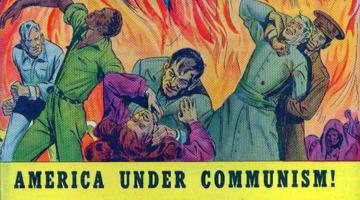 ‘Anti-Communism Week’ is a legal blueprint for crushing dissent. By labeling social justice activism as terrorism and empowering a new national task force, the state is preparing for the most intense…
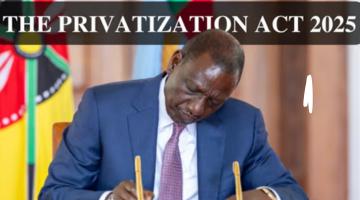 Kenya is auctioning its sovereignty to foreign powers. The final item on the block is the genetic data of its own people.
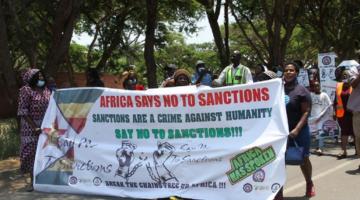 The West's concept of human rights has always justified imperialism. The People(s)-Centered Human Rights framework offers a radical alternative—a practical tool for oppressed people to define their…
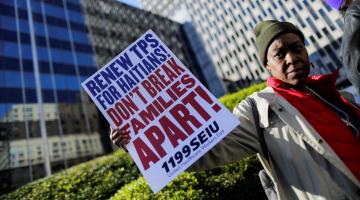 U.S. immigration policy is the domestic arm of its foreign policy. The attack on Haitian migrants is a direct consequence of Washington's ongoing war on Haiti's sovereignty, making their defense a…
 Venezuela's revolution is a project of Afro-descendant empowerment and a force against imperialism that has long exploited the African diaspora and the Global South.


