As I wrote a couple of years ago, the decision of the capitalist ruling class to intensify the class struggle in response to the upsurge of popular anti-capitalist and anti-imperialist struggles in the seventies created the conditions that are driving the ideological and political crisis of today. After more than 50 years of counterrevolution in the form of the right-wing Neoliberal reform project, U.S. society and political discourse have dramatically shifted to the right. Political struggles among the ruling elements that were non-violently played out in the general electoral process have now turned violent, irrational, and counterproductive for the long-term sustainability of the system as a whole. The implosion of the Democratic Party as a result of the party bosses attempting to displace the party’s nominee and the bipartisan commitment to war by both parties as the most effective weapon to prop up profits and maintain global U.S. hegemony are by-products of this deepening crisis of the system and affirm that absent radical structural change the electoral process will only provide the illusion of popular rule.
The agenda was set with the Lewis Powell Memorandum in 1971. Written at the request of the United States Chamber of Commerce, probably the most influential structure of capitalist rule at the time, the concern for the Chamber was the need to find a more coherent counter-offensive to the attacks against the system over the previous years. At the center of the anti-system attacks during the 1960s was, of course, the Black Liberation Movement and the Anti-War Movement.
Powell made the argument that the capitalist class had to recognize that their very survival was at stake and that meant capitalists had to understand that as a class their interests transcended their individual enterprises.
And while the tone of Powell’s memo was “professional” and lacked rhetorical excesses, the need for a more intentional and strategic class war was the call that leaped out from the Powell memo.
“The day is long past when the chief executive officer of a major corporation discharges his responsibility by maintaining a satisfactory growth of profits, with due regard to the corporation's public and social responsibilities. If our system is to survive, top management must be equally concerned with protecting and preserving the system itself.”
The policy implications were obvious. The U.S. ruling class concluded that it could no longer afford the “excesses” of the liberal welfare state and reform liberalism that as far as it was concerned had produced a failed war strategy, cultural decadence, rampant inflation, urban riots and demands for rights from groups representing every sector of U.S. society.
This was the beginning of the right-wing neoliberal turn. A societal-wide counterrevolutionary policy that also required a domestic counterinsurgency strategy that would have a military, but more importantly, an ideological/cultural component. Domestically the main target of the counterinsurgency would be the revolutionary nationalist and socialist forces of the Black liberation movement and “new communist” formations.
Internationally, the turn to neoliberalism translated into a brutal intensification of colonial/capitalist (imperialist) value extraction from nations in the global South buttressed by weak, corrupt, repressive neocolonial states politically and militarily propped-up by the U.S.
The neoliberal counterrevolution produced irreconcilable contradictions that we are living through today. The gap between rich and poor nations and between workers and capitalists had never been more pronounced and immiseration so cruel.
For the Black working class, the neoliberal turn was a catastrophe. The off-shoring of the U.S. industrial base with its relatively high paying jobs along with the reorganization of the economy to a service economy and the privatization wave that devastated social services and public employment where black workers were disproportionately located created structural precarity that only needed one incident to push tens of thousands into desperation. In the 2000s there were two. Hurricane Katrina and the economic collapse of 2008 that saw the greatest loss of Black wealth and income since the end of the reconstruction period between 1877 and 1896.
Compounding this devastation, the crimes against humanity represented by the 2020 covid pandemic in which literally tens of thousands of Black people, mainly poor, unnecessarily died because the state failed to protect their fundamental human rights to health and social security.
While Katrina exposed the fragility of Black life in the Gulf Coast, the economic crisis of 2008 just a few years later plunged millions of African workers into a desperate, depression era scramble for survival in conditions where Black labor was superfluous, and the very existence of Black life was seen as a social problem. The mass slaughter of the covid pandemic closed out the first two decades of a century that was supposed to exemplify “American” greatness with a demoralized and confused electorate turning to a washed-up hack politician named Joe Biden.
Midterm Elections: If Stopping Fascism is on the Ballot, what was it the Africans Experienced all These Years?
Neoliberalism was a rightist capitalist reform project. Today it informs the context for the midterms elections for African/Black workers. The objective material needs of Black workers and our desire for self-determination, independent development and peace were not on the ballot.
And while the duopoly represents the primary political contradiction obscuring the reality of the dictatorship of capital, the most aggressive neoliberal actors now operate in and through the Democratic Party. Consequently, the unspoken character of the competition between the two parties is that elections have now shaped up since 2016 as a contest between the far-right elements represented today by Trump forces and the neoliberal right represented by corporate Democrats tied to finance capital and transnational corporations.
This is the undemocratic choice. The Republicans represent the disaffected white nationalist petit-bourgeoisie settlers who think they are indigenous to this land. The ruling corporate capitalist elements of that party are for the most part nationalist oriented, dependent for their profits on the domestic economy. Some elements produce for the global markets, but they are in constant struggle with big capital as the capitalist economy “naturally” concentrates into its monopoly stage.
Democrats who historically had been associated with labor and the common man even during the period when it was the party of racist segregation under the apartheid system in the South, is today the party controlled by U.S. based monopoly capital. For workers, this form of bourgeois democracy has no space or structure representing the interests of workers, the poor and structurally oppressed. The working class and poor are slowly beginning to understand that.
That is why early evidence suggests that African/Black workers did not participate in numbers that were necessary for the Democrats to have prevailed in some of those key races. The Democrats have nothing to offer, no policies, no hope, and no vision.
Some of the cowardice phony “progressives” in that party suggest that the national Democrats did not push an economic message even though it was clear that the economic crisis was their most pressing concern.
But what economic message? The Democrats long ago abandoned their base and they continue to desperately find ways to dilute the influence of their most loyal base – African Americans – by seeking out that elusive white, primarily female, suburban vote.
What the midterms reaffirmed is that the class war that Powell advocated for in the 70s as a primary strategic objective of the ruling class continues and is intensifying, even as the ruling class is in crisis and cannot rule in the same way. This means that the people must disabuse themselves of all illusions and sentimental ideas around common national interests with this reckless and increasingly irrational bourgeoisie.
We cannot allow ourselves to fall prey to the slick propaganda that diverts attention away from the failures of the capitalist system. January 6th and Trump, evil Putin, the calculating Chinese, the exaggerated crime issue, and immigration issue, are all meant to divert us away from the fact that our lives are empty, that we have no time for friends and family, mindless soul crushing work characterizes our existence, if we have it, and the fear and anxiety that comes from a precarious existence saps our spirits and turns our confusion and anger inward.
Ideological clarity that stems from a liberated consciousness directs us to the conclusion that it is the system that is the enemy. Not our neighbor, or the undocumented gardener or food delivery person, not the peoples of Nicaragua, Haiti, Venezuela and Cuba who just want to live in their own way and in peace.
The Democratic Party is a morally bankrupt shell, hollowed out by years of lies and corruption. Many do not want to accept the bitter reality that we (Africans and colonized peoples) must objectively acknowledge, that nothing will substantially change by this election or any other bourgeois election. We can and must contest in those spaces but we are clear - as long as power is retained by the Pan European colonial/capitalist dictatorship Black people will continue to suffer and collective humanity will face an existential threat.
Ajamu Baraka is the national organizer of the Black Alliance for Peace and an editor and contributing columnist for the Black Agenda Report. Baraka serves on the Executive Committee of the U.S. Peace Council and leadership body of the U.S. based United National Anti-War Coalition (UNAC) and the Steering Committee of the Black is Back Coalition.





 Abayomi Azikiwe, editor of the Pan-African Newswire, discusses Israeli recognition of the Somaliland region, the US reduction of sanctions on Eritrea, a new anti-government alliance in Ethiopia, and…
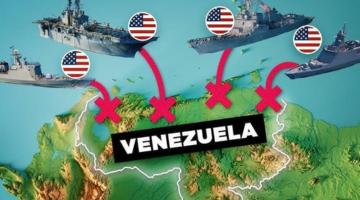 The trope of the United States being in a state of decline is a common one, but it should not be accepted without scrutiny. The U.S. faces crises but remains dangerous, powerful, and single-minded in…
 “...the science for revolutionary change…is forged by human persuasion and building social consciousness based on the class analysis which sees the struggle against racism as central.”
 Symone Sanders interview with Hasan Piker exposed her as a bad-faith interlocutor who uses identity as a cudgel while remaining silent on the poverty, pollution, and police violence that plague the…


