Bra Hugh Masekela, Apr 4, 1939 - January 23, 2018. He grazes now with the ancestors.
“ Up to the very end he was critical of the way in which the top leadership of the African National Congress had capitulated before international capital.”
It was less than a year ago on March 15, 2017 when I sat down with Hugh in Sandton to talk about his support and participation in the second Kwame Nkrumah Cultural and Intellectual Festival. I had contacted Hugh through our mutual cultural worker friends to request that he participate in the Festival that was scheduled for June 25, 2017. In the communication, Hugh had expressed an interest in coming to the public lecture that I was scheduled to deliver on March 14 at the University of Johannesburg. Before the lecture he had sent his regrets that he could not come to the lecture but dispatched Rapelang Leeuw to collect me so that he could discuss his contribution to this festival.
The theme of the Festival was Education for Transformation.
From the outset of the discussion, Hugh Masekela made it clear that he supported the idea of the Festival, and that he would travel to Legon, Ghana and perform at his own expense. After explaining the nature of the enterprise to promote the ideas of Kwame Nkrumah for a free, emancipated and socialist Africa, Hugh called up Mbongeni Ngema (composer and director of Sarafina! fame) to discuss how the Sarafina! expression of defiance could enhance the festival. After brainstorming for two hours of how much it would cost to bring the group of over 70 performers to Ghana, we agreed that we would look for sponsors and to see the availability of the Ghana National Theatre for their performance in Accra.
His life had been dominated by the experiences of Sharpeville, police brutality, racism , exploitation and resistance.”
Hugh was excited about his planned trip to the USA in May 2017 to promote his new album of 2016, No Borders. I left Johannesburg with the optimism that Masekela had fired up in his enthusiastic support for this new push for African Unity and for politically educating the youths about the tasks ahead. In May when I contacted the manager to discuss the logistics of his participation in the Festival, we were informed that Hugh would not be well enough to perform. We did not then know that Hugh would never perform again. Hugh fought a long battle with prostrate cancer and joined the ancestors on January 23, 2018.
For over 60 years Hugh had been at the forefront of world revolutionary trends and made his mark at the site of the global anti racist struggles. It was fifty years ago in the midst of the ‘68 uprisings when Masekela used his trumpet to inspire the youths who were then fighting for revolutionary change all over the world. His album and the lead song, Grazing in the Grass , was a song of inspiration. His sounds of struggle, inspiration, revolutionary change and love are now part of the history of revolutionary music of the end of the twentieth century and early twenty first century. Born in 1939 in the period of fascism and warfare, his life had been dominated by the experiences of Sharpeville, police brutality, racism , exploitation and resistance. In response, he sought avenues for self expression and articulation and up to the very end he was critical of the way in which the top leadership of the African National Congress had capitulated before international capital. In our discussion he shared the regrets that Bishop Trevor Huddleston had expressed over the compromises made by the liberation movements in seeking to enter the corridors of power in Pretoria.
“Masekela used his trumpet to inspire the youths who were then fighting for revolutionary change all over the world.”
Masekela felt strongly about the looting spree that had been undertaken by sections of the leadership of the African National Congress under the banner of Black Economic Empowerment (BEE). In many ways, his salvation had come from his immersion in the anti racist struggles in North America, and his internship with the greats of African American jazz leaders. Hence, there had been no compromise by Masekela when the political leaders embraced neo-liberalism to justify their own primitive accumulation of capital. He could rub shoulders with dignitaries but he never forgot where he came from. All over the world leaders sought his music and his performance before the Queen and Nelson Mandela at the Royal Albert Hall in 1996 showed his irreverence before pomp and piety when he danced in the Royal box.
Hugh Masekela had left South Africa soon after the Sharpeville massacres but he never forgot the conditions of oppression of the working peoples. His autobiography Still Grazing: The Musical Journey
“There had been no compromise by Masekela when the political leaders embraced neo-liberalism to justify their own primitive accumulation of capital.”
During the era of apartheid repression and collaboration between the US government and the racist regime in South Africa, Masekela remained in the vanguard of the movement and made numerous songs to defy the barbarism of racist capitalism. When the South African government had launched its Total Strategy to destroy the liberation movements, Masekela released the song “Bring Him Back Home.” In the period of Margaret Thatcher and Ronald Reagan, the racists had decided that Nelson Mandela would die in jail and that the liberation movements would be crushed. The song calling for the release of Mandela pushed forward the sanctions campaign and the Free Mandela campaigns at a crucial moment in the history of the anti-apartheid struggles.
By 1989, after the military defeat of the South African armed forces at Cuito Cuanavale, Masekela relocated to South Africa, and in 1990 he immersed himself into the lively jazz scene that had sustained the spirits of the peoples all through the terrorism of apartheid. As a member and strong supporter of the Cultural Reclamation Forum, a group of progressive literary, visual and musical artists and cultural workers based in Johannesburg, Masekela’s voice gave guidance and inspiration to many discussions and specific programs held to provide focus during the turbulent period of new state construction.
“It was the struggles of the working poor that fired him up.”
The sentiments and ideas of freedom that he promoted were on full display when Masekela acted as a node for the progressive artists and musicians who had come forward for the African Union concert held at the Sandton Convention Centre in Johannesburg on 9th July, 2002, The cultural artists brought the songs of peace before a large audience (live and via radio, television and internet). A group going by the name of Joyous Celebration brought together the voices of all races in South Africa to provide inspirational music for the ongoing struggles to transcend the heritage of apartheid in South Africa and by extension, global apartheid. The artist Lagbaja from Nigeria echoed the cries for peace and justice. Performing in a mask, this artist declared that his face would not be shown in a performance until all of the ordinary workers in Africa have justice. In the Yoruba language (Nigeria), Lagbaja means variously somebody, anybody, everybody and nobody in particular. It is a specific reference to the loss of identity of African peoples and Lagbaja sang on behalf of the faceless Africans in all parts of the world.
Another singer, Letta Mbulu, brought out the songs of peace and love of African women. Functioning as a cultural artist and as the UNICEF representative in Southern Africa she served a representative for peace and unity and seeks to mobilize oppressed women as the powerful forces of peace. Oliver Mtukudzi, the Zimbabwean singer, is a musician and lyricist singing songs of liberation since 1977. Fifteen years ago he worked with Masekela as a cultural artists opposing the brutality and repression of the Zimbabwean government. In his rendition of the song, “What are we going to do?,” one African activist noted that this call was the twenty first century rendition of Lenin’s, What is to be Done ?
“His autobiography provides a clear statement of his internationalism and his commitment to the rights of oppressed peoples.”
The power of this call for new politics and new mobilization was reflected in the reality that the cultural artists were using all of the communications media of the twenty first century to speak in all of the languages calling for peace. While singing in Shona and Ndebele (languages of Zimbabwe), Tuku (as Mtukudzi is called) was communicating to the young and the old and asserting the claim that the cultural artist was offering a different kind of leadership.
This message was underlined by the anchor of the evening – Hugh Masekela. It was in this setting that Masekela brought together his tremendous international experience as trumpeter, bandleader, composer and lyricist. On this occasion, Masekela understood that he was now reaching another generation different from the era of John Coltrane and Janis Joplin. He did not disappoint.
At the launch of the African Union Masakela was at the forefront of composing the theme song for this continental representative organization. The song that underlined the depth of the feeling of the mass of the people of Africa was the entitled, “Everything Must Change .” This was a song calling on all of the old leaders such as Eyadema of Togo, Moi of Kenya and Mugabe of Zimbabwe to step down. Masekela drew attention to the destructiveness of the militarists such as Jonas Savimbi and the militarists in Liberia and called on the African youths to struggle for peace.
VIDEO The songs “Change” and “Stimela” sent a clear message to leaders such as Thabo Mbeki who had become an apologist for “nationalists” such as Mugabe. Whether it was in Ghana, New York or Johannesburg, freedom lovers will this week join in the celebration of the contribution of Hugh Masekela
Rest well freedom fighter. Your music will continue to inspire those who have never surrendered.
Horace Campbell is Professor of African American Studies and Political Science, Syracuse University. He is the author of Global NATO and the Catastrophic Failure in Libya , Monthly Review Press, 2013.
This article previously appeared in Counterpunch

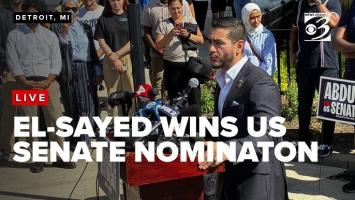 Abayomi Azikiwe is editor of the Pan-African Newswire and a Detroit resident and activist. Dr. Abdul El-Sayed won the Democratic Party primary for the senate in Michigan, defeating the establishment…
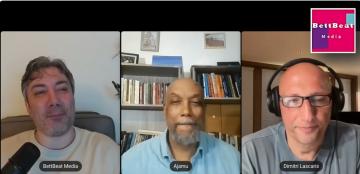 Ajamu Baraka and Dimitri Lascaris join BettBeat media to interrogate the questions the anti-imperialists keep refusing to ask.
 The evisceration of the Voting Rights Act is of great concern to Black voters. But most of them are affiliated with the Democratic Party, whose leadership have no real interest in making it a…
 “I don't mean just in the struggles in these prisons. America is one whole concentration camp in and of itself.”
 "During the last week of July, I traveled to the front lines of Somalia’s unresolved border conflict with Somaliland, the Somali secessionist state now recognized by Israel but not by


