by BAR editor and senior columnist Margaret Kimberley
If ever there was a clear path to reparations for the descendants of slaves, it is in compensation to the progeny of the 272 men and women sold South to save the Jesuit school that became Georgetown University. The institution’s $1.5 billion endowment is at least partially owed to an identifiable group of Black people. “If Georgetown pays up like it ought to they can go to any college or make whatever financial decisions they choose.”
Freedom Rider: Georgetown Should Pay for Slavery
by BAR editor and senior columnist Margaret Kimberley
“The people held on the Jesuit plantations were doomed to be sent into a lower rung of hell than the one they already inhabited.”
When the Civil War began in 1861 the total value of enslaved people in the United States was “worth more than all of America’s manufacturing, all of the railroads, all of the productive capacity of the United States put together. Slaves were the single largest, by far, financial asset of property in the entire American economy. The only thing worth more than the slaves in the American economy of the 1850s was the land itself.” Myriad institutions owed their existence to the vast fortunes created by chattel slavery.
In a recent series of articles the New York Times revealed that Georgetown University is on that list of infamy. In 1838 what was then a struggling Jesuit college chose to sell 272 enslaved people to toil on Louisiana sugar plantations.
The Jesuit religious order owned plantations in Maryland beginning in the 1700s. According to the Times, these properties were “badly managed” and “inefficient.” It isn’t clear how those words are defined by the newspaper but productivity in the plantation economy meant that enslaved people had to suffer very badly in a concentrated labor pool.
That task was left to the states of the deep South, who perfected extracting productivity as their need for free labor grew. By the 1830s they were already draining the upper South of its enslaved population. Cotton and sugar cultivation were extremely profitable and demanded a constant and massive flow of chattel slaves in order to stay that way. The people held on the Jesuit plantations were doomed to be sent into a lower rung of hell than the one they already inhabited.
“The descendants should be well compensated for their ancestors’ contribution to Georgetown’s wealth.”
After the publication of the New York Times articles, some descendants of those enslaved people have been located, identified by name, and interviewed. Their thoughts and feelings are now public but neither they nor anyone else has made a simple demand of Georgetown University. They should be paid in cash.
It is now clear that the college which became Georgetown University continued operating precisely because those 272 people were sold to ensure its survival. Georgetown now has an endowment of $1.5 billion. Like all non-profit organizations in this country it pays no taxes, no matter how wealthy it ever becomes. All of this money is a result of the 1838 sale and the descendants of that human property are owed some portion of it.
It is interesting that the most obvious resolution to the wrong doing has been mentioned so little, that the descendants of the Georgetown enslaved be paid directly. There have been proposals to create scholarships or build a monument or undertake some other commemorative effort. That is all well and good but the descendants should be well compensated for their ancestors’ contribution to Georgetown’s wealth. Let the descendants decide where their children or grand-children go to college. If Georgetown pays up like it ought to they can go to any college or make whatever financial decisions they choose. That would be true justice.
Of course all African descended people in the Americas are owed reparations for their ancestors’ unpaid financial contributions. The descendants of the Georgetown enslaved are fortunate to know the circumstances of their ancestors’ fates and the fact that they directly enriched an institution that still exists and thrives. They are poster children for how the reparations demand might work in a particular circumstance.
“Georgetown should be on the hook for millions of dollars.”
But as Black Agenda Report has already pointed out, the effort needed to make reparations a reality is mired in what amounts to wishful thinking and talking points for the misleadership class. For most people fundamental societal readjustments towards socialism and justice can right many wrongs. Those changes are hard to discuss, plan or see enacted. That is why so many people would rather have fanciful discussions than be serious about difficult matters.
In the meantime, when a situation appears that makes a direct settlement possible, it should be acted upon without apology. White people usually feel aggrieved at the very thought of black people benefitting from anything for any reason, so of course they will shout denunciations. Pundits will fume and rich alumni will refuse to keep giving rather than pay for a huge crime. No matter. Georgetown should be on the hook for millions of dollars and if the corporate media are really interested in the story they ought to make the case for that too. Scholarships be damned.
Margaret Kimberley's Freedom Rider column appears weekly in BAR, and is widely reprinted elsewhere. She maintains a frequently updated blog as well as at http://freedomrider.blogspot.com. Ms. Kimberley lives in New York City, and can be reached via e-Mail at Margaret.Kimberley(at)BlackAgendaReport.com.

 Ngũgĩ wa Thiong'o reminds us that the primary contradiction in Africa is imperialism and its meek comprador bourgeoisie enforcers.
 Over a year in advance, the Black Misleadership Class has kicked their efforts to corral Black people into the Democratic party, despite the Dems’ apathy toward Black politics or the concerns of…
 The US empire is continuing its psychological warfare campaign by conducting a mass mobilization of resources and waging a propaganda offensive to protect its interests in the Middle East.
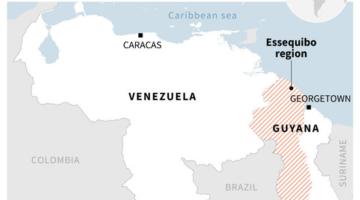 Despite the reality of US intervention causing inhumane conditions in the region, Venezuela’s push for the annexation of Guyana’s Essequibo region prioritizes its own political objectives,…
 Survivors open up about struggles with lingering post-traumatic stress disorder 18 years after the storm


