Many families have taken refuge at the Kanyaruchinya site for people displaced by fighting in DRC's North Kivu Province. UNICEF/Jospin Benekire, 2022
Likening the suffering of Gazans to that of Rwandan Tutsis perpetuates the narrative that has dominated the African Great Lakes Region for 30 years, allegedly justifying the sacrifice of millions of Congolese.
Since the Gaza Genocide began, many people have likened it to the 1994 Rwandan Genocide and likened Gazans’ suffering to that of Rwandan Tutsis in 1994. Those making this comparison now include Navi Pillay, head of the Independent International Commission of Inquiry on the Occupied Palestinian Territory, including East Jerusalem, and Israel, which last week concluded, in a 71-page report, that Israel is indeed guilty of genocide.
This conclusion is of course a good thing, long overdue, but the comparison is pernicious, no matter how well-intentioned. It perpetuates the narrative that has dominated the African Great Lakes Region for 30 years, allegedly justifying the sacrifice of millions of Congolese lives. Over and over, beginning with the 1996-1997 First Congo War, Rwanda has invaded, occupied, and plundered the Democratic Republic of the Congo (DRC), using the Rwandan Genocide as its excuse.
Rwandan President Paul Kagame never stops saying that his forces have to hunt down Hutu militias in the Congolese jungle, to keep them from returning to Rwanda to commit another genocide. He repeats this like a broken record even as he denies his troops are in DRC.
Rwanda and Uganda invaded the Democratic Republic of the Congo, which was then Zaire, from October 1996 to May 1997, joining an alliance with a Congolese front that crossed the country to topple Mobutu Sese Seko, the aging dictator whom the West had installed after assassinating Patrice Lumumba. As a Newsweek analyst explained at the time, in “Washington’s Africa Move,” the US backed that alliance to displace France as the dominant power in the region and install Laurent Kabila.
Kabila not only proved insufficiently US-compliant but also told Rwandans that they could not remain in Congo as conquerors. The US then backed Rwanda and Uganda’s second invasion, starting the Second Congo War, which lasted from August 1998 to July 2003 and drew in all nine countries bordering DRC.
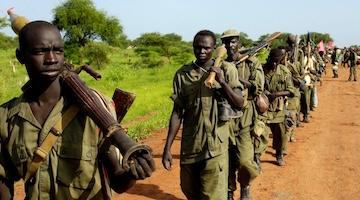
The Second Congo War ended with a peace treaty signed in 2003, but Rwanda and Uganda have continued to invade and occupy DRC ever since, and Rwanda now controls the capitals of Congo’s North and South Kivu Provinces. It often uses proxy militias—including the most recent, M23—but the presence of its own troops has also been documented in decades of UN reports. The 2024 and 2025 reports said that the numbers of Rwandan troops actually exceeded those of M23.
In 2007, the International Rescue Committee concluded that 5.4 million people had died in the conflict, mostly of consequent displacement, hardship, and disease, since 1998.
In 2010, the UN Mapping Report on Human Rights Abuse in the Democratic Republic of the Congo, 1993 to 2003 concluded that Rwandan troops had massacred tens of thousands of innocent Hutu refugees in what a competent court would likely rule to be genocide.
Western government and media support have nevertheless kept Kagame and his Tutsi elite’s excuse alive, and now Navi Pillay is reinforcing it.
Navi Pillay, the ICTR, and the one-sided narrative
The infamous “100 days of genocide” that took place in Rwanda between April 6 and July 4, 1994, were the conclusion of the four-year Rwandan War that began when Paul Kagame, with US backing, led the Rwandan Patriotic Army (RPA) invasion of Rwanda from Uganda on October 1, 1990.
As I have often explained here in Black Agenda Report, it was a far more complex story than the simple, Manichean tale told in Hotel Rwanda and constructed at the International Criminal Tribunal for Rwanda. Yes, Rwandan Tutsis were massacred by Rwandan Hutu militias. Yes, the massacres fit the definition in the UN Convention on Genocide. However, Rwandan Hutus were also massacred by the advancing Rwandan Patriotic Army led by then General, now President, Paul Kagame. General Paul Kagame’s own Defense Chief, Kayumba Nyamwasa, testifies that Kagame ordered the assassination of Rwandan President Juvenal Habyarimana, sparking the genocide after four years of war and mass displacement.
As I have also previously explained, the US—the undisputed hegemon at the time—created and funded the International Criminal Tribunal for Rwanda, like the International Criminal Tribunal for Yugoslavia, to construct a useful imperial narrative. Only Hutus, those Noam Chomsky and Ed Herman called “unworthy victims,” were prosecuted. Tutsis were the “worthy victims” and not one was even indicted.
As a former Chief Prosecutor at the ICTR and chair of the Independent International Commission of Inquiry on the Occupied Palestinian Territory, including East Jerusalem, and Israel, Navi Pillay is perfectly situated to promote the pernicious comparison between Gazans and Rwandan Tutsis.
Is she doing so intentionally in service to Rwanda? There’s no evidence of that, although it is worth noting that she was the UN High Commissioner for Human Rights when the Commission produced the 2010 UN Mapping Report, and in that position, she stated that she thought it had been unfair to Rwanda.
Whatever her motivation, the comparison made by her and anyone else is a grave disservice to the long suffering Congolese.
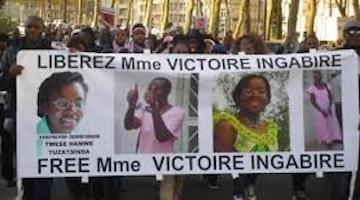
Ann Garrison is a Black Agenda Report Contributing Editor based in the San Francisco Bay Area. In 2014, she received the Victoire Ingabire Umuhoza Democracy and Peace Prize for her reporting on conflict in the African Great Lakes region. She can be reached at ann@anngarrison.com. You can help support her work on Patreon.



 There are Arab governments going along with the U.S. push to normalize relations with Israel. But people throughout the region are adamantly opposed to such treachery, as the now suspended Foreign…
 Nothing is sacred under capitalism. Even hip hop, the genre which spoke to Black politics and culture is now just another commodity.
 Any celebration of the 50th anniversary of hip hop must reference its worldwide political appeal.
 The state of Georgia is using the RICO organized crime statute to crush Stop Cop City protests.
 Socialists, organizers, and working class leaders in the United States describe the challenges the movement faces, and what is to be done to overcome them.


