A Black Agenda Radio commentary by executive editor Glen Ford If you believe public health officials, lead levels in Flint, Michigan’s water have finally fallen to acceptable levels. The problem is, nobody in Flint has any faith in official pronouncements, and there’s a lot more wrong with the city’s water than just lead. It’s been more than 1000 days since the water has been safe to drink. An investigative report shows nearly 3,000 communities across the country have more lead contamination than Flint.
Flint’s 1000-Plus Days Without Safe Drinking Water A Black Agenda Radio commentary by executive editor Glen Ford “Residents have been fooled ‘too many times’ and will never trust the water again.”
Flint, Michigan, a city that used to be famous for producing cars but gained notoriety almost three years ago for its poisoned water supply, last week marked its 1000th day without clean drinking water. Nevertheless, the 100,000 mostly poor, predominantly Black residents of Flint have been informed that the current levels of lead in their water no longer exceed federal limits. That would be good news – if you could believe it, and if lead were the only problem with Flint’s water. Mona Hanna-Attisha doesn’t believe the water is safe for drinking. She’s the pediatrician who helped blow the whistle on skyrocketing rates of lead in the blood of Flint’s children, after state emergency financial managers forced the city to draw its water from the heavily polluted Flint River. Dr. Hanna-Attisha says the federal regulations are too weak to protect young brains and bodies from stunted development.
Gina Luster, a community organizer in Flint, warns that, even if lead levels are down, the there’s plenty of other harmful stuff in the water. Her advice is, “Don’t drink the Kool-Aid.” Luster says she and other residents have been fooled “too many times” and will never trust the water again.”
Nine people have so far been criminally charged in the poisoning of Flint’s water, eight of them state employees. But no one at the federal Environmental Protection Agency, which has broad powers over the whole country’s water supply, has been charged with a crime. The EPA, however, is on President Donald Trump’s hit list -- not for failing the people of Flint, but for sometimes getting on the wrong side of Trump’s friends in polluting industries. The Trump administration has frozen all EPA grants and contracts, which put in question $100 million that Congress allocated to help Flint replace and repair its water infrastructure. Michigan’s two Senators, both of them Democrats, got worried when they heard about the freeze from news reports. Neither the White House nor the EPA could say for sure whether Flint’s money had been tied up by the freeze. Plus, the money doesn’t exactly have Flint’s name on it. The $100 million is supposed to be awarded to “a municipality that is, or has been, the subject of an emergency declaration due to lead contamination. The bill doesn’t mention Flint by name. However, the funds should eventually find their way to Flint, since it’s the only city in the country that fits that description.
Multiply that by 3,000
But, when it comes to lead poisoning, Flint is anything but alone. An investigative report by the Reuters news agency, in December, showed that children in nearly 3,000 communities across the country show lead levels in their blood at least twice as high as kids in Flint. In more than 1,100 neighborhoods, kids tested four times higher than children in Flint. At the peak of the contamination of Flint’s water, 5 percent of children tested had high levels of lead. However, in some neighborhoods in South Bend, Indiana almost one-third of the kids had high lead levels. Pennsylvania is the state with the most census tracts with lead-contaminated water. Thirty-six percent of the kids in Warren, Pennsylvania tested high for lead.
So, if Flint needs $100 million to tackle a lead problem that is, supposedly, close to under control, how much money is needed to make the water safe in 3,000 other communities across the country?
For Black Agenda Radio, I’m Glen Ford. On the web, go to BlackAgendaReport.com.

 The Black Radical Tradition is the rich legacy passed down by revolutionaries. It is an important tool today as we struggle to turn the Americas into a Zone of Peace.
 The trial of former Peruvian president Pedro Castillo, the victim of a 2022 lawfare-style coup, has begun. The legal process used against him is a sham covering up the human rights abuses…
 Trump administration interference in Panama has brought about a reckoning on migration and human rights throughout the region. These issues can no longer be ignored.
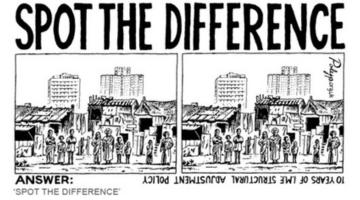 Presenting new research, Dylan Sullivan and Jason Hickel mount a devastating critique of the impact of structural adjustment in Africa in the 1980s and 1990s. Drawing on recent data on Africa’s…
 The messaging app Signal is touted as being a safe harbor from state surveillance. However, its connections to large corporate entities make organizers more vulnerable than they may think.


