by Ajamu Nangwaya
The unraveling of Sen. Don Meredith’s political career has nothing to do with Black “progress” in Canada. As a loyal member of the Conservative Party, Meredith supports mining interests that exploit Africa and, domestically, “is not on record opposing any of the anti-people laws of the right-wing regime in Ottawa.”
The Fall of a Right-Wing Black Canadian Politician
by Ajamu Nangwaya
“It is time we stop supporting people just because they share our skin color.”
The news of Canadian Senator Don Meredith’s expulsion from the parliamentary caucus of the ruling Conservative Party of Canada based on an allegation of sexual relations with a 16-year-old girl was greeted with shame, embarrassment and deep disappointment from some members of the Afrikan-Canadian community, which they expressed on social media; a collective “what a shame” reverberated on Twitter and Facebook.
Meredith’s fall from grace is seen as a collective one, because these characters see his presence in the Senate as a collective achievement and symbol of social or political possibilities for the whole Afrikan-Canadian community.
It is high time for the community to become more politically sophisticated in its understanding of politics and representation. Many Afrikan-Canadians need to abandon the empty and useless politics of symbolic political representation.
It is this same line of thinking that had Afrikans in Toronto cheering for the appointment of Deputy Chief Peter Sloly as police chief in spite of his strong support of carding.
The appointment or election of one person to a seemingly powerful position is not a substitute for policies and programs that substantively improve the economic standing of the working-class majority.
“Many Afrikan-Canadians need to abandon the empty and useless politics of symbolic political representation.”
The publisher/senior editor Arnold Auguste of Share newspaper is on-point with his expectation of Afrikan people in responsible positions:
“It is time we stop supporting people just because they share our skin color. We need more than that. We need to know that they share our values; our concerns; our fears, our sense of place in this society and, when placed in a position to make a difference, are willing to step up.
Senator Don Meredith is a politically conservative politician who went to Ottawa to execute the Harper government’s economic and social agenda that has been detrimental to the welfare of the working-class, Afrikans and other racialized peoples, Indigenous peoples, women, the environment, trade union members, students, retirees, unemployed and the socially marginalized Canadians in general.”
Meredith is not on record opposing any of the anti-people laws of the right-wing regime in Ottawa.
Senator Meredith and his Conservative colleagues in the House of Representatives and the Senate promote the economic and political interests of the capitalist class at home and abroad. Senator Meredith went before the national convention of the Akwa Cross Association of Canada extolling the virtues of the predatory Canadian companies that are operating in Nigeria.
He also praised the Canada-Nigeria Foreign Investment Promotion and Protection Agreement. It is a bilateral trade treaty like others signed with a number of Afrikan countries, which puts Canadian companies in a position to “sue a government if it expropriates a concession, changes investment rules or requires value added production take place in the country,” according to foreign policy commentator Yves Engler.
Canadian mining companies have an unsavory reputation in Afrika for their involvement in human rights abuses, labor exploitation and environmental destruction. Actually, the exploitative activities of Canadian firms are encouraged by the Harper regime through its opposition to passing a law that would regulate their operation in the global South.
“The Stephen Harper government, with the support of Senator Meredith, has been shredding the social safety net and attacking trade unions.”
The politically aware members of the Afrikan working-class would not be embarrassed by the alleged behavior of a man who supports the exploitation of the natural resources of Afrika by imperialist and capitalist foreign interests.
On the domestic front in Canada, Senator Meredith is an unabashed supporter and booster of capitalism. This political position is inconsistent with the interests of the Canadian working-class in general and the Afrikan-Canadian working-class in particular.
It is important to note that it was the need for a servile and dependable labor force by an emergent (mercantile) capitalism that led to the enslavement of Afrikans in the Americas. Even today, the workers from the Afrikan community in Canada are among the most exploited sections of the national labor force.
Neoliberal capitalism in Canada has intensified the economic hardship faced by the people of Canada, especially for Afrikans, other racialized peoples and the Indigenous peoples. The Stephen Harper government, with the support of Senator Meredith, has been shredding the social safety net and attacking trade unions that are supposed to operate as instruments of working-class resistance.
Given the lower income and sparse wealth of Afrikan-Canadians, they need a social welfare infrastructure that provides adequate income when unemployed, a livable income when receiving social assistance, access to a good public pension income, strong funding of public or social housing, and adequately funded social services.
Senator Meredith’s political agenda is in line with that of Harper when it comes to the social safety net. Even when the good senator is supportive of the federal government providing assistance to single working individuals, lone-parent families and people with disabilities, he is in full alignment with the Harper regime’s copying of the Elizabethan Poor Laws’ idea of only helping the deserving poor.
“Symbolic political representation is useless.”
Meredith’s Income Inequality and Wealth Statement that was delivered before the Senate supported the use of tax benefits to direct income to poverty-stricken sole-parent households and single working individuals.
The provision of a publicly-funded national childcare program, a guaranteed annual income, relaxing the restrictive eligibility rules of the Employment Insurance plan and increasing its benefits level, and allocation of robust funding to social housing would go a long way toward eliminating poverty. This policy direction would be too good for the socially-marginalized.
There are petty bourgeois admirers of Senator Meredith in the Afrikan community who point to his advocacy for Afrikan youth, participation on a number of police-created community liaison committees, advocacy for the acknowledgement of Afrikan-Canadian veterans, and support for the recognition of the late Lincoln Alexander.
It certainly does not take a lot to politically impress some political actors. The members of the Afrikan-Canadian working-class need adequately funded social and income security programs and a strong social safety net. Symbolic political representation is useless to their material needs.
Given the direction of the policies favored by Senator Meredith and them not being beneficial to most members of the Afrikan community, there are no logical reasons for it to feel shame over the predicament of this conservative politician. Ideologically-speaking, Meredith is a class enemy of the Afrikan-Canadian working-class majority.

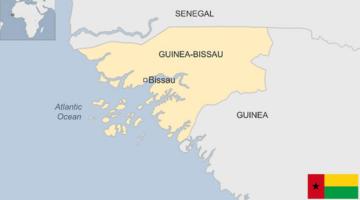 Rafiki Morris joins us from Washington D.C. to discuss the upcoming demonstration, “Open the Peoples National Assembly in Guinea-Bissau” and why this action is so important.
 Dr. Jemima Pierre joins BreakThrough News to discuss the nationwide uprisings in Haiti where thousands of demonstrators have flooded the streets calling for the ouster of the unelected Prime Minister…
 Public reaction to the Fani Willis soap opera is an example of how cynical Black misleadership creates confusion among the masses.
 At a rally against the House Un-American Activities Committee, insurgent playwright Lorrainne Hansberry called on artists to shake off the fear and incoherency of the world to defend the peoples’…
 Rwanda’s M23 militia and Rwandan Special Forces have been advancing on Goma, the capital city of North Kivu Province in the Democratic Republic of the Congo (DRC). Ann Garrison speaks with Congolese…


