A Nakba survivor sitting in front of her humble dwelling in the Shati Refugee Camp in the besieged Gaza Strip. (Photo: Mahmoud Ajjour, The Palestine Chronicle)
The catastrophe for the Palestinian people began 75 years ago and their struggle against the apartheid state continues.
Originally published in RamzyBaroud.net.
On May 15, 2023, the Palestinian Nakba will be 75 years old.
Palestinians all over the world will commemorate the tragic occasion, known as the ‘Catastrophe’, when nearly 800,000 Palestinians were made refugees and nearly 500 towns and villages were ethnically cleansed of their inhabitants in historic Palestine between late 1947 and mid-1948.
The depopulation of Palestine carried on for months; in fact, years after the Nakba was supposedly concluded. But the Nakba has never actually concluded. Until this day, Palestinian communities in East Jerusalem, in the southern Hebron hills, in the Naqab Desert and elsewhere, are still suffering the consequences of Israel’s quest for demographic supremacy. And, of course, millions of refugees remain stateless, denied basic political and human rights.
In a speech before the ‘UN World Conference against Racism’ in 2001, Palestinian intellectual, Dr. Hanan Ashrawi aptly described the Palestinian people as “a nation in captivity held hostage to an ongoing Nakba”. Elaborating, Ashrawi described this ‘ongoing Nakba’ as “the most intricate and pervasive expression of persistent colonialism, apartheid, racism and victimization.” This means that we must not think of the Nakba only as an event in time and place.
Though the massive influx of refugees in 1947-48 was a direct outcome of the Zionist ethnic cleansing campaign as devised in ‘Plan Dalet’, that event had officially ushered in a greater Nakba, which continues to this day. ‘Plan Dalet’, or Plan D, was initiated by the Zionist leadership and carried out by the Zionist militias with the aim of emptying Palestine of most of its native inhabitants. They did so successfully, while paving the way for decades of violence and suffering, the brunt of which was borne by the Palestinian people.
In fact, the current Israeli occupation and entrenched racial apartheid regime in Palestine are not simply the intended or unintended outcomes of the Nakba, but direct manifestations of a Nakba that never truly concluded.
It is widely acknowledged, though sadly unfulfilled, that Palestinian refugees, regardless of the specific events which triggered their forceful displacement, have ‘inalienable’ rights under international law. United Nations Resolution 194 makes it legally impossible for Israel to flout these rights.
Indeed, UNGA Res. 194 (III) of 1948 resolved that “refugees wishing to return to their homes and live at peace with their neighbors should be permitted to do so at the earliest practicable date.” This must be carried out, according to the UN, by “Governments or authorities responsible.”
Since Israel is the government responsible, Tel Aviv quickly moved to shelter itself from any blame or responsibility. “Top secret” files retrieved by Israeli researchers and reported in the Israeli newspaper Haaretz, include a file named GL-18/17028. The document demonstrates how Israel’s first Prime Minister, David Ben Gurion attempted to ‘rewrite history’ soon after the first and major phase of the ethnic cleansing of Palestine was completed. To achieve his aim, Ben Gurion chose the most scandalous of all strategies: blaming the supposed flight of Palestinians on the Palestinian victims themselves.
But why would the victorious Zionists concern themselves with seemingly trivial issues as narratives?
“Just as Zionism had forged a new narrative for the Jewish people within a few decades, (Ben Gurion) understood that the other nation that had resided in the country before the advent of Zionism would also strive to formulate a narrative of its own,” Haaretz wrote. This ‘other nation’ is, of course, the Palestinian people.
The crux of the Zionist narrative on the ethnic cleansing of Palestine was, thus, predicated on the drummed-up claim that Palestinians had left “by choice”, even though it was becoming clear to the Zionists themselves that “only in a handful of cases did villages leave at the instructions of their (local) leaders or mukhtars.”
However, even in these few isolated cases, seeking safety elsewhere during times of war is still not an offense, and should not cost a refugee his/her inalienable right. If the bizarre Zionist logic becomes the standard in international law, then refugees from Syria, Ukraine, Libya, Sudan and all other war zones would lose their legal rights to their property and to citizenship in their respective homelands.
But the Zionist logic was not intended just to challenge the Palestinian people’s legal or political rights; it was part and parcel of a greater process known to Palestinian intellectuals as erasure: the systematic destruction of Palestine, its history, culture, language, memory and, of course, people. This process was reflected in early Zionist discourses, even decades before Palestine was emptied of its inhabitants, where the homeland of the Palestinian people was maliciously perceived as a “land without a people”.
The denial of the very existence of the Palestinians was expressed numerous times in the Zionist discourse and continues to be employed to this day.
All of this means that 75 years of an ongoing Nakba and the denial of the very existence of the enormous crime by Israel and its supporters require a much deeper understanding of what has fallen – and continues to befall – the Palestinian people.
Palestinians must insist that the Nakba is not a single political point to be discussed with Israel or bargained away by those claiming to represent the Palestinian people. “The Palestinians have no moral or legal obligation to accommodate Israelis at their own expense. By any standards, Israel has such an obligation to correct the monumental injustice it has committed,” wrote famed Palestinian historian, Salman Abu Sitta in reference to the Nakba and the Right of Return for Palestinian refugees.
Indeed, the Nakba is an all-encompassing Palestinian story of the past, present but also the future. It is not only a story of victimization, but also of Palestinian sumud – steadfastness – and resistance. It is the single most unifying platform that brings all Palestinians together, beyond the restrictions of factions, politics or geography.
For Palestinians, the Nakba is not a single date. It is the whole story, the conclusion of which will be written, this time, by the Palestinians themselves.
Ramzy Baroud is a journalist and the Editor of The Palestine Chronicle. He is the author of six books. His latest book, co-edited with Ilan Pappé, is “Our Vision for Liberation: Engaged Palestinian Leaders and Intellectuals Speak out”. Dr. Baroud is a Non-resident Senior Research Fellow at the Center for Islam and Global Affairs (CIGA). His website is www.ramzybaroud.net.

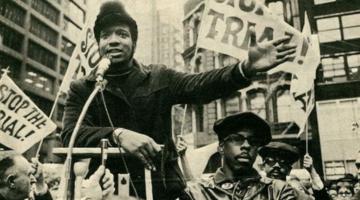 The thread connecting the struggles of Black and Palestinian liberation makes itself known in the propagandistic attacks on the Palestinian resistance. The assassination of Fred Hampton helps…
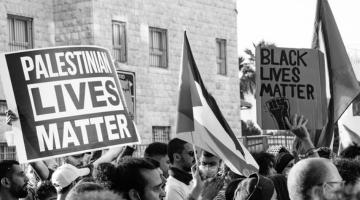 As the US continues to conflate every criticism of Zionism with anti-semitism, the predicable happens once again. Black people are used as an avatar of anti-Jewish sentiment. This tactic will not…
 Al-Fateh’s communique at the 1969 Festival of Pan-African Culture offered a brilliant analysis of the overlapping histories of European colonialism and white supremacy in Africa and Palestine.
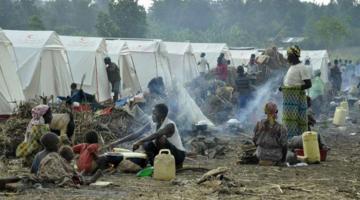 The ongoing crisis is a result of converging forces determined to pursue their own interests by controlling the affairs within the Congo and subjecting the masses to inhumane conditions.
 Ngũgĩ wa Thiong'o reminds us that the primary contradiction in Africa is imperialism and its meek comprador bourgeoisie enforcers.


