Deadly, Cowardly U.S. Drone Wars in Africa
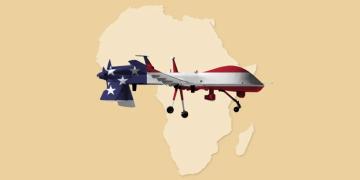
The anticipated reduction of US troops in Africa will be matched by an increase in killer drones.
“The U.S. is completing construction of a $100 million drone base in Agadez, Niger.”
War is romantic only when it is limited to the confines of a sanitized imagination. Movies that portray heroic soldiers vanquishing demonic enemy combatants or rescuing fallen comrades may whip up jingoistic war fever, but horrific images of real children and elders maimed, scarred, dismembered and killed during armed conflicts have the power to end wars. Graphic pictures of civilian victims of the Hiroshima and Nagasaki bombings account for a universal fear of nuclear weapons. Soldiers themselves are often deeply affected. Countless Vietnam veterans struggle with post-traumatic stress disorder because of up-close and personal observations of unspeakable violence directed at non-combatants.
Although it is claimed that some military strikes are designed to hit only military targets with surgical precision, far too often there are unintended civilian “casualties.” Gil Scott-Heron said it best when he noted there is nothing “casual” about dying.Civilized societies know this and in 1949 nations concerned about civilian deaths signed on to the Fourth Geneva Convention that was designed for the specific purpose of protecting wars’ innocent bystanders.
“Barack Obama, with his ‘kill list’ in hand, became the King of Drones.”
Notwithstanding the actual horror of civilian deaths, the U.S. apparently believes this loss of life is less horrible if nobody -- not even soldiers -- are able to see it. George W. Bush used remotely controlled lethal armed drones, but it was Barack Obama who, with his “kill list” in hand, became the King of Drones. In a 2016 article in The Atlantic, writer Conor Friedersdorf explained:
“The notion that the Obama Administration has carried out drone strikes only when there is ‘near-certainty of no collateral damage’ is easily disproved propaganda. America hasn’t killed a handful of innocents or a few dozen in the last eight years. Credible, independent attempts to determine how many civilians the Obama administration has killed arrived at numbers in the hundreds or low thousands. And there is good reason to believe that they undercount the civilians killed.”
The New America Foundation reported that U.S. drone attacks in Pakistan since 2004 have caused between 245 and 303 civilian deaths. In Yemen between 111 and 142 civilians have been killed by U.S. drones, and in Somalia there have been 22 to 37 civilian drone deaths. According to The Bureau of Investigative Journalism, since 2015, anywhere from 150 to 313 civilians were killed in Afghanistan, including between 36 and 77 children. And if that isn’t enough, in 2012, The New York Timesreported that when chronicling drone deaths, the U.S. “in effect counts all military-age males in a strike zone as combatants… unless there is explicit intelligence posthumously proving them innocent.”
“Drones have a smaller footprint, they are easier to run and deploy, and they don’t attract as much attention.’”
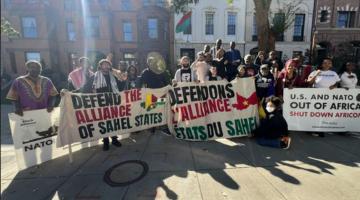
It is against this backdrop that the U.S. has announced plans to expand and increase drone strikes in Africa. The catalyst was the attack that killed four U.S. soldiers in Niger last year. The U.S. has blamed the killings on terrorism, but there is a political context into which these deaths must be placed. A decision to deploy approximately 800 U.S. troops in Niger was not made on an arbitrary whim. France has been a longtime collaborator with the U.S. in Africa, and that country has extensive uranium mining operations in the city of Arlit in Niger. Notwithstanding anti-terrorism rhetoric, France maintains a military presence in Niger to protect its mining operations and the U.S. assists. However, this engagement became a liability when four U.S. soldiers lost their lives, and the reality of military conflict smacked the U.S. public in the face yet again. Thus, a remote-controlled drone war has become a very attractive, far less messy option.
The U.S. is completing construction of a $100 million drone base in Agadez, Niger. “Drones have a smaller footprint, they are easier to run and deploy, and they don’t [attract as much] attention,” said Joshua Meservey, a Heritage Foundation analyst. Agadez will be the second armed drone launch site in Africa. Drones launched from Djibouti have had destinations in Yemen and Somalia.
Unlike previous administrations the Trump CIA will not limit its drone attacks to conventional war zones. All of this means civilian populations are endangered in regions of Africa that have not been drone target areas in the past. Africans’ horror, misery and death will be no deterrent to the violence because it will occur outside of the gaze of not only civilian populations worldwide, but also the soldiers in remote locations who cause it.
“Civilian populations are endangered in regions of Africa that have not been drone target areas in the past.”
As the use of drones increases, hundreds of U.S. troops are being withdrawn from Africa. They will be pulled out of Niger, Libya, Kenya and Cameroon among other places. It is also anticipated that the number of Special Operations troops in Africa will be reduced by 50 percent over three years.
In the end, the U.S. recognizes that the deaths of even four anonymous U.S. soldiers in Niger caused extraordinary pain for their families, which in turn created broad public resistance to U.S. war ventures in Africa. The horror of armed conflict became very real to an American population accustomed to ignoring misery experienced by much of the rest of the world. Against this backdrop, the U.S. is gathering up its own troops and scrambling from Africa like rats leaving a sinking ship. Although the U.S. wants no more of its own youths to die, it is leaving behind drone operations that have the potential to kill hundreds if not thousands of African civilians out of sight and out of mind of a U.S. population that would be horrified if only they could see the twisted, mangled and shredded bodies of innocent Africans. It is perhaps the ultimate profile in cowardice.
Mark P. Fancher is an attorney who writes frequently about the U.S. military presence in Africa. He can be contacted at mfancher[at]Comcast.net.
COMMENTS?
Please join the conversation on Black Agenda Report's Facebook page at http://facebook.com/blackagendareport
Or, you can comment by emailing us at comments@blackagendareport.com





 "It will be about the survivors and about the Tao" is the latest from BAR's Poet-in-Residence.
 Ajamu Baraka, BAR Editor and Columnist, gave this presentation at the U.S. Peace Council Webinar on Iran.
 Trump's EPA denies that greenhouse gases endanger public health. It is destroying public health protections and confirms that environmental policy serves corporate interests exclusively.
 In 1903, Britain offered Kenyan land to Zionist settlers. That scheme failed. Now, a new attempt is underway in Nakuru.
 The militarization of disaster response is an indication that public infrastructure is not a governmental priority. The deployment of the National Guard to aid in times of emergency demonstrates a…


