The following article by Carlos Martinez, co-editor of Friends of Socialist China and author of The East Is Still Red, examines the most far-reaching changes to Cuba’s economic model in more than 60 years – a programme of 23 strategic axes and 176 measures approved unanimously this month by the National Assembly.
Much of the Western press, and a good part of the Western left, has rushed to read the reforms as the moment the blockade finally broke the Revolution. Carlos argues the opposite: that they are best understood as a defence of socialism under siege, following the strategic logic China has pursued since 1978 – the controlled use of markets and foreign investment to develop the productive forces while the Communist Party retains political power and public ownership of the commanding heights. As the Cuba specialist Isaac Saney puts it, the measures, “far from representing a retreat”, constitute “a strategic effort to preserve and deepen the social gains of the Revolution”.
The article sets the reforms against the backdrop of an unprecedented US siege – 64 years of blockade, escalated under Trump and Rubio, with fuel choked off and blackouts of up to twenty hours a day – and traces Cuba’s two decades of gradual reform, from Raúl Castro’s “Guidelines” to the Mariel Special Economic Zone consciously modelled on China and Vietnam. The decisive question, Carlos insists, is the one that separated Beijing’s reforms from Gorbachev’s “perestroika”: who holds political power? Cuba, he argues, is travelling the road of China’s reform and opening up, not the Soviet road of perestroika – and China’s solidarity, in energy, food and party-to-party ties, may prove decisive.
In President Díaz-Canel’s words: “There is no sovereignty with an empty plate” – and “We are not going to come together only to resist. We are going to come together to create. To produce. To decide. To oversee. To prosper, and to transform.”
A version of this article, translated into Portuguese, can be found on Brasil de Fato.
Originally published in Friends of Socialist China.
This month Cuba announced the most far-reaching changes to its economic model in more than 60 years. Approved by an Extraordinary Plenum of the Central Committee of the Communist Party of Cuba and passed unanimously by the National Assembly, the programme runs to 23 strategic axes and 176 concrete measures. Predictably, much of the Western press – along with a substantial section of the Western left – has rushed to interpret it as the moment the blockade finally broke the Revolution, as proof that Havana has at last been forced onto the capitalist road.
Such a reading misunderstands both the content of the measures and the history that has produced them. The reforms are best understood as Cuba’s attempt to do what several other besieged socialist states have had to do before it: to defend itself by developing its productive forces, on its own terms, but under conditions not of its choosing. As the Cuba specialist Isaac Saney puts it, the measures, “far from representing a retreat”, in fact constitute “a strategic effort to preserve and deepen the social gains of the Revolution in the face of relentless external pressure and unprecedented economic challenges”.
For those that have followed China’s development, the framework on display in Havana is immediately recognisable. Cuba is reaching, under enormous duress, for the strategic logic that has guided the Chinese Revolution since 1978: the controlled use of markets and foreign investment to develop the productive forces, while the Communist Party retains political power and public ownership of the commanding heights. It is also reaching for the support of its longstanding friends. China and Vietnam have been Cuba’s most consequential partners in weathering the present siege, and the deepening relationship between their parties forms an essential part of the backdrop to these reforms.
What the reforms actually do
Under the new package, Cuba will scrap the long-standing requirement that foreign investors partner with a state-owned company. It will authorise large private firms, permit private banks to operate, allow private real estate development, and open the door to domestic and foreign investors acquiring stakes in state enterprises, some of which are to be converted into joint-stock companies.
Cubans living abroad will be actively encouraged to invest, donate, import technology and build businesses at home. State-owned enterprises – which remain the principal pillar of the economy – will be granted far greater autonomy over investment, hiring, pricing and financial management, while municipal governments will gain expanded powers to pursue local development. Wage ceilings that have motivated significant numbers of skilled professionals to leave the country are to be lifted.
Agriculture, where the current crisis bites hardest, receives particular attention. Idle land will be handed to those willing to farm it, with usufruct arrangements expanded and producers given better access to imported seed, equipment and fertiliser, along with the right to participate directly in exports.
Crucially, land remains nationally owned: what is being widened is the right to use and invest in it, not the right to accumulate it. The financial sector is to be opened to greater private and foreign participation under state regulation; the energy sector is reoriented sharply towards renewables; and digital technologies, software and artificial intelligence are to be applied across agriculture, healthcare, logistics, tourism and trade.
Generalised subsidies that benefit the relatively affluent and the poor alike are to be replaced by assistance targeted at the most vulnerable – retirees, families with chronically ill children, and impoverished neighbourhoods – but the state’s responsibility for healthcare, education, social security and welfare is unchanged.
The animating idea is captured in President Miguel Díaz-Canel’s phrase about the need to “unleash productive forces” by replacing prohibition with regulation. Cuba, he argued, needs “more production instead of more restriction”. On the food question he was blunter still: “There is no sovereignty with an empty plate”. And on the urgency of acting: “Cuba does not need more delays; it needs solutions”.
A state of siege
None of this can be understood separately from the extraordinary pressure now bearing down on the island. Cuba is not reforming from a position of comfort; it is reforming under the most comprehensive economic siege in modern history. The US blockade, 64 years old and counting, has been escalated to unprecedented levels under the second Trump administration and Secretary of State Marco Rubio. Fuel imports have been choked off – for a long stretch this year only a single Russian oil tanker managed to dock – and blackouts of up to twenty hours a day have crippled transport, hospitals, schools and water supply. Food, medicine and spare parts are all being squeezed by a sanctions regime explicitly designed to manufacture hunger and discontent. Díaz-Canel has described it as “the cruelest, genocidal, and prolonged economic, financial, energy, and commercial blockade exercised by the most powerful nation in the world”.
On top of the blockade have come the lasting effects of Covid, which gutted the tourism sector that had been one of Cuba’s most important earners of hard currency; the strangulation of regional allies, above all the cutting-off of Venezuelan oil; and open threats of military action, with Washington declining to rule out the use of force and Trump musing publicly about a “friendly takeover” of the island.
The parallel with the 1990s is instructive. When the Soviet Union collapsed, Cuba lost the bulk of its trade almost overnight and entered the “Special Period”, a brutal contraction it survived in part by opening selected sectors to foreign capital and building a tourism industry from scratch. Fidel Castro was always explicit that those openings were dictated by necessity, not by any softening of socialist conviction. What Cuba now faces amounts to a new Special Period – with the cruel difference that the tourism escape valve which helped the country through the last one is, this time, largely closed off by the energy crisis and US hostility. The reforms are a response to that emergency.
Cuba’s long road of reform
If the scale of the announcement is new, the direction of travel is not. Cuba has been edging along a reform path for the better part of two decades, and the present measures are best understood as the acceleration of a process that has long been underway.
The Cuban leadership has grappled with the productivity problems of a siege economy for far longer still. As far back as 1979, Raúl Castro was warning the National Assembly, with characteristic frankness, about the corrosive effects of low norms and lax discipline:
The lack of work discipline, unjustified absences from work, deliberate go-slows so as not to surpass the norms – which are already low and poorly applied in practice – so that they won’t be changed … In contrast to capitalism, when people in the countryside worked an exhausting 12-hour workday and more, there are a good many instances today especially in agriculture, of people working no more than four or six hours … We know that in many cases heads of brigades and foremen make a deal with workers to meet the norm in half a day and then go off and work for the other half for some nearby small private farmer for extra income … All these “tricks of the trade” in agriculture are also to be found in industry, transportation service, repair shops and many other places where there’s rampant buddyism, cases of “you do me a favour and I’ll do you one” and pilfering on the side.
Cited in Michael Parenti (1997), Blackshirts and Reds: Rational Fascism and the Overthrow of Communism, City Lights Books, p79
Evidently, the Cuban leadership has long understood that over-centralisation and blunt administrative methods can sap initiative and breed inefficiency. A similar diagnosis drove China’s reformers in the late 1970s.
It was Raúl Castro, who succeeded Fidel as President in 2008 and led Cuba until 2018, who first translated that diagnosis into systematic reform. From 2010 his government began to scale back the state’s direct role in the economy, with the aim of moving roughly a million workers off the state payroll – at a time when some 95 percent of Cubans worked for the government – and into an expanded private and cooperative sector.
The 2011 “Guidelines” (lineamientos) adopted at the Sixth Party Congress legalised home and car sales, eased travel restrictions, expanded the categories of permitted self-employment, and licensed hundreds of thousands of self-employed workers (cuentapropistas). Family-run restaurants, the famous paladares, and small shops proliferated. Even state barbershops and beauty salons were, in effect, handed over to their employees – the first time retail outlets had been ceded to workers since the nationalisation of small businesses in 1968.
The centrepiece of this modernisation programme was the Mariel Special Economic Zone, opened in 2013 around a new deepwater container port. With its lower taxes, looser hiring rules and exemption from the joint-venture requirement, Mariel was consciously modelled on the special economic zones that had “galvanised and opened up China’s and Vietnam’s economies”. The underlying method – test economic opening in a controlled local environment before extending it nationally – closely tracked Chinese and Vietnamese reform practice.
So why, after fifteen years, did Cuba arrive at a moment of such acute crisis with so much still undone? Part of the answer, as Díaz-Canel has admitted, relates to “obstacles that don’t come from outside, nor the blockade” – the “slowness, bureaucracy and norms that impede those who want to produce”. Successive reforms were approved on paper but stalled in implementation, blunted by bureaucratic inertia and an institutional caution that often treated private initiative as a threat to be contained rather than a force to be harnessed. Much of the new package is a deliberate attempt to break that logjam, with Díaz-Canel insisting that each measure will carry named responsible parties, deadlines and compliance indicators.
But the internal obstacles cannot be separated from the external siege. Gradual, experimental reform of the kind China pursued requires precisely what the blockade is designed to deny Cuba: a measure of stability, access to capital and technology, and breathing space. China opened up in the relatively benign external environment of the late 1970s and 1980s (a political situation created, incidentally, under the pre-reform leadership of Mao Zedong and Zhou Enlai). Cuba by contrast has tried to reform while being strangled, with Washington actively working to frighten off investors and choke the flow of fuel and finance.
As one London-based Cuban economist has noted, China and Vietnam reformed gradually and from a position of relative calm, beginning with agriculture over a period of years; Cuba is opening up “at its worst moment”, when the economy is in crisis.
The Chinese road, not the Soviet road
There is more than one way to introduce markets and foreign investment into a socialist economy, and the difference between them is the difference between life and death for the project. This is the lesson China has spent nearly half a century demonstrating, and it is the lesson most relevant to Cuba today.
China’s approach to reform was fundamentally different from that taken by the Soviet Union under Gorbachev. Where the late USSR hurriedly privatised key sectors and dismantled its planning agencies overnight – combining ill-considered economic measures with a political “liberalisation” that transferred power from the working class to a nascent capitalist class, ending in the chaos and looting of the Yeltsin years – China moved cautiously and pragmatically. It relaxed restrictions on private capital while keeping the commanding heights in public hands; it retained and steadily improved its system of planning; the state-owned sector was strengthened rather than dissolved; and, above all, political power was never put up for grabs. As Deng Xiaoping insisted in his Four Cardinal Principles, the leadership of the Communist Party and the socialist road were non-negotiable, the framework within which markets were permitted to operate. Reform proceeded by experiment – “crossing the river by feeling the stones” – with successful pilots extended and failures abandoned.
This is a logic with deep roots in the socialist tradition. It descends directly from Lenin’s New Economic Policy (NEP) of 1921, which used markets and private initiative to revive a war-shattered economy while the Bolsheviks kept hold of state power and the heights of industry. “We must not be afraid of the growth of the petty bourgeoisie and small capital”, Lenin argued; “what we must fear is protracted starvation, want and food shortage”. Deng’s reform and opening up was a far more ambitious application of the same insight – and nearly half a century on, the verdict is in. China remains a socialist country led by the Communist Party, it has lifted hundreds of millions out of poverty, and it now stands as the most powerful champion of the global multipolar and anti-imperialist cause.
The fruits of China’s reform process persuaded some who had considered it to be exceedingly risky. In a 2002 letter to the editors of Monthly Review, reproaching the magazine for one-sided coverage of China’s turn, the revolutionary educator Isabel Crook – who spent most of her long life in China and was largely sceptical of the reforms – reflected that the objective situation had made them necessary. China by the late 1970s had been weakened both externally, by the split in the socialist camp, and internally, by the upheavals of the Cultural Revolution; “the house was built with the stones that were there”. And so, while “I regretted the turn from Mao’s strategy to Deng’s”, she wrote, “if in her vulnerable position China required speedy economic development, for her own security, then Deng’s choice was valid”. Much of the disappointment now voiced on the left at Cuba’s reforms judges a blockaded island against an ideal it has never been free to pursue.
For Cuba, the decisive question is the same one that separated Beijing from Moscow: who holds political power? There is no sign whatsoever that the leadership of the Communist Party of Cuba – the ultimate guarantor of the socialist system – is to be weakened or delegitimised. The state retains the banking system, the commanding heights and the power to tax, regulate and redistribute. The wager the leadership is making is the same one China made successfully and the USSR did not: that an emerging private stratum can be kept a junior and dependent partner rather than allowed to become a rising rival. So long as that holds, Cuba is travelling the road of China’s reform and opening up, not the Soviet road of perestroika and glasnost. That this is the conscious intention is not in doubt: Díaz-Canel has stated plainly that the measures draw on the experience of socialist construction in China and Vietnam, and Cuba and China have for years been studying that experience together.
China’s solidarity: an essential part of the picture
The Chinese model is not merely an abstract reference point for Cuba; it comes embedded in a living relationship of solidarity. As Washington has tightened the noose, China has stepped repeatedly into the breach.
Nowhere is this clearer than in energy – the very front on which the blockade is most lethal. With Chinese support, Cuba has tripled its solar generation in a single year, from under six percent to over 20 percent of total electricity, connecting dozens of new solar parks; China is financing a programme of around 92 solar parks projected to cover roughly half of Cuba’s daytime demand by 2028, and its cooperation in the energy sector extends to grid equipment, battery storage and technical support. Every kilowatt Cuba generates from the sun is a kilowatt the energy blockade cannot touch; the renewables drive at the heart of the new reforms is, in this sense, an instrument of anti-imperialist resistance, and China is central to it.
The solidarity extends well beyond energy. Over recent months China has delivered successive shipments of emergency food aid, including tens of thousands of tonnes of rice, along with further rounds of assistance approved at the highest level, and has expanded scientific and agricultural collaboration. This is the practical substance of what the two governments describe as a “China-Cuba community with a shared future”.
Underpinning the material support is an increasingly close party-to-party relationship. The Communist Party of China and the Communist Party of Cuba have now held seven joint theoretical seminars, the most recent focused on advancing socialist modernisation through scientific development planning – precisely the questions Cuba is now wrestling with.
When Xi Jinping and Díaz-Canel met in Beijing in September 2025, they reaffirmed a friendship that runs back to Mao and Fidel and committed to deepening it in the new era. In a recent video call with his Cuban counterpart, the head of the CPC’s International Department, Liu Haixing, framed Chinese support in unambiguous terms: whatever the shifts in the international landscape, China’s commitment to its friendship with Cuba “will not change”, its resolve to “support Cuba in pursuing a socialist path suited to its national conditions will not change”, and its commitment to helping the Cuban people improve their lives “will not change”.
That backing is diplomatic as well as economic. China has consistently demanded an end to the blockade, stood with Cuba at the United Nations, and condemned Washington’s illegal indictment of Raúl Castro. Only last month, Foreign Minister Wang Yi told his Cuban counterpart that Beijing would “continue to uphold justice and speak up for Cuba … and contribute to Cuba’s economic development and people’s livelihood”, while this week a Foreign Ministry spokesperson reiterated that China “firmly supports Cuba in exploring the socialist development path suited to its national conditions”. For a country under siege, attempting a delicate and risky economic transition, the existence of powerful socialist partners willing to provide fuel, food, technology, investment and diplomatic support is not a marginal factor. It may prove decisive.
A symbolic victory for Trump?
There is a geopolitical dimension to the reforms that should be named honestly. They can be presented by the Trump administration as a victory – proof that “maximum pressure” forced Havana to open its economy. For a regime that consistently values the appearance of winning over its substance, that symbolism has real value: it offers Trump a face-saving “win” that lets him avoid a military adventure, an act that would be staggeringly unpopular both at home and abroad, given that virtually the entire international community votes year after year at the United Nations against the blockade. Cuba’s leadership is under no illusion about this. But a concession that buys time, attracts investment and keeps the door shut on military aggression is a very different thing from surrender.
Conclusion: preservation, not abandonment
For Cuba, the stakes could hardly be higher. The Revolution still delivers a life expectancy and infant mortality rate better than the United States’, literacy above 99 percent, and more doctors sent abroad than the WHO, UNICEF and Médecins Sans Frontières combined. The alternative Washington offers is not a consumer democracy but the return of the pre-revolutionary order – the Cuba of Batista, a playground for foreign capital and a colony in all but name.
The reforms unquestionably carry risks. A property market, private banks, large firms and remittance-funded investment will tend to generate a propertied stratum, and in the Cuban case along existing fault lines of access to hard currency and family abroad. None of this should be waved away; it is the real cost of the policy. But the wager is a considered one, and it rests on a proposition that China has spent nearly 50 years testing: that a socialist state which keeps political power, public ownership of the commanding heights and the levers of planning and redistribution in its own hands can use markets and foreign capital to develop without being captured by them.
Cuba’s reforms should therefore be understood not as the abandonment of the socialist project but as a bid for its preservation and renewal – the latest chapter in a story of siege socialism stretching back to 1959. Whether the gamble succeeds will depend on implementation, on the Party’s ability to break down bureaucratic inertia, and on solidarity – the solidarity of the Cuban people, and of friends abroad, with China foremost among them. As Díaz-Canel told his compatriots: “We are not going to come together only to resist. We are going to come together to create. To produce. To decide. To oversee. To prosper, and to transform.”

 “Conflicts over colonies constitute the major source of war in the modern world.”
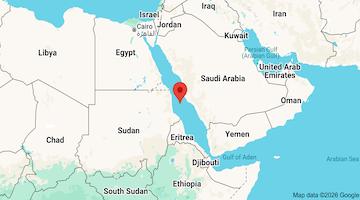 Saudi Arabia has formed a 14-state coalition to stop Ansar Allah, which has threatened to blockade its oil tankers in the Red Sea.
 “...when I talk about our political institutions, there is no reason for any American to continue to be victimized by what we still refer to as the Republican and Democratic parties…We don’t have to…
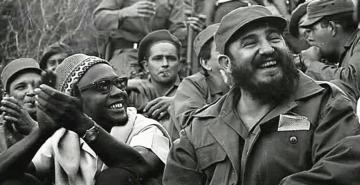 In commemoration of the Fidel Castro centenary on August 13, 2026, we present remarks given by Djibo Sobukwe at The Symposium on Fidel Castro and the Cuban Revolution on January 21, 2017,…
 Former Black Panther Deputy Minister of Defense Byron Booth's journey from Compton to Cuba, Algiers to Lagos, reveals the global reach of Black radicalism in a 2016 interview.


