
A Black Agenda Radio commentary by Glen Ford
The United States’ use of mercenaries is unprecedented in scope for a major power in modern times, and further weakens a decaying empire. Unable to defeat the resistance in two of the poorest nations on the planet, America increasingly depends on high-paid killers-for-profit to man the battlements. In Iraq, where the U.S. is reluctantly making an exit, “President Obama plans to substitute outgoing U.S. troops with mercenaries.” The same may happen, soon, in Afghanistan.
Will the Last Mercenary Turn Out the Lights On U.S. Empire
A Black Agenda Radio commentary by Glen Ford
“Washington is likely to find out that its privatization of war cannot save the empire’s last toehold in Iraq.”
The soldier of fortune has become an indispensable element of U.S. imperial rule. Mercenaries are a key item in President Obama’s menu for continued American domination of Afghanistan and Iraq, as deadlines arrive for withdrawal of uniformed American troops. With foreign wars going badly for the United States, more and more it looks like the last defenders of America’s imperial Alamo will be murder-for-hire corporations like the one formerly known as Blackwater.
All U.S. troops – whether the Americans call them combat soldiers or not – are scheduled to leave Iraq at the end of this year. The Americans never intended to leave, but were forced on the way out the door by the Iraqis during George Bush’s presidency. Now President Obama plans to substitute outgoing U.S. troops with mercenaries, who would guard remaining U.S. installations, the Green Zone and the U.S. Embassy, the biggest embassy in the world and really a base, itself. But the Iraqis hold a special hatred for the American mercenaries, who roamed the country, killing civilians for pleasure, often in sprees of mass murderous drunkenness. Washington is likely to find out that its privatization of war cannot save the empire’s last toehold in Iraq.
The same moment will come in Afghanistan, where civilian contractors outnumber U.S. soldiers. American mercenaries under arms number 26,000, which is about one and a half times the size of a U.S. Marine division. President Obama has promised to begin the process of withdrawing troops from Afghanistan in July. It’s quite clear that the Americans never plan to actually leave, but the Afghans want them to go, and for that reason they will be going. The Americans would surely try to dominate the country through their huge mercenary army. However, Afghan President Hamid Karzai, like most people, doesn’t like mercenaries running around his country. He’s already applied a variety of measures to constrain their freedom of movement, and it is difficult to imagine that Karzai or any other Afghan leader would permit the mercenaries to stay on after the U.S. soldiers leave. So, some guy from Blackwater may wind up turning out the lights on the U.S. imperial presence in Afghanistan, a couple of years from now. The most expensive army in the world, supplemented by even more expensive hired killers, cannot defeat one of the world’s poorest countries.
“The Americans would surely try to dominate the country through their huge mercenary army.”
How about two of the world’s poorest countries? Somalia hasn’t had a national government since the early Nineties, but its people refuse to allow foreigners to rule them. The puppet regime set up in Mogadishu by the Americans and Europeans controls only a few city blocks. Soldiers rented by the U.S. from Uganda guard the escape route to the airport. The richest nation on the planet cannot defeat one of the world’s most poorly financed resistance movements, the Islamist Shabab. So, who ya gonna call? Blackwater, whose founder, Erik Prince, was awarded a contract to try to create an army to defend the puppet Somali state. But mercenaries like Erik Prince are incapable of creating armies that will defend a country’s sovereignty. They can only create mercenaries like themselves, who fight for money. And such mercenaries cannot, in the end, defeat genuine people’s movements – in Somalia, or anywhere else. Not anymore.
For Black Agenda Radio, I’m Glen Ford. On the web, go to www.BlackAgendaReport.com.
BAR executive editor Glen Ford can be contacted at Glen.Ford@BlackAgendaReport.com.

 The liberal news media treat U.S. violence and oppression as aberrations from the country's founding ideals rather than expressions of its fundamental character as a settler colony, empire,…
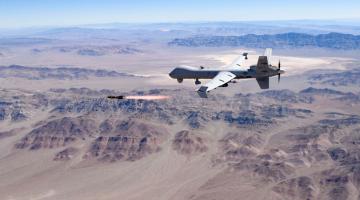 The U.S. relocation of MQ-9 Reaper drones from Africa to Latin America is not a drawdown of imperial aggression but a strategic reallocation, with the drones likely to be used against Cuba, Venezuela…
 Race is a sociopolitical construct, not a biological truth. The real determinants of health are structural factors such as zip code, environmental pollution, and access to resources.
 A photograph of Delcy Rodríguez smiling with Donald Trump after the U.S. kidnapped Nicolás Maduro is evidence of subordination to the United States. These images cannot be reconciled with the dignity…
 Imperialist competition and wars that facilitate extractivism have long shaped the use of seaports for access to resources, markets, and devalued labor. In the last decade, countries in the chain of…


