A Black Agenda Radio commentary by Glen Ford
Less than a year ago, Sudan was split in two after decades of U.S. support for the secessionist South. Newly independent and deeply impoverished South Sudan has now seized much of what remains of the North’s oil fields. The South refuses to return to its borders, despite widespread international denunciation – a boldness that is inconceivable without the connivance of the United States.
The West Wants to Take the Rest of Sudan’s Oil
A Black Agenda Radio commentary by Glen Ford
“South Sudan refuses to return to its borders, and its generals are talking about marching all the way to Khartoum.”
The campaign to chop away more territory from the African nation of Sudan is in full swing. South Sudan, which comprised one-third of the country until becoming independent, last year, seized the oil town of Heglig on the northern Sudan side of the border and is refusing international calls to withdraw. The region around Heglig contains half of Sudan’s remaining oil fields. Most of the country’s oil went to South Sudan when the country was partitioned. But the Heglig fields indisputably belong to northern Sudan, having been awarded to the Khartoum government by a Permanent Court
The European Union describes the South Sudanese seizure of northern territory as “completely unacceptable grave concerns
So, who does have influence on South Sudan? That would be, overwhelmingly, the United States, which supported South Sudan’s secessionist movement for more than a generation and steamrolled African and international opinion into accepted the dismemberment of what had been the continent’s largest country. It was an especially bitter pill to swallow for that African Union, whose predecessor, the Organization of African States, in 1964 declared that national boundaries left by colonialists should be left alone. The founding statesmen of Africa feared that tampering with borders would expose the continent to foreign intrigues, as Europeans and Americans stirred up secessionist movements for their own gain.
“Green Berets now operate in South Sudan and neighboring Uganda, Congo, and the Central African Republic.”
That time has fully arrived. No sooner had South Sudan declared itself independent, than President Obama devised an excuse to move U.S. Special Forces into the country – one of the poorest on Earth, if you don’t count the oil. Green Berets now operate in South Sudan and neighboring Uganda, Congo, and the Central African Republic. American money keeps the Sudanese army equipped and paid. And President Kiir met with Obama
Well, it looks like Obama and the cowboy-hatted President Kiir reached their own agreement: to seize the North’s oil fields. South Sudan is a U.S. client state that owes its independence to the U.S. and Europeans and Israel, which was deeply involved in the Sudanese civil war. It is inconceivable that South Sudan would defy the United Nations and the European Union to invade North Sudan and seize half of its oil reserves without the connivance of the United States. U.S. Ambassador to the UN Susan Rice, who has been calling for the head of Sudanese President al-Bashir since George Bush was in office, will pretend that she is “concerned” with the fighting between the two Sudans, and so will Obama. But U.S. client states like South Sudan don’t invade their neighbors without Washington’s blessing. For Black Agenda Radio, I’m Glen Ford. On the web, go to BlackAgendaReport.com.
BAR executive editor Glen Ford can be contacted at Glen.Ford@BlackAgendaReport.com .

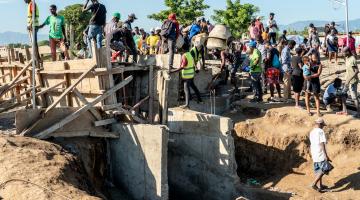 Dr. Bertrhude Albert joins us to discuss the construction of the Ouanaminthe Canal, the history of the Massacre River, and the project's importance to the Haitian people.
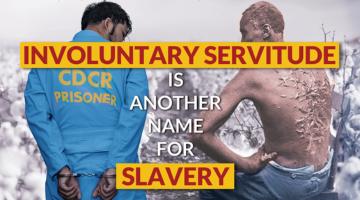 Dorsey Nunn joins us to discuss a proposed amendment to California’s state constitution, ACA 8, which aims to abolish involuntary servitude as a form of criminal punishment.
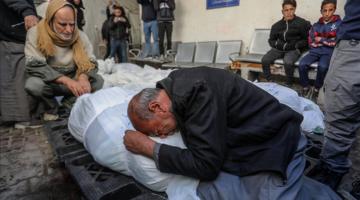 Israel is crowing about rescuing four people held hostage and killing more than 200 Palestinians in the process. It is typical behavior for the apartheid state but all of the pressure it exerts can’t…
 This short history of the Workers Party of Jamaica (WPJ) demonstrates that there was a moment in time when a radical remaking of Jamaican society seemed possible.
 Raymond Nat Turner, BAR’s poet-in-residence, pays homage to San Francisco’s late shipyard artist, JoeSam.


