by Kalundi Serumaga
At the heart of the conflict over the presidency of Ivory Coast is the question: who is a legitimate citizen of a country whose economy has pulled in millions of workers from around the region? A deeper problem: “Should Africans embrace the artificialities in which they live for the sake of preserving the foreign-owned economies that underpin them.” Increasingly, African presidential contestants fit the description of “two bald men fighting over a comb.”
West Makes Ivory Coast Safe for Cocoa
by Kalundi Serumaga
This article previously appeared in Counterpunch.
“The economic goods of the region have always held more importance to the world than the people actually living there.”
The best indication of the depth of the crisis in the Ivory Coast lies in its very name.
Much as it is now known as perhaps the primary global supplier to the cocoa industry, it started life as a place where ivory was found.
This was of course right next to a coast where gold was found and in the general coastal area where slaves could also be obtained. Only commodities. Never people.
Today there is optimism that the county will go back to being the region’s economic powerhouse.
However, the realities of the country’s history indicate that Allassane Ouattara’s entry into State House will no more prove a cure than Laurent Gbagbo’s presidency ever was.
If it is indeed true that some 54 per cent of the electorate voted for Ouattara, then it means that nearly half the electorate — the 46 per cent who voted for Gbagbo — voted against.
Talking glibly to impoverished citizens about winners and losers in these circumstances can therefore actually become counterproductive, especially when they feel that the outcome puts their livelihoods at stake.
The current crisis seems to carry the old historical resonance: That the economic goods of the region have always held more importance to the world than the people actually living there.
This could help explain why, despite the fact that the people are politically split nearly fifty-fifty, the Western powers are for once determined to see an African election result, however marginal, implemented to the fullest extent of whatever military might can be mustered.
All this in defense of not even an economy, but of a commodity to which some wretched African voters find themselves harnessed.
This outcome, however, masks a much deeper malaise that could see the country headed towards decades of instability if the more fundamental questions about its origins are not honestly addressed.
“The status of many northerners in the country has been subject to legal scrutiny and policy U-turns.”
The Ivorian cocoa economy became much bigger than the capacity of the original population to work it, and so there began decades of an increasing reliance on labor from informal migrants from the neighboring countries. This is where the real story of the crisis begins.
The northern support base for the man declared winner of the ill-fated November elections comprises descendants of generations of migrants who came to the country to feed the cocoa industry’s labour needs.
Now totaling nearly half the population, their status in the country has been subject to legal scrutiny and policy U-turns anywhere between being deemed illegal immigrants to being declared new naturalised citizens.
This vacillation revealed a deeper problem of “status anxiety” among the original peoples who first found themselves Ivorians at the start of the colonial project, and now nearly outnumbered by gastarbeiten, and whom Gbagbo, in his desperation, increasingly claimed to represent.
The two armies that faced each other in the land of elephant tusks were conducting a twin march towards the death of those two contradictory and ultimately sterile narratives of contemporary African citizenship.
The autocratic culture created by the French need for the post-colonial strongman Houphouet Boigny meant that there would be few mechanisms to politically moderate and defuse this problem.
The African Union for their part remained true to their goal of keeping all the former European plantation-states as they were when the Europeans left, and so their stance here is a familiar one.
It helped them to appear to be standing on the respectable side of history, and insisting that the beleaguered Gbagbo accept the voice of the voters, and step aside.
“African presidential offices offer all the wrong tools with which to try to comprehend — let alone solve — the huge historical complications brought about by the Arab and European imperial adventure in Africa.”
Certainly Gbagbo had no business insisting that he is the president over people who — by his own admission — even he does not know for whom they voted, be it him or his opponent.
Furthermore, if at all he is the champion of the indigenes of southern Ivory Coast — as he now claims be — then he probably also had no business aspiring to be president of the colonial machine that sought to progressively erode any such pre-colonial identities so as so make colonial and post-colonial plunder much easier.
African presidential offices offer all the wrong tools with which to try to comprehend — let alone solve — the huge historical complications brought about by the Arab and European imperial adventure in Africa.
Presidential contestants therefore increasingly fit the description of “two bald men fighting over a comb.”
In demonstrating a lack of strategic foresight through failing to reorient his politics to something that did not derive its whole legitimacy from the very state that swallowed up the natives he claims to represent, Gbagbo found himself comprehensively outmanoeuvred.
He was left with no standing among the important centres of international political, diplomatic, and financial decision-making.
The real political challenge is not so much to work out who won the conflict as it is to work out what will become of the losers.
Ouattara’s war was itself born of the northerners losing out in the earlier contestations.
At the heart of this lies that great unmentionable of African politics: Should Africans embrace the artificialities in which they live for the sake of preserving the foreign-owned economies that underpin them, or should they find a way of reasserting their actual identities?
If the latter, what happens to the modern African migrant? And will it deliver a better standard of living for all?
So Africans are first denied any right to belong, and then offered one only at the expense of disenfranchising others.
Regular elections were supposed to solve this dilemma. But Ivory Coast is not the only African country where unsolved questions of citizenship, identity and therefore the right to civic participation neuter that aspiration.
In Uganda, President Museveni was forced to officially concede this very point due to popular pressure when the indigenes of oil-rich Bunyoro demanded that migrant labourers from other parts of the same country be barred from elective posts in the region.
The ultimate tragedy for Cote d’Ivoire is not that Gbagbo had to be driven out by force of arms, but that someone else has replaced him by the same means.
And we still do not know the real electoral register.
Kalundi Serumaga is a political and cultural activist based in Kampala.

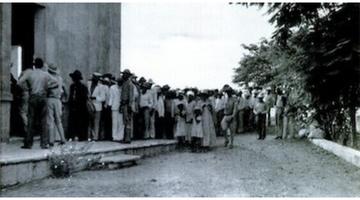 “Between October 2 and October 8, 1937, between 15,000 and 40,000 Haitians and Black Dominicans were slaughtered by Dominican troops…”
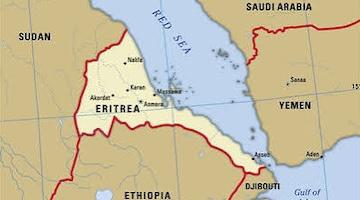 Ethiopia and Eritrea are on the brink of a war that could further destabilize the Red Sea, disrupt oil tanker traffic, and drive gas prices even higher.
 The UN's renewal of the Gang Suppression Force mandate is part of a wider hemispheric project to reassert military control across the Americas. Caribbean leaders cannot claim to support a Zone of…
 The Islamic Revolutionary Guard Corps (IRGC) has issued a letter addressed to the American people, outlining its views on recent developments and Iran-U.S. relations.
 The Trump administration's new sanctions on Cuba, are part of a dual strategy to create unendurable hardship while simultaneously making Cuba financially dependent on the United States.


