by BAR editor and columnist Dr. Marsha Coleman-Adebayo
In an important ruling, the nation’s highest court shot down an Obama administration attempt to shield governments from whistle-blowing employees. Nevertheless, the decision “still sends a chilling message” because it fails to adequately protect whistleblowers’ jobs.
Unanimous Supreme Court Backs Whistleblowers over White House Objections
by BAR editor and columnist Dr. Marsha Coleman-Adebayo
“The Barack Obama Administration argued against First Amendment protections for public employees who testify against corruption at trials.”
The US Supreme Court on Thursday, June 19th ruled that First Amendment protections extend to public employees who provide testimony, under subpoena, on corruption from adverse actions, such as retaliation or job termination. In a rare show of bi-partisan unity in Washington, DC, Justice Sonia Sotomayor wrote the Supreme Court decision in favor of whistleblowers over the opposition of those who nominated her for the Supreme Court, the Obama Administration. Although the corporate media hailed it as triumphant, the decision fails to provide necessary protections to whistleblower against retaliation for exposing corruption.
The case of Lane v. Franks centers on an employee, Edward Lane of Alabama Community College, hired in 2006 to direct an at-risk youth program that provided “counseling and educations as an alternative to incarceration.” The program received “substantial federal funds.” In the course of conducting an audit, Lane discovered that a state representative, Suzanne Schmitz, was being paid for work that she did not provide. Lane raised concerns about this fraudulent situation and was warned by the president of the community college, Steve Franks, that firing Schmitz could have a negative impact on his career at the community college. Despite the warning, Lane terminated Schmitz’s employment. As a result, a lawsuit was filed and the FBI initiated an investigation.
In 2008, Lane was subpoenaed and testified against Schmitz at her criminal trial. She was convicted of “fraudulently obtaining $177,000 in public in funds.” Under the thin pretext of a budgetary crisis, Franks laid off 29 employees but withdrew all but two of those lay offs – Lane was one of the two employees not re-hired. Lane filed charges claiming that Franks retaliated against him for testifying against Schmitz. He argued that his First Amendment rights had been violated. Franks on the other hand argued that he was protected from these charges because he was acting in an official capacity and therefore immune from such charges. In the federal government, managers also claim to be above the law because of sovereign immunity.
“Lane argued that his First Amendment rights had been violated.”
Justice Sotomayor wrote in the Courts decision that Lane gave his testimony “as a citizen on a matter of public concern – a public program and misuse of state funds.” Sotomayor wrote: “ Anyone who testifies in court…bears an obligation, to the court and society at large, to tell the truth.”
Sotomayor further asserted:
“…The importance of public employee speech is especially evident in the context of this case: a public corruption scandal. The United States, for example, represents that because “[t]he more than 1000 prosecutions for federal corruption offenses that are brought in a typical year . . . often depend on evidence about activities that government officials undertook while in office,” those prosecutions often “require testimony from other government employees.” Brief for United States as Amicus Curiae 20. It would be antithetical to our jurisprudence to conclude that the very kind of speech necessary to prosecute corruption by public officials-speech by public employees regarding information learned through their employment may never form the basis for a First Amendment retaliation claim. Such a rule would place public employees who witness corruption in an impossible position, torn between the obligation to testify truthfully and the desire to avoid retaliation and keep their jobs.” [emphasis added]
Unfortunately, Franks was not held accountable for terminating Lane because of the on-going bias towards protecting the illegal behavior of managers and those in power.
The Sotomayor opinion is certainly a step forward in protections for citizens who have the courage to fight against corruption. However, what remains unclear is why a citizen should need a subpoena to protect them from retaliation? The Supreme Court, in future rulings need to eliminate this unnecessary barrier to justice. Because the Supreme Court did not order Lane to be reinstated, the Court ruling still sends a chilling message to whistleblowers in the sense that their jobs are still in jeopardy. This issue of holding officials to account for their illegal behavior remains unaddressed. The First Amendment victory is small consolation when one is facing unemployment.
“Why should a citizen need a subpoena to protect them from retaliation?”
However, the Barack Obama Administration -- true to its core values of retaliating against, maligning and silencing whistleblowers-- argued against First Amendment protections for public employees who testify against corruption at trials. At one point, the Obama Administration even argued “a police department would be within their rights to fire an officer who responded to a subpoena and testified about a search warrant in a court.”
Had the Supreme Court accepted the Obama Administration’s argument it would have further undermined democratic ideals and intensified the fear of losing ones job by providing testimony in corruption cases, even with a subpoena. With the Supreme Court pushing back against the Obama Administration’s position they have set the stage for further examination of how to best provide transparency in government and comprehensive whistleblower protection.

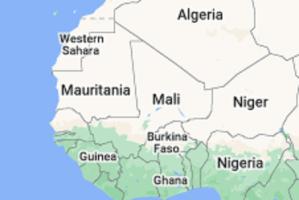 The government of Mali has accused France of numerous violations of its airspace and has requested that the United Nations Security Council investigate. French forces may have left Mali, but the…
 This article was written on the occasion of the sixth summit between the European Union and the African Union which was held in Brussels on 17 and 18 of February 2022. These meetings are…
 The history and significance of Black August, presidential elections and politics in Kenya, and reflections on the anniversary of the Sandinista Revolution.
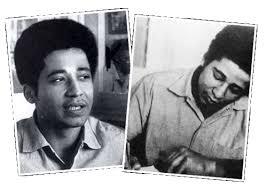 Kalonji Changa is co-founder of Black Power Media and founder of FTP Movement. He joins us from Atlanta to talk about Black August, which has been a fixture of the liberation movement for 43 years.
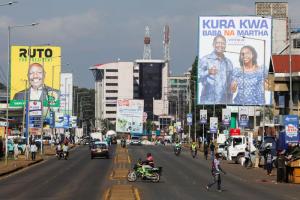 Irene Asuwa joins us from Nairobi, Kenya. She is co-convener of Ecological Justice and supports outreach at Ukombozi Library. We discuss the recent presidential election in that country.


