A Black Agenda Radio commentary by Glen Ford
Greater Harlem is now less Black “than at any time since the 1920s,” with African Americans making up only 4 in 10 residents. Galloping gentrification is a “racial as well as economic crime,” predicated on the historical devaluation of Black life, nationwide. “Poor Blacks are considered the human equivalent of blight, while affluent whites are treated as precious resources.”
Blackness Ebbs Away in Harlem
A Black Agenda Radio commentary by Glen Ford
“Poor Blacks are considered the human equivalent of blight, while affluent whites are treated as precious resources.”
Harlem, that piece of Manhattan real estate that epitomized Black urban life for most of the 20th century, is no longer majority African American. The white presence in central Harlem has grown from only 672 individuals in 1990, to almost 14,000 in 2008. According to Census data citied in a recent article in the New York Times, Blacks now make up just 62 percent of central Harlem, and only 41 percent of greater Harlem, the cityscape between the Hudson and East Rivers from 96th Street to 155th Street. Greater Harlem’s Black population is now smaller than at any time since the 1920s. It is true that Hispanic Harlem grew dramatically in the last decade, but in Manhattan as a whole Latinos are losing ground right along with Blacks. The island gets whiter by the day.
The driving force that is rendering Harlem uninhabitable to its traditional population, is not white people swarming uptown – that’s just a symptom of the underlying pathology. Harlem, like inner cities across America, is under relentless siege by organized money, the real estate and banking interests that reap their greatest profits by forcing out poor and working class residents in order to create a much more expensive space for the relatively rich. It is pure predation, and a racial as well as economic crime.
The New York Times article on the whitening of Harlem attempts to treat runaway gentrification as a, somehow, race-neutral phenomenon – as if race and the price of real estate have not always been inextricably intertwined in America. It is the manipulation of race and its relationship to housing and land values in a racist society that allows speculators the greatest opportunities to buy low and sell high. Whether in scaring whites out of city neighborhoods in the Forties and Fifties, or pushing Blacks out today, vast fortunes have been made by the skillful use of race to inflate or deflate the value of entire neighborhoods. The racist devaluation of Black people shows up as profits on the bankers’ and developers’ side of the ledger.
“Greater Harlem’s Black population is now smaller than at any time since the 1920s.”
Race has everything to do with the politics of gentrification. Both the political and economic marketing of gentrification are based on the assumption that “good” neighborhoods and attractive cities are those populated by upscale white people. Poor Blacks are considered the human equivalent of blight, while affluent whites are treated as precious resources. New York Mayor Michael Bloomberg plans to lay a white line of luxury apartments right across the center of Harlem, from river to to river, at 125th Street – and call it a renaissance. Most Manhattan Black elected officials are allies of the mayor, the developers, the landlords and the banks in the project to destroy Black Harlem. They are loyal to money, not their constituents, and hope to make enough money in the short run that they will not need those constituents in the long term.
It's the same story in Atlanta and other large Black population centers across the United States, the majority of which are hemorrhaging Black residents. The fact that gentrification is such a potent force for Black removal in all regions is proof that racism and finance capitalism behave in remarkably similar fashion throughout the United States. In that sense, nothing has changed since the days of racial blockbusting, several generations ago.
BAR executive editor Glen Ford can be contacted at Glen.Ford@BlackAgendaReport.com.

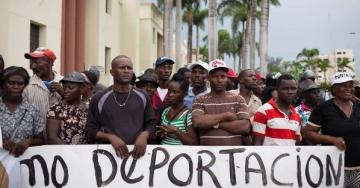 Violence against Haitians and Haitian descended people continues in the Dominican Republic. The Socialist Movement of Workers of the Dominican Republic condemn the latest state sanctioned…
 COINTELPRO never ended. The FBI still pays informants to disrupt, to target organizers, and to spy on the movement.
 Black people must differentiate between pride in self and their ancestors and any attempt to forge connections with the nation that continues to oppress.
 State affiliated think tanks often shape foreign policy in Washington.
 The US regime of economic coercive measures is investigated by a newly formed tribunal, prison abolition is a necessity, and so are changes in drug policy.


