 by Leo Igwe
Black homophobes often invoke “African” culture to buttress their arguments against gay rights, including the right to marry. But, according to the author, a native of southern Nigeria, the Igbo culture has long nurtured same-sex couples consisting of "woman-husband" and "woman-wife." The practice is entirely indigenous. “This marriage practice pre-dates Christianity and the so- called western culture which most people today blame for all the moral and cultural wrongs in Africa.
Tradition of Same Gender Marriage in Igboland, Nigeria
by Leo Igwe
This article originally appeared in the Nigeria Tribune.
“We should not rush to deny this, or pretend it does not exist or just sweep it under the carpet.”
One of the contentious issues in the debate over homosexuality and same sex marriage is whether a marriage between persons of the same gender is totally alien to African culture and tradition. Those opposing same sex marriage have continued to argue that same gender union is foreign to Africa. On the contrary, I have tried to draw their attention to the fact that there is a strain of the same gender marriage in African tradition, particularly in Igboland. And that we should not rush to deny this, or pretend it does not exist or just sweep it under the carpet in the quest to establish that same gender marriage is alien to the African continent, and must be banned.
I hail from Mbaise in Imo State in Southern Nigeria. Traditionally, in my community, marriage is taken to be a union between a man and a woman as the case may be. But there are circumstances where a marriage between a woman and a woman is permissible.
In a situation where a woman has no son or no child, if the husband dies, it is culturally allowed for her to marry a wife. And in this case, she becomes the husband. Like in every case of marriage, this woman goes out, inquires and gets a wife of her choice. She pays her dowry and fulfills other traditional rites as it is done when a man is marrying a woman.
“Like in every case of marriage, this woman goes out, inquires and gets a wife of her choice.”
After that, the woman brings her "wife" home and they start living together as "husband" and "wife." Nobody frowns at it. To have children, both the "woman-husband" and "woman-wife" will agree to allow a man from the same village or neighboring town to sleep with the wife.
The children born by the wife bear the family name of the woman-husband, not that of the man responsible for the pregnancy. I want to add here that the men who sleep with such wives in most cases are married men. And normally it is regarded as immoral, in fact it is a taboo for a married man to sleep with or "father" children from another woman. But in this case an act normally taken to be immoral is allowed.
This is a situation where people are permitted to break taboos and deviate from traditions. This marriage practice pre-dates Christianity and the so- called western culture which most people today blame for all the moral and cultural wrongs in Africa. The same gender marriage is still practiced till date. In other words, there are some families today in Igboland where women are both husbands and wives, fathers and mothers.
There are some homes where woman-husbands are living happily with their woman-wives, though there are not many such families or marriages. Such unconventional marriages and families are in the minority. The fact is that they exist. The fact is that they are part of the local tradition and culture. They are not imports from the West. And this has in no way undermined social cohesion, public order and morality or family values.
“There are some families today in Igboland where women are both husbands and wives, fathers and mothers.”
Some people have tried to argue that this is not really a case of gender marriage because a man comes in to impregnate the wife. But, traditionally, it is the case and it is known as such. It is a case where a woman marries a woman.
The man who impregnates the wife does not come into the picture at all. He has no family responsibility. His duty is only to supply sperm. The family is responsible for the woman-husband and wife.
Some say that same gender unions destroy family values and undermine the upbringing of children. It should be emphasized that children in this case are brought up in an environment where both "parents" are females. And they grow up to be normal children. Some say because child bearing is involved, then it is not same gender marriage. But my response is this: whether for procreation or for pleasure, it is same gender marriage. And it is the couples, not the state that decides whether to marry for procreation and or for pleasure or for any other purpose they deem fit.
Unfortunately, most Nigerians think that same gender marriage is antithetical to procreation. It is not. In fact same gender unions as in this case enrich family values. There have been instances where a partner in a same gender relationship wants children, and goes ahead to have them.
Because of the secrecy, privacy and hypocrisy that go with sexual expression, no one can really say if these female partners have or do not have sex with each other. But like all couples they live together and run their families. But today, things are changing.
“Same gender unions as in this case enrich family values.”
Individuals are becoming more open, more assertive and expressive with their sexual and marriage choices, desires, orientations and identities. The sexual and marriage dynamics are changing rapidly. And Africans must make the necessary social, cultural and legal adjustments in response to - and to accommodate - these changes.
Leo Igwe is the executive secretary of the Nigerian Humanist Movement. The Nigerian Humanist Movement is an association of non-religious people who seek a rational, constructive approach to human affairs. It offers a positive alternative to all religious and dogmatic creeds. It acts to uphold and defend the human rights of humanists and of the general public. It supports via legislation any other democratic and constitutional means to improve social conditions. It supports the widest conception of education and enlightenment for the better understanding and enjoyment of human life.

 In this week’s segment, we hear about the crisis in northwest Indiana, including the city of Gary, where some residents have gone more than two weeks without power after a storm. As in the rest of…
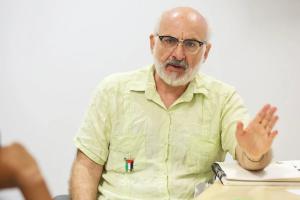 Our guest is Sam Husseini. He’s a veteran independent journalist and senior analyst at the Institute for Public Accuracy. He is now running for Congress in Maryland’s 4th district as a Green Party…
 Akili Shakur is a revolutionary activist and the wife of political prisoner Shaka Shakur. She joins us from Gary, Indiana, where some residents have been without power for more than two weeks after…
 In this special broadcast, BAR Senior Columnist and Executive Editor Margaret Kimberley and Black Panther Veteran Dhoruba Bin Wahad offer an uncompromising, sharp critique of the anti-Iranian open…
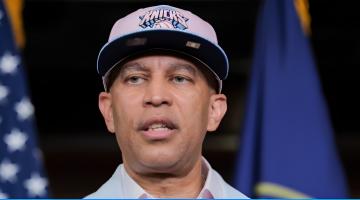 If the Democratic Party prevails in the midterm elections, Hakeem Jeffries will become the Speaker of the House of Representatives. But his decision to meet with Jared Kushner was a textbook case of…


