by Eugene Puryear
A Black man’s innocence doesn’t mean a thing. One million signatures don’t mean a thing. “We are not living in a post-racial society, and President Obama won’t save us.” The only meaningful response is to massively organize against those who organized against us. “The fight to save Davis was a glimpse of potential, a signal of militant rejection of the suffering and oppression afflicting working people in this country.”
Three lessons from the fight to save Troy Davis
by Eugene Puryear
This article previously appeared in Liberation.
“The Obama administration is silent on the most egregious violations committed on U.S. soil, aiding and abetting the execution of an innocent man.”
Troy Davis was executed on Sept. 21, pronounced dead at 11:08 p.m. Davis had been falsely convicted of the 1989 killing of a Savannah police officer.
Since his trial, seven of the nine witnesses who had testified against Davis recanted their testimony. Five witnesses signed affidavits asserting that they were coerced by the police. Three individuals said that another man, Sylvester “Redd” Coles, confessed to them that he committed the crime. The case against Davis lacked any physical evidence—no murder weapon, fingerprints or DNA evidence were ever presented.
None of that stopped the State of Georgia from taking the life of an innocent man.
In the weeks preceding the execution date, over 1 million people signed a petition; many more made phone calls and sent emails to local, state and federal officials demanding that they save the life of Troy Davis.
Students from Howard University in Washington, D.C., held rallies Sept. 16 and Sept. 21—the scheduled execution date. Hundreds of Howard students marched following the Sept. 21 campus rally and gathered at the White House, joined by other Davis’ supporters. Continuing to demand a stay of execution, at least 12 students were arrested.
“In the weeks preceding the execution date, over 1 million people signed a petition.”
When an announcement came minutes before the execution that the Supreme Court had granted a temporary reprieve delaying the execution, the demonstrators militantly marched to the Supreme Court to demand justice, holding a picket until the court’s decision was announced and the execution was carried out. Hundreds remained until after midnight, some of them having been in the streets for 12 hours, speaking out about their experience and plans to continue the struggle.
Despite this determined effort, repeated in cities across the United States and throughout the world, the Supreme Court allowed the execution to go ahead.
While there is much to be said about the case and the implications of the Save Troy Davis struggle, here are three lessons worth highlighting:
1. We are not living in a “post-racial” society
We can finally lay to rest this tiresome phrase.
The case of Troy Davis is at the intersection of race and class in the United States. The cops who coerced witnesses in the Troy Davis trial knew the odds were stacked in their favor. Georgia does not guarantee counsel for death row inmates, making it harder for poor defendants to properly mount appeals. According to the American Bar Association, those convicted of killing white victims in Georgia are 4.5 times more likely to be sentenced to death than those convicted of killing Black victims.
What these cops knew was the true essence of the criminal justice system. The death penalty and other “law and order” methods are political tools. They send a chilling message to the most oppressed sectors of society—primarily Black and Latino working-class communities—meant to discourage any resistance to their own oppression.
2. President Obama won’t save us
President Obama said it was “inappropriate” for him to “weigh in” on the Troy Davis case because it was a “state” issue. Seriously? In 2009, Obama weighed heavily against the trial of a woman in Iran that the United States government claims was innocent. The U.S. president can take a stand against an alleged injustice in another sovereign country, but not against a proven injustice in a U.S. state?
The White House raises the banner of democracy, freedom and human rights as a weapon against those governments it seeks to replace. The Obama administration and U.S. officials are brimming with quotes of condemnation against its targets abroad, yet are silent on the most egregious violations committed on U.S. soil, aiding and abetting the execution of an innocent man.
That is the true role of the U.S. president: the protector, the commander-in-chief of this corrupt system. Obama could have taken a stand for justice, but instead he stood by silently as Troy Davis was killed.
3. The fight-back movement is on
The fight is not over. Troy Davis’ executioners cannot be allowed to escape scot-free. There are many Troy Davises across the country, both in prison and outside. This is the time to escalate the struggle, to take the spirit of the fight to save Troy’s life and turn it into a mass fight-back movement against racism and the system of class oppression that depends on it.
The upsurge to save Troy Davis’ life is part of a rebellious undercurrent. From the massive immigrant rights’ movement in 2006 to the Jena 6 struggle in 2007 to the labor battle in Wisconsin this past winter, the fight to save Davis was a glimpse of potential, a signal of militant rejection of the suffering and oppression afflicting working people in this country.
Moving forward from here, we must turn the fight around Davis’ life into a general struggle against racism, oppression and exploitation. Troy Davis did not die in vain.
Mr. Puryear is a student organizer at Howard University, in Washington, DC.

 Today, we launch Sovereign Media, an anti-imperialist coalition bringing together voices from the Global South and the Global North who refuse to bow to censorship or empire.
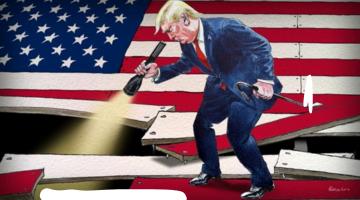 Donald Trump has declared war on the “enemy within” and put the military on notice that they will mete out the same treatment domestically that they dispense around the world.
 The so-called "peace deal" does not offer peace; it demands surrender. The Trump plan is the manifestation of a colonial logic that believes might makes right.
 “There is and always will be, until every Black man, woman, and child is free, a Black Liberation Army.”
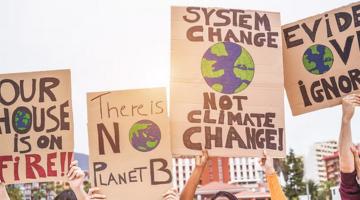 "Mother Earth Is Angry!" is the latest from BAR's Poet-in-Residence.


